Oura Church Audio Guide

Audio guide for Oura Church

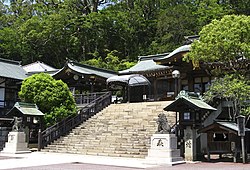
Ōura Church
Photo by Houjyou-MinoriWikimedia CommonsCC0

7 min of listening · Section 1 of 5: Welcome to Oura Catholic Church

Prefer reading? The full guide is below

Here in person? Walk on with Mappu

This audio guide tells one place’s story. Walk Mode keeps going as you walk:

  • It knows where you are and talks about what’s in front of you, not only these chapters.
  • It takes you on to the next sight and follows what interests you.
  • Ask about anything you see, and it answers on the spot.
  • Your phone stays in your pocket.

A 2-hour live walk with Mappu, €4.99.

50 credits from the Starter pack. One-time purchase, no subscription.

Self-guided audio walk. No guide accompanies you. Not affiliated with the sites.

Keep exploring

Discover more places in Mappu.

Ōura Church • Section 1 of 5

Ōura Church: is there a free audio guide?

Quick answer. Yes. Mappu’s Oura Church audio guide (Nagasaki, Japan) is free in your browser: 5 sections and about 7 minutes of listening, in 8 languages. It covers “A Church Facing Nishizaka: Why Oura Catholic Church Was Built” and “The Seventeenth of March: Oura Catholic Church and the Hidden Christians”. In the Mappu app, Walk Mode narrates the places around you as you move and answers your follow-up questions.

Oura Church map

Mappu's own map of the place, with the paths and entrances OpenStreetMap shows around it.

Oura Church mapThe place on the map, with the guide's point marked.

Ōura Church: what does the audio guide cover?

  1. 01

    Welcome to Oura Catholic Church

    Welcome to Oura Catholic Church, known in Japanese as Oura Tenshudo. It stands on the hillside of the Minamiyamate district in Nagasaki, where the slopes look out over the harbor. This is the oldest surviving Christian building in Japan, finished in 1864 and still holding its place among the old foreign settlement houses nearby. The story here is bigger than the building. The church went up in the years after Japan opened its ports in 1859, when Nagasaki set aside a foreign settlement. Within about a year of its completion it became the scene of one of the most remarkable moments in the history of religion. Descendants of Japan's hidden Christians walked in and quietly revealed that their faith had survived for roughly two and a half centuries. Over the next few minutes we will look at why the church was built and why it faces the direction it does. We will stand in the moment of the discovery, look at the architecture and the seminary beside it, and see how the church came through the atomic bombing of 1945. Take your time on the stone steps. The best way to listen is with the harbor behind you and the church in front.

  2. 02

    A Church Facing Nishizaka: Why Oura Catholic Church Was Built

    Rewind to 1859. Japan has opened to foreign trade, and Nagasaki gets a foreign settlement. French Catholic priests of the Paris Foreign Missions Society come to serve the foreign residents. Father Furet arrived in Nagasaki on the twenty-second of January, 1863, and found that the settlement was already crowded with merchants. Land was hard to find, but with the help of the Nagasaki magistrate he secured a plot next to the Oura Minamiyamate settlement. He raised funds, mixed with the foreign community and prepared the ground himself. The builder was Koyama Hidenoshin, a craftsman from Amakusa who had already worked on the English church in the Higashiyamate district. The church was completed at the end of the following year and was officially named the Church of the Twenty-Six Martyrs of Japan. In Japan, churches are usually called by their place name, so it became known simply as Oura. Its formal dedication was led by Bishop Girard with the missionaries Petitjean and Laucaigne. Captains from French, Russian, British and Dutch ships in the harbor attended, each bringing a few Catholic sailors. The dedication to the Twenty-Six Martyrs is a statement. On the fifth of February, 1597, 26 Christians were executed at Nishizaka in Nagasaki, the first persecution of Christianity ordered by a national ruler, Toyotomi Hideyoshi. The church was built facing toward that site, so the building looks back across two and a half centuries to those events.

  3. 03

    The Seventeenth of March: Oura Catholic Church and the Hidden Christians

    About a month after the dedication, on the seventeenth of March, 1865, a small group of visitors from the Urakami district drifted in among the curious crowds. Outwardly they lived as Buddhists. Inwardly, for roughly 250 years, they had held onto their faith in secret. One of them approached Father Petitjean as he prayed and whispered a sentence that is still told in Nagasaki: our hearts are the same as yours. Then came the question that gives the story its heart: where is the statue of Holy Mary? Petitjean, overjoyed, led them to the statue. This is remembered as the Discovery of the Hidden Christians, and it proved that Christian faith had survived through the long era of prohibition. The mood of the moment was joy, but the aftermath was hard. Under the Tokugawa shogunate's continuing ban, more than 3,000 believers from Urakami were arrested in 1867. When you step inside, turn around at once. The double wooden door behind you dates from the founding of the church and stands in its original position, repaired in a 2002 restoration. It watched that encounter. Then walk up the center aisle toward the main altar. On the right wall you will find a stone tablet marking the tomb of Father Petitjean, and his remains rest in the crypt directly beneath the altar. Even now, the seventeenth of March is marked here as the Day of the Discovery.

  4. 04

    Gothic Lines, Bamboo Ceilings and Father de Rot at Oura Catholic Church

    The church you see today took its final shape in 1879, when it was enlarged and remodeled so that interior and exterior share a unified Gothic style. It was designated a National Treasure in 1933 and redesignated in 1953. The assessment of its architecture praises exactly this: it is an early work, yet highly resolved. Look up inside and you will find a ribbed vault ceiling. Here is a surprise: the ceiling is not stone. Its interior is built from specially woven bamboo and earth, a technique the church's caretakers say is hard to reproduce with today's skills. Outside, the roof is covered with traditional Japanese interlocking tiles. Beside the church, to the right at the back, stands a three-storey wooden building, the former Latin seminary. It was set up by Father Petitjean after the ban on Christianity was lifted, to train Japanese priests. The Paris Foreign Missions Society built the seminary building on the church grounds in 1875. It was designed and built by Father Marc Marie de Rot, who is still affectionately called Father de Rot in Nagasaki for his later welfare work with people in poverty. It is considered one of the finest Western-style buildings in Nagasaki. De Rot arrived in 1868 and printed a church calendar and a book of daily prayers right here at Oura. They are recorded as the first lithographic printing in Japan.

  5. 05

    Before You Head Off from Oura Catholic Church

    One more chapter belongs to this hillside. On the ninth of August, 1945, the atomic bomb fell on Nagasaki. Oura Catholic Church stood at a distance from the center of the blast and did not collapse or burn, but the gate, roof, ceiling and stained glass were badly damaged. Restoration took five years and was completed in 1952. The original bell survived the war and now hangs in a newly built bell tower. It still rings every day at noon and in the evening, with a prayer for peace. There is a practical detail too. As visitor numbers grew, a new parish church, Oura Church, was built in 1975 beside the stone steps, and the cathedral opened to the public as a paid visitor site. Daily Mass is now held in that neighboring church. Only on Christmas Eve, the twenty-fourth of December, and on the seventeenth of March, the Day of the Discovery, is Mass held inside the old cathedral itself. As you leave, linger by the steps and look from the building toward the harbor, then back toward the direction of Nishizaka. See if the bell finds you at noon. Each of these stories in this one hillside church is worth following further.

About this guide

AI-generated from 6 sources; checked automatically and last updated on October 31, 2026. Verify tickets and opening hours on the official site. Independent guide by Mappu. Not affiliated with or endorsed by the site or its managers.

Run a travel site or blog? Embed this audio guide for free.

Walk on from here

This place is stop 2 of 7 of a self-guided walk: Glover Garden to Suwa Shrine, Nagasaki. About 5.2 km and 70 minutes on foot, plus about 43 minutes of listening.

Route map: walking on from Ōura Church7 numbered stops in walking order. Stop 1: Glover Garden; Stop 2: Ōura Church; Stop 3: Dejima; Stop 4: Nagasaki Shinchi Chinatown; Stop 5: Sōfuku-ji Temple; Stop 6: Megane Bridge; Stop 7: Suwa Shrine.Stop 1: Glover Garden1Stop 2: Ōura Church2Stop 3: Dejima3Stop 4: Nagasaki Shinchi Chinatown4Stop 5: Sōfuku-ji Temple5Stop 6: Megane Bridge6Stop 7: Suwa Shrine7
Distances are estimates along the walking route, from OpenStreetMap.

Indicative route. While you walk, watch where you're going, mind the traffic and follow local signs and rules. The map is an aid, not a safety guide. Terms

  1. Glover Garden

    about 0.2 km · about 3 min on foot

  2. Ōura ChurchThis guide

    about 1.4 km · about 19 min on foot

  3. Dejima

    about 0.4 km · about 6 min on foot

  4. Nagasaki Shinchi Chinatown

    about 1.1 km · about 14 min on foot

  5. Sōfuku-ji Temple

    about 1.0 km · about 13 min on foot

  6. Megane Bridge

    about 1.1 km · about 15 min on foot

  7. Suwa Shrine
Photo attribution

Walk Mode, in the free Mappu app: 2 hours for 50 credits (€4.99 Starter pack)

See the whole walk

Planning a trip to Nagasaki?

Get your plan

Mappu sketches your days free in the chat, no account needed. Then take the full plan with you:

  • Weekend trip, €9.99: Your day-by-day plan plus 2 live walks
  • Save your trip’s free guides on your phone in the Mappu app: they play with no signal
See the trip packs

Already going? The 2-hour live walk in Nagasaki is €4.99

Plan your trip on a map and get an audio guide for almost any place nearby: just tap it on the Mappu map.

Common questions

Oura Church: how long is the free audio guide?

About 7 minutes of listening in 5 sections: “Welcome to Oura Catholic Church”, “A Church Facing Nishizaka: Why Oura Catholic Church Was Built”, “The Seventeenth of March: Oura Catholic Church and the Hidden Christians”, “Gothic Lines, Bamboo Ceilings and Father de Rot at Oura Catholic Church”, and “Before You Head Off from Oura Catholic Church”.

Oura Church: what can I ask Mappu after the guide?

You can ask follow-up questions such as “Why was the church built to face the direction of Nishizaka, and what happened there in 1597?” and keep asking in Mappu, with the guide connected to your map and trip plan.