Twenty-Six Martyrs Museum and Monument Audio Guide

Nishizaka Hill, where a city remembers its first martyrs

Twenty-Six Martyrs Museum
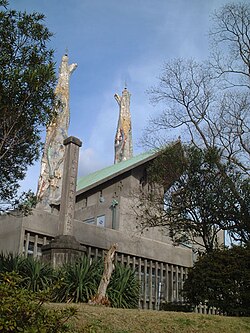
Photo by No machine-readable author provided. Fk assumed (based on copyright claims).Wikimedia CommonsCC BY-SA 2.5

7 min of listening · Section 1 of 5: Welcome to Twenty-Six Martyrs Museum

Prefer reading? The full guide is below

Here in person? Walk on with Mappu

This audio guide tells one place’s story. Walk Mode keeps going as you walk:

  • It knows where you are and talks about what’s in front of you, not only these chapters.
  • It takes you on to the next sight and follows what interests you.
  • Ask about anything you see, and it answers on the spot.
  • Your phone stays in your pocket.

A 2-hour live walk with Mappu, €4.99.

50 credits from the Starter pack. One-time purchase, no subscription.

Self-guided audio walk. No guide accompanies you. Not affiliated with the sites.

Keep exploring

Discover more places in Mappu.

Twenty-Six Martyrs Museum • Section 1 of 5

Twenty-Six Martyrs Museum: is there a free audio guide?

Quick answer. Yes. Mappu’s Twenty-Six Martyrs Museum and Monument audio guide (Nagasaki, Japan) is free in your browser: 5 sections and about 7 minutes of listening, in 8 languages. It covers “The Road to Nishizaka”, “Bronze Figures and Gaudí-Inspired Tile” and “Inside the Museum: Letters, Paintings and Fumie”. In the Mappu app, Walk Mode narrates the places around you as you move and answers your follow-up questions.

Twenty-Six Martyrs Museum and Monument map

Mappu's own map of the place, with the paths and entrances OpenStreetMap shows around it.

Twenty-Six Martyrs Museum and Monument mapThe place on the map, with the guide's point marked.

Twenty-Six Martyrs Museum: what does the audio guide cover?

  1. 01

    Welcome to Twenty-Six Martyrs Museum

    Welcome to Nishizaka Hill in Nagasaki, home of the Twenty-Six Martyrs Museum and Monument. This is not a hilltop with a pretty view and a pleasant story. It is the place where, on February the fifth, 1597, 26 Christians were executed on the orders of Toyotomi Hideyoshi, the chief imperial minister of Japan. The museum and monument were built here in June 1962. They mark 100 years since the Catholic Church canonized the martyrs, which happened in 1862. The complex is managed by the Society of Jesus. As you walk, you will see a long bronze sculpture in the plaza, a church, and a museum that gathers letters, paintings and objects from the long story of Christianity in Japan. Over the next few stops, I will tell you who the 26 were, why they were brought to Nagasaki, what the artist and architects tried to say in metal and tile, and how this hill connects to three centuries of hardship and faith. Take your time here. It rewards a slow pace.

  2. 02

    The Road to Nishizaka

    Let's go back to the late sixteenth century. Nagasaki was then the center of Christian evangelism in Japan. Toyotomi Hideyoshi, the ruler of the country, grew fearful of that growing faith. He had 26 Christians taken prisoner: missionaries active in Kyoto and Osaka, along with some of their believers. They were then transported to Nagasaki. The group was strikingly mixed. Twenty of the 26 were Japanese, and the others were foreign. It included Franciscans and Jesuits, laymen, and several young boys. On February the fifth, 1597, they were crucified on crosses set in a row here on Nishizaka Hill. Historians treat this as the opening chapter of something much longer. Their deaths marked the beginning of centuries of severe persecution of Christians in Japan. The martyrs were canonized in 1862, and their feast day is observed on February the sixth. That is why the museum and monument you see today were timed to mark the hundredth anniversary of that canonization.

  3. 03

    Bronze Figures and Gaudí-Inspired Tile

    Now look at the great bronze high relief in the plaza. It was made by the sculptor Yasutake Funakoshi, who lived from 1912 to 2002 and converted to Catholicism in his late thirties. It took him four years to complete, and it shows life-sized figures of the 26 martyrs. Walk along it slowly and notice how the figures read as a procession. That idea of a journey runs through the whole complex. The main theme of both the museum and the monument is called The Way to Nagasaki. It points to the physical trek of the prisoners to this hill, and also to the Christian spirit of the martyrs. The church and museum were designed by Kenji Imai, who is credited with introducing Gaudí to Japan, and his mosaics and architecture are key things to see. Look at the museum building's layers. The second level has a takeyarai, a bamboo lattice that once surrounded places of execution. The two top layers use pillars that evoke a prison. On the thicker pillars, the colored tiles turn red toward the top, a reference to the bloody spears thrust into the martyrs' sides.

  4. 04

    Inside the Museum: Letters, Paintings and Fumie

    Inside, the museum widens the story beyond one day in 1597. Christianity in Nagasaki has a history of more than 300 years. That history includes the edicts banning it in the early Edo era, the harsh persecution that followed the Shimabara Rebellion, and four crackdowns on Christians in Urakami. It ends with the recognition of freedom of religion in the Japanese Constitution of 1889. Among the objects are a letter from Francis Xavier to King John the Third of Portugal, dated 1546. There is also an original letter from 1621 by Nakaura Julian, who had traveled to Rome in 1582 as a member of the Tensho Embassy, then returned to Japan and became a priest. In it he describes the persecution of Japanese Christians. Look too for Our Lady of the Snows, a painting of the Virgin Mary thought to have been made in Nagasaki between 1600 and 1614. The exhibits also include replicas of fumie, or treading images. Every year from 1629 to 1857, Nagasaki residents were forced to step on bronze images of Christ or Mary to prove they were not Christians. Standing in front of one is a quiet, uncomfortable lesson in how ordinary life was turned into a test of belief.

  5. 05

    Before You Head Off

    This hill has drawn visitors from far beyond Nagasaki. The shrine and church here were visited by Pope John Paul the Second in 1981 and by Pope Francis in 2019. Yet the place also speaks in smaller ways, even through a name. One person is recorded here as Phillip Nishizaka, named for one of the 26. Before you leave, let your eye travel once more along the bronze figures, then up to the red-tipped pillars and the tile work on the building. See how many of the stories we talked about you can read in the materials themselves: the bamboo lattice, the prison-like pillars, the line of life-sized figures. And if you want to keep going, think about the question this site keeps asking. How does a community remember a hard beginning, and what does it choose to build on the spot? The answer is in the bronze, the tile, and the letters you have just seen.

About this guide

AI-generated from 6 sources; checked automatically and last updated on October 31, 2026. Verify tickets and opening hours on the official site. Independent guide by Mappu. Not affiliated with or endorsed by the site or its managers.

Run a travel site or blog? Embed this audio guide for free.

Walk on from here

The nearest places with a Mappu audio guide, in walking order: about 2.3 km and 30 minutes on foot in all.

Route map: walking on from Twenty-Six Martyrs Museum3 numbered stops in walking order. Stop 1: Twenty-Six Martyrs Museum; Stop 2: Suwa Shrine; Stop 3: Megane Bridge.Stop 1: Twenty-Six Martyrs Museum1Stop 2: Suwa Shrine2Stop 3: Megane Bridge3
Distances are estimates: the straight line between places plus 30%.

Indicative route. While you walk, watch where you're going, mind the traffic and follow local signs and rules. The map is an aid, not a safety guide. Terms

  1. Twenty-Six Martyrs MuseumThis guide

    about 1.2 km · about 16 min on foot

  2. Suwa Shrine

    about 1.1 km · about 14 min on foot

  3. Megane Bridge
Photo attribution

Walk Mode, in the free Mappu app: 2 hours for 50 credits (€4.99 Starter pack)

Planning a trip to Nagasaki?

Get your plan

Mappu sketches your days free in the chat, no account needed. Then take the full plan with you:

  • Weekend trip, €9.99: Your day-by-day plan plus 2 live walks
  • Save your trip’s free guides on your phone in the Mappu app: they play with no signal
See the trip packs

Already going? The 2-hour live walk in Nagasaki is €4.99

Plan your trip on a map and get an audio guide for almost any place nearby: just tap it on the Mappu map.

Common questions

Twenty-Six Martyrs Museum and Monument: how long is the free audio guide?

About 7 minutes of listening in 5 sections: “Welcome to Twenty-Six Martyrs Museum”, “The Road to Nishizaka”, “Bronze Figures and Gaudí-Inspired Tile”, “Inside the Museum: Letters, Paintings and Fumie”, and “Before You Head Off”.

Twenty-Six Martyrs Museum and Monument: what can I ask Mappu after the guide?

You can ask follow-up questions such as “Why were missionaries and believers from Kyoto and Osaka brought all the way to Nagasaki, and what made Nagasaki so significant for Christianity at the time?” and keep asking in Mappu, with the guide connected to your map and trip plan.