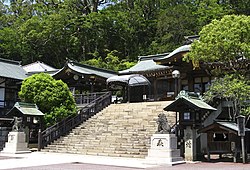
Megane Bridge Audio Guide

Nagasaki's twin-arched stone spectacles bridge over the Nakashima

Megane Bridge
Photo by LuxTonnerreWikimedia CommonsCC BY 2.0

6 min of listening · Section 1 of 5: Welcome to Megane Bridge

Prefer reading? The full guide is below

Here in person? Walk on with Mappu

This audio guide tells one place’s story. Walk Mode keeps going as you walk:

  • It knows where you are and talks about what’s in front of you, not only these chapters.
  • It takes you on to the next sight and follows what interests you.
  • Ask about anything you see, and it answers on the spot.
  • Your phone stays in your pocket.

A 2-hour live walk with Mappu, €4.99.

50 credits from the Starter pack. One-time purchase, no subscription.

Self-guided audio walk. No guide accompanies you. Not affiliated with the sites.

Keep exploring

Discover more places in Mappu.

Megane Bridge • Section 1 of 5

Megane Bridge: is there a free audio guide?

Quick answer. Yes. Mappu’s Megane Bridge audio guide (Nagasaki, Japan) is free in your browser: 5 sections and about 6 minutes of listening, in 8 languages. It covers “Megane Bridge and the Year 1634”, “A River That Fought Back at Megane Bridge” and “Strolling the Riverside Around Megane Bridge”. In the Mappu app, Walk Mode narrates the places around you as you move and answers your follow-up questions.

Megane Bridge map

Mappu's own map of the place, with the paths and entrances OpenStreetMap shows around it.

Megane Bridge mapThe place on the map, with the guide's point marked.

Megane Bridge: what does the audio guide cover?

  1. 01

    Welcome to Megane Bridge

    Welcome to Megane Bridge, one of the most photographed corners of Nagasaki. It spans the Nakashima River in the middle of the city. Its local name is 眼鏡橋, and it means spectacles bridge. The reason is easy to see once you stand on the bank. Two stone arches rise over the water, and each one meets its own reflection to form a full circle. Together the circles look like a pair of old-fashioned glasses. This audioguide tells the story of the bridge itself and of the river it crosses. We will look at how it was built, how the floods have tested it, and how people use the riverside today. Give yourself time to walk along the water, because the bridge is best enjoyed slowly, from a few different angles. There is a lot packed into this small stretch of river. It is one of the oldest stone arch bridges in Japan, a protected national cultural treasure, and a place where locals and visitors both come to stroll. Let's begin.

  2. 02

    Megane Bridge and the Year 1634

    The date to remember is 1634. That is when Megane Bridge was built, and it is celebrated as the oldest stone arch bridge in Japan. Tradition says it was raised by a monk named Mokusu Nyojo, who was the second head of Kofukuji Temple, one of the temples near this stretch of the river. That is the story as it has been handed down, and it ties the bridge to the temple world that grew up along the water. The bridge is modest in size, and that is part of its charm. It measures about 22 meters long and 3.65 meters wide. That is narrow enough that you could picture two neighbors stopping to chat in the middle of it. Despite its small scale, the bridge has been designated a national Important Cultural Property, which is a formal recognition of its place in Japanese heritage. It was also never the only one of its kind. More than 10 stone bridges were built across the Nakashima River as it runs through central Nagasaki, and Megane Bridge is the oldest of them. Think of the river as a gallery of stone bridges, with this one as the founding piece.

  3. 03

    A River That Fought Back at Megane Bridge

    The Nakashima River is gentle most of the time, but it has a history of flooding. Over the centuries its stone bridges have been washed away and rebuilt again and again. Megane Bridge has taken its share of the punishment too. The most dramatic chapter came with the Great Nagasaki Flood of 1982. The floodwaters brought down part of the bridge. What happened next is the heart of the story. The stones that had been swept downstream were gathered up and reused. The following year the bridge was restored to its original form. So when you look at the arches today, you are looking at a bridge that was put back together, in large part, from its own scattered pieces. That gives the bridge a second kind of meaning. It is a seventeenth century monument, and it is also a story of recovery. A city that cares about a bridge enough to hunt down its stones after a flood is a city that treasures its past.

  4. 04

    Strolling the Riverside Around Megane Bridge

    Now let's turn from the bridge to the river around it. The Nakashima River was once the central artery of Nagasaki, and its importance to trade is part of why so many stone bridges were built across it. Today it is a peaceful place for a stroll, with paths along the water and a blend of cultural influences that is typical of Nagasaki. Keep an eye on the stone walls along the riverbank. Heart-shaped stones are set into them, including around Megane Bridge. They are known as heart stones, and they have a reputation as a spot for luck in love. Spotting them is a little treasure hunt in itself. You may also notice stepping stones crossing the river, which let you get close to the water and look back at the arches. A short distance away stands Fukurobashi, believed to be the second oldest of the river's stone bridges. In winter, during the Nagasaki Lantern Festival, the area around Megane Bridge is decorated with lanterns, and the bridge takes on a completely different glow. Shinchi Chinatown is also close by, so the neighborhood invites you to keep wandering.

  5. 05

    Before You Head Off from Megane Bridge

    Before you move on, take one more look at the water. The perfect circle that gives Megane Bridge its name only appears when the arch and its reflection meet, so the view changes with the light and the mood of the river. See how it looks from the bank, from the stepping stones, and from the neighboring bridges along the Nakashima River. Then let your curiosity lead you. Walk upstream or downstream and count the stone bridges you pass. Compare their arches with the two you have just seen. Find Fukurobashi, look for the heart stones, and imagine the river as the busy artery it once was. Every bridge along this water has its own character, and this one is simply the oldest.

About this guide

AI-generated from 6 sources; reviewed for accuracy and last updated on October 31, 2026. Verify tickets and opening hours on the official site. Independent guide by Mappu. Not affiliated with or endorsed by the site or its managers.

Run a travel site or blog? Embed this audio guide for free.

Walk on from here

This place is stop 6 of 7 of a self-guided walk: Glover Garden to Suwa Shrine, Nagasaki. About 5.2 km and 70 minutes on foot, plus about 43 minutes of listening.

Route map: walking on from Megane Bridge7 numbered stops in walking order. Stop 1: Glover Garden; Stop 2: Ōura Church; Stop 3: Dejima; Stop 4: Nagasaki Shinchi Chinatown; Stop 5: Sōfuku-ji Temple; Stop 6: Megane Bridge; Stop 7: Suwa Shrine.Stop 1: Glover Garden1Stop 2: Ōura Church2Stop 3: Dejima3Stop 4: Nagasaki Shinchi Chinatown4Stop 5: Sōfuku-ji Temple5Stop 6: Megane Bridge6Stop 7: Suwa Shrine7
Distances are estimates along the walking route, from OpenStreetMap.

Indicative route. While you walk, watch where you're going, mind the traffic and follow local signs and rules. The map is an aid, not a safety guide. Terms

  1. Glover Garden

    about 0.2 km · about 3 min on foot

  2. Ōura Church

    about 1.4 km · about 19 min on foot

  3. Dejima

    about 0.4 km · about 6 min on foot

  4. Nagasaki Shinchi Chinatown

    about 1.1 km · about 14 min on foot

  5. Sōfuku-ji Temple

    about 1.0 km · about 13 min on foot

  6. Megane BridgeThis guide

    about 1.1 km · about 15 min on foot

  7. Suwa Shrine
Photo attribution

Walk Mode, in the free Mappu app: 2 hours for 50 credits (€4.99 Starter pack)

See the whole walk

Planning a trip to Nagasaki?

Get your plan

Mappu sketches your days free in the chat, no account needed. Then take the full plan with you:

  • Weekend trip, €9.99: Your day-by-day plan plus 2 live walks
  • Save your trip’s free guides on your phone in the Mappu app: they play with no signal
See the trip packs

Already going? The 2-hour live walk in Nagasaki is €4.99

Plan your trip on a map and get an audio guide for almost any place nearby: just tap it on the Mappu map.

Common questions

Megane Bridge: how long is the free audio guide?

About 6 minutes of listening in 5 sections: “Welcome to Megane Bridge”, “Megane Bridge and the Year 1634”, “A River That Fought Back at Megane Bridge”, “Strolling the Riverside Around Megane Bridge”, and “Before You Head Off from Megane Bridge”.

Megane Bridge: what can I ask Mappu after the guide?

You can ask follow-up questions such as “What is the story behind the monk traditionally credited with building Megane Bridge in 1634?” and keep asking in Mappu, with the guide connected to your map and trip plan.