Nagasaki Shinchi Chinatown Audio Guide

Nagasaki's Chinatown, built on a former warehouse island

Nagasaki Shinchi Chinatown
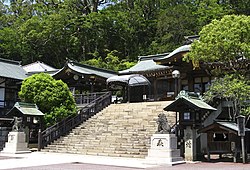
Photo by そらみみ (Soramimi)Wikimedia CommonsCC BY-SA 4.0

7 min of listening · Section 1 of 5: Welcome to Nagasaki Shinchi Chinatown

Prefer reading? The full guide is below

Here in person? Walk on with Mappu

This audio guide tells one place’s story. Walk Mode keeps going as you walk:

  • It knows where you are and talks about what’s in front of you, not only these chapters.
  • It takes you on to the next sight and follows what interests you.
  • Ask about anything you see, and it answers on the spot.
  • Your phone stays in your pocket.

A 2-hour live walk with Mappu, €4.99.

50 credits from the Starter pack. One-time purchase, no subscription.

Self-guided audio walk. No guide accompanies you. Not affiliated with the sites.

Keep exploring

Discover more places in Mappu.

Nagasaki Shinchi Chinatown • Section 1 of 5

Nagasaki Shinchi Chinatown: is there a free audio guide?

Quick answer. Yes. Mappu’s Nagasaki Shinchi Chinatown audio guide (Nagasaki, Japan) is free in your browser: 5 sections and about 7 minutes of listening, in 8 languages. It covers “Nagasaki Shinchi Chinatown: The Island Built After a Fire”, “Nagasaki Shinchi Chinatown: From Warehouses to a Community” and “Nagasaki Shinchi Chinatown: Gates, Lanterns and Flavors”. In the Mappu app, Walk Mode narrates the places around you as you move and answers your follow-up questions.

Nagasaki Shinchi Chinatown map

Mappu's own map of the place, with the paths and entrances OpenStreetMap shows around it.

Nagasaki Shinchi Chinatown mapThe place on the map, with the guide's point marked.

Nagasaki Shinchi Chinatown: what does the audio guide cover?

  1. 01

    Welcome to Nagasaki Shinchi Chinatown

    Welcome to Nagasaki Shinchi Chinatown, known in Japanese as 長崎新地中華街, in the Shinchi district of Nagasaki city. Together with Yokohama Chinatown and Kobe's Nankinmachi, it is counted among the three great Chinatowns of Japan. The story I'll tell you here is that of the whole Chinatown district and the ground it stands on, rather than of any single building. Here is the first surprise: this neighborhood was once the sea. In the Edo period it was an artificial rectangular island sticking out into Nagasaki harbor, built to store goods arriving on Chinese trading ships. Today it is joined to the mainland, and its two crossing streets add up to roughly 250 meters of paved lanes, lined with about 40 restaurants, sweet shops and shops selling Chinese goods. Over the next few stops we'll look at how a warehouse island turned into a living Chinatown, the colorful gates that mark its four entrances, and the festivals and flavors that bring it alive today. Look around as you listen: much of what you see has a reason behind it.

  2. 02

    Nagasaki Shinchi Chinatown: The Island Built After a Fire

    To understand this place, go back to the year 1698. Chinese ships arriving in Nagasaki unloaded their cargo into warehouses along the shore, in the districts of Gotomachi and Daikokumachi. That year a great fire destroyed those warehouses. The authorities decided it must never happen again. In front of the Chinese residential compound, the Tojin Yashiki, they reclaimed a patch of sea measuring 3,500 tsubo, a traditional Japanese unit of area. The work took three years, and the new island was completed in 1702. It was roughly rectangular, about 70 ken east to west and 50 ken north to south, and it held 12 buildings containing 60 storehouse units. Its purposes were practical: to make loading and unloading easier, to protect goods from fire and theft, and to prevent smuggling. People called it Shinchi, meaning new ground, and that is still the district's name. If you look at old paintings of Nagasaki harbor from the Edo period, you'll see the fan-shaped island of Dejima, and right beside it a plain rectangle jutting into the water. That rectangle is the ground beneath your feet.

  3. 03

    Nagasaki Shinchi Chinatown: From Warehouses to a Community

    The warehouse island's story changed with Japan's own. When Japan opened its ports to the world, Nagasaki lost its special position as the country's only trading port, and the Tojin Yashiki, the old Chinese quarter, fell out of use. The storehouses of Shinchi were abolished along with it. Chinese residents in Nagasaki began settling in the area near the harbor. Shinchi was brought into the foreign settlement, and Chinese merchants set up trading firms here one after another. In the Meiji, Taisho and Showa eras, others arrived by the Shanghai sea route looking for a new start in Nagasaki, much as happened in Yokohama and Kobe. That is how a place built to hold goods became a place where people lived and worked. Today the Chinatown is carried forward by descendants of Nagasaki's overseas Chinese community, families whose history runs alongside the city's own. Notice the contrast as you stroll: the main streets are lively, with larger shops, while the narrow side lanes known as uramachi are quiet, with small premises and few passersby.

  4. 04

    Nagasaki Shinchi Chinatown: Gates, Lanterns and Flavors

    Now look up at the four gates, one at each entrance on the east, west, south and north. They were completed in April of 1986 and were funded by the Chinatown shopkeepers' association, which hoped the district would grow to stand beside Yokohama and Kobe. The materials came from Fuzhou in China, the roof tiles are Chinese, and local craftsmen built them. The east, north and south gates are each 9 meters high and 9 meters wide, while the west gate is 9 meters high and 4 meters wide. The gates follow feng shui principles. On the reverse sides, guardian deities protect each entrance: the Azure Dragon in the east, the White Tiger in the west, the Black Tortoise, a turtle entwined with a snake, in the north, and the Vermilion Bird in the south. The calligraphy reading Nagasaki Shinchi Chinatown on the north gate was written by Wang Zhen, then honorary president of the China-Japan Friendship Association. The stone paving of the crossroads was laid with the cooperation of Fujian Province, a sister region of Nagasaki. The festivals are just as striking. The famous Nagasaki Lantern Festival began as the Spring Festival celebrations held by overseas Chinese here in Chinatown, and it now lights up the whole city each winter. During the Mid-Autumn Festival, yellow lanterns shaped like the full moon decorate the streets, since in China the full moon stands for family togetherness. And for food, the local favorites are champon noodle stew, sara udon, and kakuni manju, soft braised pork belly in a steamed bun.

  5. 05

    Before You Head Off from Nagasaki Shinchi Chinatown

    Before you wander on, take one more look at the ground itself. Everything around you stands where waves once lapped against a purpose-built island of storehouses, raised after a fire to keep a precious trade safe. Try walking from gate to gate and see whether you can match each guardian creature to its direction. Then step into one of the quieter back lanes and compare it with the bustle of the main crossroads. Each way of seeing the place tells a slightly different story. And if you ever return in winter, imagine the same streets under a canopy of glowing lanterns, the celebration that grew from this small community's own New Year traditions. There is plenty more to discover here, one bite, one gate and one lane at a time.

About this guide

AI-generated from 6 sources; reviewed for accuracy and last updated on October 31, 2026. Verify tickets and opening hours on the official site. Independent guide by Mappu. Not affiliated with or endorsed by the site or its managers.

Run a travel site or blog? Embed this audio guide for free.

Walk on from here

This place is stop 4 of 7 of a self-guided walk: Glover Garden to Suwa Shrine, Nagasaki. About 5.2 km and 70 minutes on foot, plus about 43 minutes of listening.

Route map: walking on from Nagasaki Shinchi Chinatown7 numbered stops in walking order. Stop 1: Glover Garden; Stop 2: Ōura Church; Stop 3: Dejima; Stop 4: Nagasaki Shinchi Chinatown; Stop 5: Sōfuku-ji Temple; Stop 6: Megane Bridge; Stop 7: Suwa Shrine.Stop 1: Glover Garden1Stop 2: Ōura Church2Stop 3: Dejima3Stop 4: Nagasaki Shinchi Chinatown4Stop 5: Sōfuku-ji Temple5Stop 6: Megane Bridge6Stop 7: Suwa Shrine7
Distances are estimates along the walking route, from OpenStreetMap.

Indicative route. While you walk, watch where you're going, mind the traffic and follow local signs and rules. The map is an aid, not a safety guide. Terms

  1. Glover Garden

    about 0.2 km · about 3 min on foot

  2. Ōura Church

    about 1.4 km · about 19 min on foot

  3. Dejima

    about 0.4 km · about 6 min on foot

  4. Nagasaki Shinchi ChinatownThis guide

    about 1.1 km · about 14 min on foot

  5. Sōfuku-ji Temple

    about 1.0 km · about 13 min on foot

  6. Megane Bridge

    about 1.1 km · about 15 min on foot

  7. Suwa Shrine
Photo attribution

Walk Mode, in the free Mappu app: 2 hours for 50 credits (€4.99 Starter pack)

See the whole walk

Planning a trip to Nagasaki?

Get your plan

Mappu sketches your days free in the chat, no account needed. Then take the full plan with you:

  • Weekend trip, €9.99: Your day-by-day plan plus 2 live walks
  • Save your trip’s free guides on your phone in the Mappu app: they play with no signal
See the trip packs

Already going? The 2-hour live walk in Nagasaki is €4.99

Plan your trip on a map and get an audio guide for almost any place nearby: just tap it on the Mappu map.

Common questions

Nagasaki Shinchi Chinatown: how long is the free audio guide?

About 7 minutes of listening in 5 sections: “Welcome to Nagasaki Shinchi Chinatown”, “Nagasaki Shinchi Chinatown: The Island Built After a Fire”, “Nagasaki Shinchi Chinatown: From Warehouses to a Community”, “Nagasaki Shinchi Chinatown: Gates, Lanterns and Flavors”, and “Before You Head Off from Nagasaki Shinchi Chinatown”.

Nagasaki Shinchi Chinatown: what can I ask Mappu after the guide?

You can ask follow-up questions such as “How did the fire of 1698 lead to the creation of the artificial island that became Shinchi?” and keep asking in Mappu, with the guide connected to your map and trip plan.