Asakusa Shrine Audio Guide

The Shrine of the Three Gods beside the main hall of Sensō-ji

Asakusa Shrine
Photo by KakidaiWikimedia CommonsCC BY-SA 3.0

5 min of listening · Section 1 of 5: Welcome to Asakusa Shrine

Prefer reading? The full guide is below

Here in person? Walk on with Mappu

This audio guide tells one place’s story. Walk Mode keeps going as you walk:

  • It knows where you are and talks about what’s in front of you, not only these chapters.
  • It takes you on to the next sight and follows what interests you.
  • Ask about anything you see, and it answers on the spot.
  • Your phone stays in your pocket.

A 2-hour live walk with Mappu, €4.99.

50 credits from the Starter pack. One-time purchase, no subscription.

Self-guided audio walk. No guide accompanies you. Not affiliated with the sites.

Keep exploring

Discover more places in Mappu.

Asakusa Shrine • Section 1 of 5

Asakusa Shrine: is there a free audio guide?

Quick answer. Yes. Mappu’s Asakusa Shrine audio guide (Tokyo, Japan) is free in your browser: 5 sections and about 5 minutes of listening, in 8 languages. It covers “Sanja-sama: The Shrine of the Three Gods”, “A Shogun's Building That Outlasted a War” and “Grounds, Pond and Hillside Stones”. In the Mappu app, Walk Mode narrates the places around you as you move and answers your follow-up questions.

Asakusa Shrine map

Mappu's own map of the place, with the paths and entrances OpenStreetMap shows around it.

Asakusa Shrine mapThe place on the map, with the guide's point marked.

Asakusa Shrine: what does the audio guide cover?

  1. 01

    Welcome to Asakusa Shrine

    Welcome to Asakusa Shrine, known in Japanese as 浅草神社, a Shinto shrine in the Asakusa district of Tokyo. Most visitors arrive here for the great temple next door, Sensō-ji, and many walk straight past this quieter neighbor. That would be a pity, because this shrine is one of the most famous in the city and has a remarkable story. You will find it right beside the main hall of Sensō-ji, the temple many travelers know for its Kaminarimon gate and enormous red lantern. The shrine's address is the second district of Asakusa, in Taitō ward. Taitō is the smallest of Tokyo's wards by area, only 10.11 square kilometers, yet it holds an astonishing amount of history. Over the next few minutes we will look at who is honored here, how this building survived a war that flattened its surroundings, and what to look for in the grounds. Let's step in.

  2. 02

    Sanja-sama: The Shrine of the Three Gods

    Locals rarely say the full name of Asakusa Shrine. They call it Sanja-sama, which means the Shrine of the Three Gods. The name tells you exactly who is honored here: the three men who founded the neighboring Sensō-ji. That makes this shrine something like a thank-you note in wood and lacquer. The three deities enshrined here are local figures who contributed to the construction of Sensō-ji, so the temple's founders are remembered right beside it. In Japan, Shinto shrines and Buddhist temples have long stood side by side, and this pairing is a lovely example. The shrine's earliest origins are hazy. It grew from a smaller sanctuary called Sanja Gongen-sha, and its exact founding date is unknown. It is believed to go back to the late Heian period or the early Kamakura period, or perhaps somewhat later. So when you stand here, you are in front of a very old act of remembrance, even if the present building is younger.

  3. 03

    A Shogun's Building That Outlasted a War

    The main building you see today dates to 1649, in the Edo period. It was commissioned by Tokugawa Iemitsu, the third Tokugawa shogun, which tells you how much importance the ruling family placed on this corner of Asakusa. It is built in the gongen-zukuri style, an architectural form associated with Japanese shrines and one of the more elaborate ones. The style joins the worship hall and the inner sanctuary under a single roof structure, and it often comes with rich decoration. Now for the surprising part. In the Tokyo air raids of 1945, most of the area burned, and Sensō-ji itself was lost. Yet this shrine, along with the nearby Nitenmon gate of Sensō-ji, came through. They were the only two buildings in the area to survive World War II. That long history earned the shrine its designation as an Important Cultural Property by the Japanese government in 1951. So the wood in front of you has seen the whole arc, from a shogun's commission to wartime fire and postwar protection.

  4. 04

    Grounds, Pond and Hillside Stones

    Take your time in the grounds, because the details reward a slow walk. There is a pond where water bubbles up and colorful koi swim lazily, and its edge is formed of rugged volcanic lava rocks. It is a small scene, yet very calming after the crowds nearby. Behind the pond a hill rises, and on it stands a group of stone monuments. Some are engraved with words such as Naritasan, and among them you will find stone Buddha statues. They reflect a deep history of faith and culture in this spot, where different devotions have gathered over generations. Asakusa itself is also famous for its festivals. One of the best known, the Sanja Matsuri, takes its name from the same three, the honored ones of this shrine. Asakusa was once a ward of its own, until 1947, when it merged with Shitaya to form modern Taitō. It remains a classic Shitamachi neighborhood, historically home to artisans, fishermen, sailors and merchants.

  5. 05

    Before You Head Off

    As you leave Asakusa Shrine, look back at it once more and picture the neighborhood as it was in 1945, when so much around it was gone. This quiet building is a rare, direct link to the Edo period in a district that has been rebuilt many times. From here, it is only a few steps to the main hall of Sensō-ji and to Nitenmon, the gate that shared the shrine's escape from the flames. Seeing all three in one walk lets you trace a story that spans a shogun's commission, three founders remembered, and a city that kept going. And there is more to wander into. The nearby streets of Asakusa, with their old Shitamachi character, invite you to keep asking how a neighborhood of craftspeople and merchants became one of Tokyo's most beloved corners.

About this guide

AI-generated from 6 sources; reviewed for accuracy and last updated on October 31, 2026. Verify tickets and opening hours on the official site. Independent guide by Mappu. Not affiliated with or endorsed by the site or its managers.

Run a travel site or blog? Embed this audio guide for free.

Walk on from here

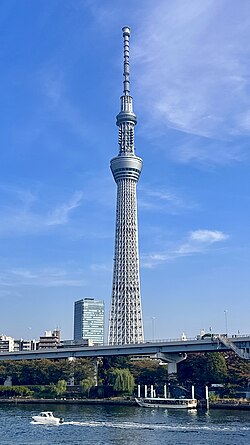
This place is stop 2 of 3 of a self-guided walk: Senso-ji to Tokyo Skytree, Tokyo. About 1.9 km and 25 minutes on foot, plus about 18 minutes of listening.

Route map: walking on from Asakusa Shrine3 numbered stops in walking order. Stop 1: Senso-ji; Stop 2: Asakusa Shrine; Stop 3: Tokyo Skytree.Stop 1: Senso-ji1Stop 2: Asakusa Shrine2Stop 3: Tokyo Skytree3
Distances are estimates along the walking route, from OpenStreetMap.

Indicative route. While you walk, watch where you're going, mind the traffic and follow local signs and rules. The map is an aid, not a safety guide. Terms

  1. Senso-ji

    about 0.2 km · about 2 min on foot

  2. Asakusa ShrineThis guide

    about 1.7 km · about 23 min on foot

  3. Tokyo Skytree
Photo attribution

Walk Mode, in the free Mappu app: 2 hours for 50 credits (€4.99 Starter pack)

See the whole walk

Planning a trip to Tokyo?

Get your plan

Mappu sketches your days free in the chat, no account needed. Then take the full plan with you:

  • Weekend trip, €9.99: Your day-by-day plan plus 2 live walks
  • Save your trip’s free guides on your phone in the Mappu app: they play with no signal
See the trip packs

Already going? The 2-hour live walk in Tokyo is €4.99

Plan your trip

Photo attribution
  • Tokyo 3-Day Itinerary: Alex
  • Japan First Trip 10-Day Itinerary: Stefan K

Plan your trip on a map and get an audio guide for almost any place nearby: just tap it on the Mappu map.

Common questions

Asakusa Shrine: how long is the free audio guide?

About 5 minutes of listening in 5 sections: “Welcome to Asakusa Shrine”, “Sanja-sama: The Shrine of the Three Gods”, “A Shogun's Building That Outlasted a War”, “Grounds, Pond and Hillside Stones”, and “Before You Head Off”.

Asakusa Shrine: what can I ask Mappu after the guide?

You can ask follow-up questions such as “Why is Asakusa Shrine called Sanja-sama, and who is honored there?” and keep asking in Mappu, with the guide connected to your map and trip plan.