


Ueno: how long is the free audio guide?
About 6 minutes of listening in 5 sections: “Welcome to Ueno”, “From Temple Ground to Public Park”, “How Ueno Became a Museum Mecca”, “The Station, Shitamachi and Street Life”, and “Before You Head Off”.
Temple town, railway gateway and Tokyo's cultural heart

Quick answer. Yes. Mappu’s Ueno audio guide (Tokyo, Japan) is free in your browser: 5 sections and about 6 minutes of listening, in 8 languages. It covers “From Temple Ground to Public Park”, “How Ueno Became a Museum Mecca” and “The Station, Shitamachi and Street Life”. In the Mappu app, Walk Mode narrates the places around you as you move and answers your follow-up questions.
Mappu's own map of the place, with the paths and entrances OpenStreetMap shows around it.
Welcome to Ueno, in the Taito area of northern central Tokyo. This guide tells the story of the whole district, from the big railway station to the park beside it, rather than of one single building, so think of it as a walk through a neighborhood with many layers. Ueno is one of those places where a single afternoon can take you from a centuries-old temple precinct to a world-class museum, then to a crowded market street and a zoo famous for its pandas. It began to flourish as a temple town in the early seventeenth century, when Tokyo was still called Edo. Today it is one of the city's great cultural centers, with a cluster of national museums, a university of the arts, a library and a concert hall. The easiest way in is the station. The Japan Railways Yamanote loop line stops here, four stops from Tokyo Station, and the station has a dedicated Park Exit. Step out of it, and the park is right across the street. Let's begin there, with the story of how a temple town became a cultural capital.
Before there was a park, there was Kaneiji. The heart of Ueno was once a vast temple site tied to the Tokugawa shogun families, and the temple town that grew around it gave the district its first great flourish in the early seventeenth century. Then the Edo shogunate ended, in the middle of the nineteenth century, and the story turned. Much of the old temple ground became a public park, known as Ueno Onshi Koen, or simply Ueno Park. That change set the direction for everything that followed. Yet the past never fully left. Temples and shrines still dot the area around the park, and among them stands the historic Ueno Toshogu Shrine. Near Shinobazu Pond you will also find Bentendo Hall. As you wander, notice how a quiet shrine path can sit just steps from a busy museum plaza. That contrast is Ueno's signature.
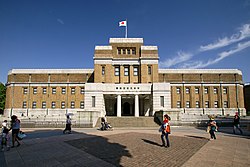
Here is a story of ambition. In the Meiji era, a plan took shape for a comprehensive institution with galleries devoted to history, art, natural history and industry, together with its own zoo, botanical garden and library. That blueprint put Ueno on the road to becoming Tokyo's cultural hub. Over time the park gained a zoo, a museum, an art school, a library and a music hall. Today the park holds some of the city's best-known museums. Among them are the Tokyo National Museum, the National Museum of Science and Nature, the Tokyo Metropolitan Art Museum, the Ueno Royal Museum and the Shitamachi Museum. One building stands out for its pedigree. The National Museum of Western Art was designed by Le Corbusier, the Swiss-French master of modern architecture, and it was registered as a World Heritage Site in 2016. Look for the canopy at the entrance, the spacing of the vertical window frames and the materials, which echo his style. The museum is a reminder that Ueno was the hub of Japan's postwar cultural renaissance.
Ueno was never only about art. When the railway station opened in 1883, it became a gateway for people from northern Japan, many of whom stepped off the train to begin a new life in Tokyo. The new line opened the capital's doors to the north and made Ueno one of the busiest stations in the country. The district grew quickly, drawing shops and restaurants. That working-city spirit is part of what Tokyoites call shitamachi, the old downtown. The word describes the area of craftsmen, fishermen, sailors and tradespersons who lived here, and the Shitamachi Museum in the park helps you feel that local culture, much of which survives today. To taste it, walk the busy streets around the station, and be sure to find Ame-Yoko. From inside the park, through Ame-Yoko, it is about 1.2 kilometers on foot to Akihabara, the electronics district turned home of anime, manga and games. The change of scene is so complete that it hardly seems the same city.
Ueno rewards people who slow down. If you come in spring, you are in luck, because the park's cherry blossoms are what it is most famous for. Beyond the blossoms, there are pandas at Ueno Zoo and the calm water of Shinobazu Pond, a very special corner of the park. If you are arriving from the airport, the Keisei Skyliner runs from Narita Airport, and bullet trains reach Ueno from northern and western Japan. Before you move on, try one thing. Pick a single doorway, whether a shrine gate, a museum entrance or a market lane, and look at what is directly behind it. Then ask yourself which era you have just walked into. Another time, you could stroll to Yanaka, the lovely old neighborhood next door, by walking through Yanaka Cemetery from Nippori Station to Ueno Park, about 20 minutes. Ueno has more stories than any single visit can hold.
AI-generated from 6 sources; checked automatically and last updated on October 31, 2026. Verify tickets and opening hours on the official site. Independent guide by Mappu. Not affiliated with or endorsed by the site or its managers.
The nearest places with a Mappu audio guide, in walking order: about 1.8 km and 25 minutes on foot in all.
Indicative route. While you walk, watch where you're going, mind the traffic and follow local signs and rules. The map is an aid, not a safety guide. Terms

UenoThis guide
about 0.3 km · about 4 min on foot
 National Museum of Western Art
about 0.2 km · about 2 min on foot
 National Museum of Nature and Science
about 0.9 km · about 12 min on foot
 Ueno Park
about 0.5 km · about 7 min on foot
 Ameya-Yokochō
Walk Mode, in the free Mappu app: 2 hours for 50 credits (€4.99 Starter pack)
Planning a trip to Tokyo?
Mappu sketches your days free in the chat, no account needed. Then take the full plan with you:
 National Museum of Western Art Tokyo
 National Museum of Nature and Science Tokyo
 Ameya-Yokochō Tokyo
 Ueno Park Tokyo
 Ueno Tōshō-gū Shrine Tokyo
 Tokyo National Museum Tokyo
Plan your trip on a map and get an audio guide for almost any place nearby: just tap it on the Mappu map.
About 6 minutes of listening in 5 sections: “Welcome to Ueno”, “From Temple Ground to Public Park”, “How Ueno Became a Museum Mecca”, “The Station, Shitamachi and Street Life”, and “Before You Head Off”.
You can ask follow-up questions such as “How did the old Kaneiji temple grounds turn into Ueno Park after the Edo shogunate ended?” and keep asking in Mappu, with the guide connected to your map and trip plan.