Yokohama Chinatown Audio Guide

A harbor town's reclaimed fields that became the largest Chinatown in Japan

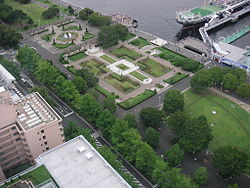
Yokohama Chinatown
Photo by WpcpeyWikimedia CommonsCC BY-SA 4.0

6 min of listening · Section 1 of 5: Welcome to Yokohama Chinatown

Prefer reading? The full guide is below

Here in person? Walk on with Mappu

This audio guide tells one place’s story. Walk Mode keeps going as you walk:

  • It knows where you are and talks about what’s in front of you, not only these chapters.
  • It takes you on to the next sight and follows what interests you.
  • Ask about anything you see, and it answers on the spot.
  • Your phone stays in your pocket.

A 2-hour live walk with Mappu, €4.99.

50 credits from the Starter pack. One-time purchase, no subscription.

Self-guided audio walk. No guide accompanies you. Not affiliated with the sites.

Keep exploring

Discover more places in Mappu.

Yokohama Chinatown • Section 1 of 5

Yokohama Chinatown: is there a free audio guide?

Quick answer. Yes. Mappu’s Yokohama Chinatown audio guide (Yokohama, Japan) is free in your browser: 5 sections and about 6 minutes of listening, in 8 languages. It covers “Yokohama Chinatown: From Rice Paddies to Port Settlement”, “Yokohama Chinatown: Go-Betweens, Craftsmen and Temples” and “Yokohama Chinatown: Disaster, Rebuilding and the Gate That Named a Street”. In the Mappu app, Walk Mode narrates the places around you as you move and answers your follow-up questions.

Yokohama Chinatown map

Mappu's own map of the place, with the paths and entrances OpenStreetMap shows around it.

Yokohama Chinatown mapThe place on the map, with the guide's point marked.

Yokohama Chinatown: what does the audio guide cover?

  1. 01

    Welcome to Yokohama Chinatown

    Welcome to Yokohama Chinatown, known in Japanese as 横浜中華街. You are in Yamashitacho, in Naka Ward, in the city of Yokohama in Kanagawa Prefecture. This is the largest Chinatown in Japan and the largest in East Asia, and if you count back to its forerunner, the Yokohama Shinden settlement of 1866, its story stretches over a hundred and fifty years. Here is the twist to keep in your pocket as you walk. The ground under your feet was not always a bustling street of restaurants. It began as reclaimed land, and the narrow lanes you wander today follow the line of old field paths. Over the next few stops we will trace how a patch of former paddy land became a community, a harbor-town crossroads, and a place that had to rebuild itself more than once. If you are arriving by train, Ishikawacho Station on the Keihin-Tohoku and Negishi Line carries the secondary name Motomachi and Chinatown, and Kannai Station is also among the stations serving the area. Take your time, look up at the gates, and let the street tell its own story.

  2. 02

    Yokohama Chinatown: From Rice Paddies to Port Settlement

    Before Yokohama was a famous port, it was a village on a long, thin sandbar, about one and a half kilometers long and some 300 meters wide, reaching out from the Yamate plateau. Behind that sandbar lay an inlet. During the Edo period, people reclaimed such inlets as new fields, and in 1796 one of those reclamations, called Yokohama Shinden, took shape near the root of the sandbar. That is the land Yokohama Chinatown now stands on. Then came July the first, 1859, the day Japan opened this port to the world. By 1861, the area had been laid out as a proper urban district. Because it grew out of rice paddies, it was nicknamed the swamp settlement. The prime waterfront, called Kaigandori, was the place to be, and the Chinese who arrived here found conditions in the marshy district far less favorable, so they gathered there. The layout still whispers about this past. The streets now called Nanmon Silk Road, Kaiko-do and Chōan-do are said to be remnants of the old paths that ran between the paddies. So when you turn a corner here, you may be following the edge of a vanished field.

  3. 03

    Yokohama Chinatown: Go-Betweens, Craftsmen and Temples

    When the port opened, Western merchants did not speak Japanese, and Japanese merchants knew little about Western languages or business. Chinese people who had worked in Western trading houses in Hong Kong, Guangdong and Shanghai could speak Western languages, and they could also communicate with Japanese people by writing in Chinese characters. So they became the go-betweens in the trade of raw silk and tea. Many of Yokohama's overseas Chinese came from Guangdong, a region with a long tradition of sending people abroad, and that is why Cantonese cooking is still so common here. They also traded in seafood: abalone and kelp from Hokkaido went to Hong Kong, and sugar came in from Taiwan. Beyond trade and restaurants, they worked in what were then cutting-edge fields: building Western-style houses, painting, making Western furniture and pianos, printing in European languages, and Western-style tailoring. Japanese residents lived nearby from early on, and new skills passed between the communities. The community also built a temple to Guan Yu, called Kanteibyo, and a Chinese cemetery with a shrine to the earth deity, called Jizoo-byo, along with festivals such as Qingming, the birthday of Guan Di, and the Spring Festival. And a phrase you may hear is the three blades: tailoring, barbering and cooking, the classic trades of Yokohama's Chinese community.

  4. 04

    Yokohama Chinatown: Disaster, Rebuilding and the Gate That Named a Street

    This neighborhood's history includes hard chapters. In the Great Kanto Earthquake of 1923, major community buildings here collapsed, including the Chinese consulate, schools and the Guan Di temple. Of roughly 5,700 Chinese residents of Yokohama, about 1,700 are estimated to have died, a death rate near 30 percent, compared with about 6 percent for the city overall. Violence by vigilante groups against Chinese residents also occurred in the aftermath, and an army unit was sent to nearby Shinyamashita to protect them. More than forty Chinese people from Kobe came to help, and over about a month they recovered 982 bodies, which were cremated and buried at the Chinese cemetery. In 1945, the district was burned flat, yet the roughly 1,900 overseas Chinese living here began rebuilding almost at once. In 1946 they had already rebuilt the Guan Di temple and the Yokohama Chinese school. In 1955 they raised the gate called Zenrinmon, with the name Chinatown carved on it, a name that settled the many older nicknames, such as Tojingai and Nankinmachi. The postwar years brought a black market, bars serving foreign soldiers during the Korean War, and a street beside the temple that American soldiers nicknamed Happy Avenue. Later the community was strained by the split between the two Chinas. Then growth in the high-economic-growth years and the gourmet boom made it a signature tourist destination.

  5. 05

    Before You Head Off from Yokohama Chinatown

    Yokohama Chinatown keeps reinventing itself. In the bubble years, buildings were renovated and raised higher, and the opening of the Bayshore Route and the Yokohama Bay Bridge in 1989 brought even more visitors. After the bubble burst, many long-established restaurants closed, and newcomers took over businesses or opened new shops. In 1993 an association of Chinatown community groups was formed, and it set about building new gates and improving the streets. So as you go on, try reading the neighborhood like a layered map. Notice the gates and what they announce. Notice how the streets bend, and ask yourself whether you are following the line of an old field path. Look for the small clues of the trades that once defined this community. There is much more to find: the stories behind the lanes, the temple, the old restaurants. Wander without a plan for a while, and see which story catches you first.

About this guide

AI-generated from 6 sources; checked automatically and last updated on October 31, 2026. Verify tickets and opening hours on the official site. Independent guide by Mappu. Not affiliated with or endorsed by the site or its managers.

Run a travel site or blog? Embed this audio guide for free.

Walk on from here

This place is stop 4 of 4 of a self-guided walk: Yamashita Park to Chinatown, Yokohama. About 1.2 km and 15 minutes on foot, plus about 23 minutes of listening.

Route map: walking on from Yokohama Chinatown4 numbered stops in walking order. Stop 1: Yamashita Park; Stop 2: Yokohama Marine Tower; Stop 3: Ma Zhu Temple; Stop 4: Yokohama Chinatown.Stop 1: Yamashita Park1Stop 2: Yokohama Marine Tower2Stop 3: Ma Zhu Temple3Stop 4: Yokohama Chinatown4
Distances are estimates along the walking route, from OpenStreetMap.

Indicative route. While you walk, watch where you're going, mind the traffic and follow local signs and rules. The map is an aid, not a safety guide. Terms

  1. Yamashita Park

    about 0.4 km · about 5 min on foot

  2. Yokohama Marine Tower

    about 0.6 km · about 8 min on foot

  3. Ma Zhu Temple

    about 0.2 km · about 3 min on foot

  4. Yokohama ChinatownThis guide

Photo attribution

Walk Mode, in the free Mappu app: 2 hours for 50 credits (€4.99 Starter pack)

See the whole walk

Planning a trip to Yokohama?

Get your plan

Mappu sketches your days free in the chat, no account needed. Then take the full plan with you:

  • Weekend trip, €9.99: Your day-by-day plan plus 2 live walks
  • Save your trip’s free guides on your phone in the Mappu app: they play with no signal
See the trip packs

Already going? The 2-hour live walk in Yokohama is €4.99

Plan your trip on a map and get an audio guide for almost any place nearby: just tap it on the Mappu map.

Common questions

Yokohama Chinatown: how long is the free audio guide?

About 6 minutes of listening in 5 sections: “Welcome to Yokohama Chinatown”, “Yokohama Chinatown: From Rice Paddies to Port Settlement”, “Yokohama Chinatown: Go-Betweens, Craftsmen and Temples”, “Yokohama Chinatown: Disaster, Rebuilding and the Gate That Named a Street”, and “Before You Head Off from Yokohama Chinatown”.

Yokohama Chinatown: what can I ask Mappu after the guide?

You can ask follow-up questions such as “How do the streets of Yokohama Chinatown still reflect the old field paths of Yokohama Shinden?” and keep asking in Mappu, with the guide connected to your map and trip plan.