Engaku-ji Audio Guide

Audio guide for Engaku-ji

Engaku-ji
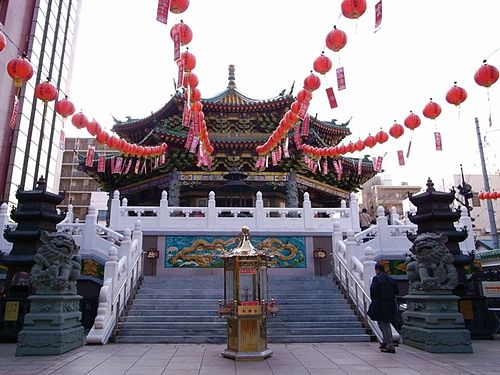
Photo by Fg2Wikimedia CommonsPublic domain

6 min of listening · Section 1 of 5: Welcome to Engaku Temple

Prefer reading? The full guide is below

Here in person? Walk on with Mappu

This audio guide tells one place’s story. Walk Mode keeps going as you walk:

  • It knows where you are and talks about what’s in front of you, not only these chapters.
  • It takes you on to the next sight and follows what interests you.
  • Ask about anything you see, and it answers on the spot.
  • Your phone stays in your pocket.

A 2-hour live walk with Mappu, €4.99.

50 credits from the Starter pack. One-time purchase, no subscription.

Self-guided audio walk. No guide accompanies you. Not affiliated with the sites.

Keep exploring

Discover more places in Mappu.

Engaku-ji • Section 1 of 5

Engaku-ji: is there a free audio guide?

Quick answer. Yes. Mappu’s Engaku-ji audio guide (Kamakura, Japan) is free in your browser: 5 sections and about 6 minutes of listening, in 8 languages. It covers “Engaku Temple: A Temple Born from Grief”, “Engaku Temple: Architecture in the Chinese Zen Style” and “Engaku Temple: The Great Bell”. In the Mappu app, Walk Mode narrates the places around you as you move and answers your follow-up questions.

Engaku-ji map

Mappu's own map of the place, with the paths and entrances OpenStreetMap shows around it.

Engaku-ji mapThe place on the map, with the guide's point marked.

Engaku-ji: what does the audio guide cover?

  1. 01

    Welcome to Engaku Temple

    Engaku-ji: His teachings were inherited by the Zen master Muso Soseki, who went on to influence Japanese culture and the arts profoundly.

    Welcome to Engaku Temple, known in Japanese as 円覚寺, one of the most important Zen Buddhist temple complexes in Japan. You are in Kita-Kamakura, the quiet northern part of Kamakura in Kanagawa Prefecture, south of Tokyo. The temple is ranked second among Kamakura's Five Mountains, the five Zen temples that were given special rank under the Kamakura shogunate. Here is a detail that sets the scene. Engaku Temple sits right beside Kita-Kamakura Station on the Yokosuka Line, so close that the railway tracks cut across the formal entrance to the grounds. You walk along a path beside a pond and cross a small bridge, and in just a few steps the everyday world is left behind. In the next few minutes we will look at why this temple was founded, how its buildings and its famous bell carry a Chinese-inspired style, and how Zen took root here. Take a slow breath, and let's begin.

  2. 02

    Engaku Temple: A Temple Born from Grief

    Engaku-ji: The temple complex is arranged in a straight line, reflecting the orderly simplicity of Zen.

    Engaku Temple was founded in 1282, in the Kamakura period, by Hojo Tokimune, the regent of the Kamakura shogunate. It was founded to console the soldiers who died on both sides in the two Mongol invasions, the conflicts known in Japan as the Bun'ei and Koan campaigns. So the temple began as an act of remembrance, not of triumph. Tokimune invited a Chinese monk from Song dynasty China, Mugaku Sogen, to serve as the founding abbot. His teachings were inherited by the Zen master Muso Soseki, who went on to influence Japanese culture and the arts profoundly. The temple belongs to the Rinzai school of Zen and is the head temple of the Engaku-ji branch of that school. The temple's full name, Zuirokusan Engaku Kosho Zenji, carries a story of its own. It refers to the auspicious appearance of a white deer during the founding ceremony. Take the name literally, and you can almost picture that moment in the hills around you.

  3. 03

    Engaku Temple: Architecture in the Chinese Zen Style

    Engaku-ji: It was made by order of Hojo Sadatoki, who lived from 1271 to 1311, after he had confined himself in the Benzaiten shrine on Enoshima.

    The buildings here follow a style that came to Japan from China during the Kamakura period. It is called kara-yo, meaning Chinese style, or Zenshu-yo, meaning Zen sect style, and its look is close to the architecture of the Song dynasty. Engaku Temple keeps the classical design of a Japanese Zen monastery. One striking feature is the layout. The temple complex is arranged in a straight line, reflecting the orderly simplicity of Zen. As you move along it, you pass the Sanmon Gate, which symbolizes the Three Gates of Liberation and is an Important Cultural Property of Kanagawa Prefecture. Walking through it is a little like stepping through a threshold of the mind as well as of the grounds. Further along stands the Shariden, a reliquary hall and one of the temple's two National Treasures. The other is the Great Bell. Between them, these two treasures make Engaku Temple one of the most celebrated Zen sites in Kamakura.

  4. 04

    Engaku Temple: The Great Bell

    Engaku-ji: Kencho-ji ranks first, followed by Engaku Temple, then Jufukuji, Jochiji, and Jomyoji.

    Now listen for the Great Bell, called the Ogane. It was cast by Mononobe Kunimitsu in August 1301, and at 2.6 meters tall it is the largest of all the many temple bells of Kamakura, and in fact the largest in the Kanto region. It was made by order of Hojo Sadatoki, who lived from 1271 to 1311, after he had confined himself in the Benzaiten shrine on Enoshima. The bell is a National Treasure. Only two bells in Kanagawa Prefecture hold that designation in the category of crafts, this one and the bell at Kencho-ji, and they are also the only ones from the Kamakura period. Together with the bell at Jorakuji, the oldest in the city, they are counted among the Three Famed Bells of Kamakura. In the belfry there is also a waniguchi gong from 1540, which is designated an Important Cultural Property. A waniguchi is a flat hanging gong, and it adds a second, older voice to the place.

  5. 05

    Before You Head Off

    Engaku Temple is one of the 22 historic sites included in Kamakura's proposal for inclusion on UNESCO's World Heritage list, and it still functions as a center for Zen practice. That mix of living tradition and historic architecture is part of its appeal. As you wander, notice how the straight line of the complex leads your eye onward, and how the nature around it softens the geometry. A one-minute walk from the station brought you here, and you can carry that contrast with you. If your curiosity is still awake, think about the other Kamakura Five Mountains. Kencho-ji ranks first, followed by Engaku Temple, then Jufukuji, Jochiji, and Jomyoji. Each one has its own story waiting to be discovered.

About this guide

AI-generated from 6 sources; checked automatically and last updated on October 31, 2026. Verify tickets and opening hours on the official site. Independent guide by Mappu. Not affiliated with or endorsed by the site or its managers.

Run a travel site or blog? Embed this audio guide for free.

Walk on from here

This place is stop 3 of 3 of a self-guided walk: Kencho-ji to Engaku-ji, Kamakura. About 1.7 km and 25 minutes on foot, plus about 18 minutes of listening.

Route map: walking on from Engaku-ji3 numbered stops in walking order. Stop 1: Kenchō-ji; Stop 2: Tōkei-ji; Stop 3: Engaku-ji.Stop 1: Kenchō-ji1Stop 2: Tōkei-ji2Stop 3: Engaku-ji3
Distances are estimates along the walking route, from OpenStreetMap.

Indicative route. While you walk, watch where you're going, mind the traffic and follow local signs and rules. The map is an aid, not a safety guide. Terms

  1. Kenchō-ji

    about 1.2 km · about 16 min on foot

  2. Tōkei-ji

    about 0.5 km · about 7 min on foot

  3. Engaku-jiThis guide

Photo attribution

Walk Mode, in the free Mappu app: 2 hours for 50 credits (€4.99 Starter pack)

See the whole walk

Planning a trip to Kamakura?

Get your plan

Mappu sketches your days free in the chat, no account needed. Then take the full plan with you:

  • Weekend trip, €9.99: Your day-by-day plan plus 2 live walks
  • Save your trip’s free guides on your phone in the Mappu app: they play with no signal
See the trip packs

Already going? The 2-hour live walk in Kamakura is €4.99

Plan your trip on a map and get an audio guide for almost any place nearby: just tap it on the Mappu map.

Common questions

Engaku-ji: how long is the free audio guide?

About 6 minutes of listening in 5 sections: “Welcome to Engaku Temple”, “Engaku Temple: A Temple Born from Grief”, “Engaku Temple: Architecture in the Chinese Zen Style”, “Engaku Temple: The Great Bell”, and “Before You Head Off”.

Engaku-ji: what can I ask Mappu after the guide?

You can ask follow-up questions such as “Why did Hojo Tokimune found Engaku Temple, and who was the Chinese monk he invited to lead it?” and keep asking in Mappu, with the guide connected to your map and trip plan.