Kenchō-ji Audio Guide

Kamakura's first Zen training monastery

Kenchō-ji
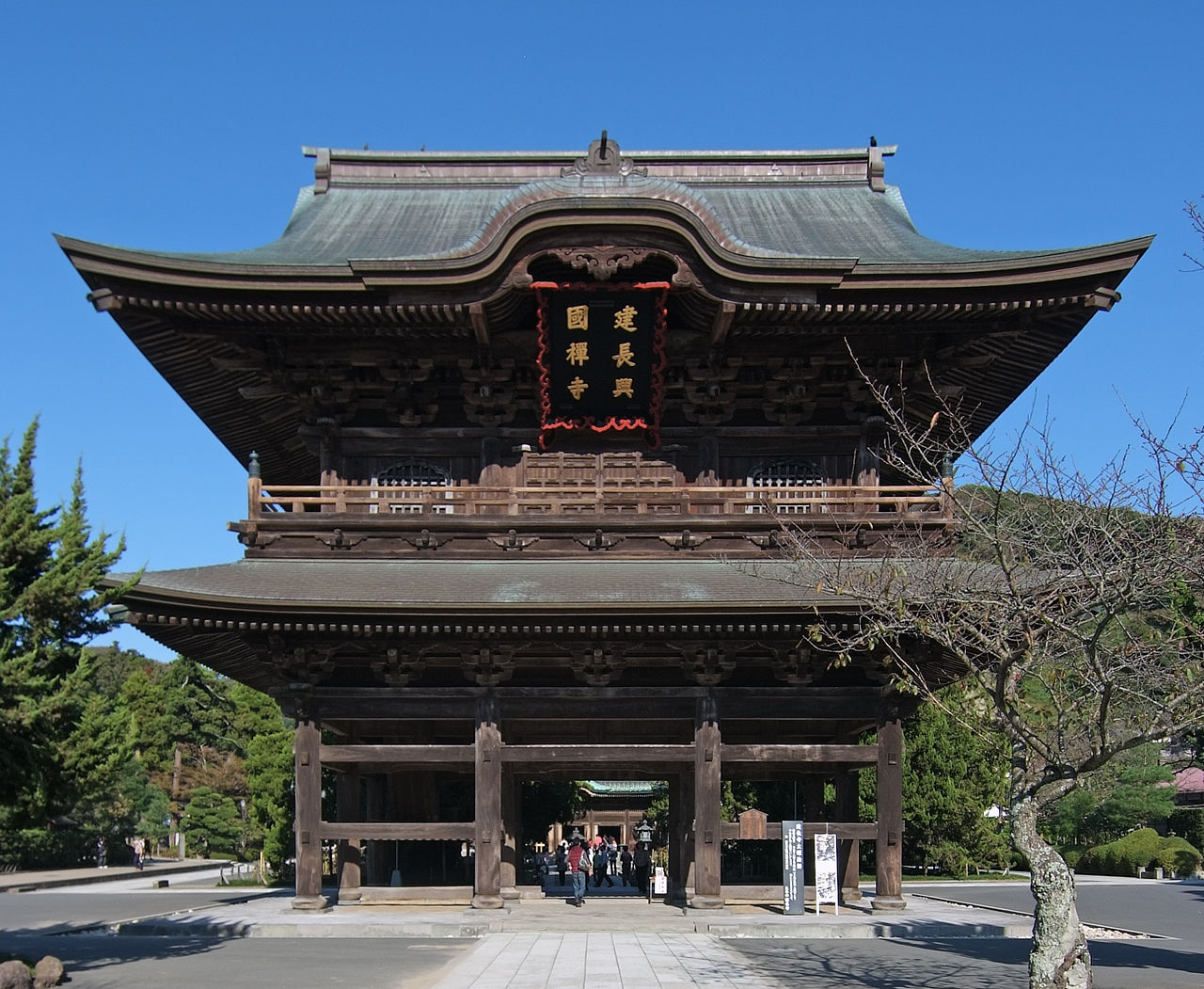
Photo by WiiiiWikimedia CommonsCC BY-SA 3.0

6 min of listening · Section 1 of 5: Welcome to Kenchō-ji

Prefer reading? The full guide is below

Here in person? Walk on with Mappu

This audio guide tells one place’s story. Walk Mode keeps going as you walk:

  • It knows where you are and talks about what’s in front of you, not only these chapters.
  • It takes you on to the next sight and follows what interests you.
  • Ask about anything you see, and it answers on the spot.
  • Your phone stays in your pocket.

A 2-hour live walk with Mappu, €4.99.

50 credits from the Starter pack. One-time purchase, no subscription.

Self-guided audio walk. No guide accompanies you. Not affiliated with the sites.

Keep exploring

Discover more places in Mappu.

Kenchō-ji • Section 1 of 5

Kenchō-ji: is there a free audio guide?

Quick answer. Yes. Mappu’s Kenchō-ji audio guide (Kamakura, Japan) is free in your browser: 5 sections and about 6 minutes of listening, in 8 languages. It covers “A Monastery Born of Regents and a Chinese Master”, “Ancient Trees, a National Treasure Bell and Sacred Halls” and “Tengu, Mountain Views and Gentle Rituals”. In the Mappu app, Walk Mode narrates the places around you as you move and answers your follow-up questions.

Kenchō-ji map

Mappu's own map of the place, with the paths and entrances OpenStreetMap shows around it.

Kenchō-ji mapThe place on the map, with the guide's point marked.

Kenchō-ji: what does the audio guide cover?

  1. 01

    Welcome to Kenchō-ji

    Welcome to Kenchō-ji, a Rinzai Zen temple in Kamakura, in Kanagawa Prefecture. It is a little over an hour from Tokyo, and about a fifteen-minute walk from Kita-Kamakura Station. It ranks first among Kamakura's Five Great Zen Temples, known as the Kamakura Gozan, and it is described as the oldest Zen training monastery in Japan. The temple was founded in the thirteenth century, when Kamakura was the seat of the samurai government. The shogunate's regents brought in a Chinese monk to build something new here: a place where Zen was practiced as a full monastic discipline. You are standing in the grounds of a place that has been training monks for more than seven centuries. Over the next few minutes we will look at the founding story, the great gates and halls, the ancient trees and the bell, and the path that climbs the hillside behind the temple. We will also stop for a bowl of soup that is said to have been born in this very monastery. Take your time; this is a temple built for slowing down.

  2. 02

    A Monastery Born of Regents and a Chinese Master

    Kenchō-ji was established in 1253, and its story begins with two people. One was the regent Hōjō Tokiyori, the real power behind the shogunate, who funded the project between 1249 and 1253. The other was the Chinese monk Rankei Dōryū, also known as Lanxi Daolong, who became its founder. Together they created Japan's first dedicated Zen training center. The temple was modeled on Chinese Chan monasteries. Its large communal halls and elaborate gates show Chinese architectural influence, and its layout is said to copy the Zen headquarters at Hangzhou. Kenchō-ji later rose to the top of the Gozan, the Five Mountain System, a network of Zen temples begun by the Hōjō regents. In Kamakura the five were Kenchō-ji, Engaku-ji, Jufuku-ji, Jōchi-ji and Jōmyō-ji. All five still stand, but Kenchō-ji remains the most prominent. There is an older layer under the monastery too. One account says the temple was built on a former execution ground called Jigokudani, Hell Valley, where a temple to the bodhisattva Jizō once stood. Zen here was never only about quiet sitting. Visitors have described it as a discipline used for education, diplomacy and training samurai in mental clarity.

  3. 03

    Ancient Trees, a National Treasure Bell and Sacred Halls

    Walk the approach and you meet the temple's oldest residents. These towering trees were brought here as saplings from Southern Song China by the founder, Rankei Dōryū. They are now over 760 years old and about 7 meters around the trunk. They link the temple directly to its Chinese beginnings. On the right side of the approach hangs the temple bell, cast in 1255 and designated a national treasure. It is counted among the Three Famed Bells of Kamakura, alongside the bell at Engaku-ji, also a national treasure, and the one at Jōraku-ji, the oldest in the city. The main hall is the Butsuden, the Buddha Hall, an Important Cultural Property. It was moved to Kamakura in 1647 from Zōjō-ji in Tokyo. Inside sits a seated statue of the bodhisattva Jizō. In the Hatto, the Dharma Hall, look up. The ceiling carries a striking painting of a cloud dragon. Goshuin, the temple stamps, are available from major buildings including the Karamon Gate and the Butsuden.

  4. 04

    Tengu, Mountain Views and Gentle Rituals

    Behind the main buildings the temple climbs the hillside, and this is where it surprises you. A steep path lined with stone statues of tengu, the legendary mountain beings, leads up to Hansōbō, which enshrines Hansōbō Daigongen, a guardian deity believed to protect against fire and misfortune. Twelve tengu statues line the way. At the top, an observation deck looks over Kamakura, Yuigahama and Sagami Bay, and on clear days Mount Fuji. This higher ground was once the temple's Inner Sanctuary, and it is reached by the steep stairs that begin near the Jizō-dō. Further along the garden, beside a lake, stands Kaishun-in. This remote little temple was built in 1334 and enshrines a statue of Monju Bosatsu. From the heights, a small stone torii marks the start of the Tenen Hiking Trail, which winds through the forest toward the eastern part of Kamakura. Two observances give the temple a distinctive character. Every year on the fifteenth of July, during Obon, Kenchō-ji holds the Sanmon Kajiwara Segaki-e. The usual funeral rites take place under the Sanmon gate, and they are then repeated for the soul of the samurai Kajiwara Kagetoki, who died in the turmoil after the death of Minamoto no Sanetomo. On the fourth of June a ceremony honors insects, and the quiet Mushizuka, the Insect Memorial Mound, reminds visitors of the creatures that share our world.

  5. 05

    Before You Head Off

    Before you go, think about what a visit here can offer beyond sightseeing. Kenchō-ji still offers zazen, seated meditation, in weekly sessions that welcome beginners. There is also sutra copying, open through the day, for anyone who wants a quieter way to engage with the temple. Then there is the soup. Kenchin-jiru, a hearty broth of tofu and vegetables with stock made from shiitake mushrooms and kombu kelp, is now familiar across Japan. It is believed to have originated at this temple, where it was called Kenchō-jiru. The on-site café Tenshin-an serves it, so you can taste a little of the monastery's kitchen. As you wander, notice how many of the temple's stories began in China. Look at the layout of the gates and halls, at the old trees, and at the way the buildings step up into the forest. Keep an eye out for the small details that suggest there is always one more path to follow, and let the hillside decide how far you go.

About this guide

AI-generated from 6 sources; checked automatically and last updated on October 31, 2026. Verify tickets and opening hours on the official site. Independent guide by Mappu. Not affiliated with or endorsed by the site or its managers.

Run a travel site or blog? Embed this audio guide for free.

Walk on from here

This place is stop 1 of 4 of a self-guided walk: Kencho-ji to Hokoku-ji, Kamakura. About 3.5 km and 45 minutes on foot, plus about 24 minutes of listening.

Route map: walking on from Kenchō-ji4 numbered stops in walking order. Stop 1: Kenchō-ji; Stop 2: Tsurugaoka Hachimangū; Stop 3: Kamakura-Gu Shrine; Stop 4: Hōkoku Temple.Stop 1: Kenchō-ji1Stop 2: Tsurugaoka Hachimangū2Stop 3: Kamakura-Gu Shrine3Stop 4: Hōkoku Temple4
Distances are estimates along the walking route, from OpenStreetMap.

Indicative route. While you walk, watch where you're going, mind the traffic and follow local signs and rules. The map is an aid, not a safety guide. Terms

  1. Kenchō-jiThis guide

    about 1.0 km · about 14 min on foot

  2. Tsurugaoka Hachimangū

    about 1.3 km · about 18 min on foot

  3. Kamakura-Gu Shrine

    about 1.1 km · about 15 min on foot

  4. Hōkoku Temple
Photo attribution

Walk Mode, in the free Mappu app: 2 hours for 50 credits (€4.99 Starter pack)

See the whole walk

Planning a trip to Kamakura?

Get your plan

Mappu sketches your days free in the chat, no account needed. Then take the full plan with you:

  • Weekend trip, €9.99: Your day-by-day plan plus 2 live walks
  • Save your trip’s free guides on your phone in the Mappu app: they play with no signal
See the trip packs

Already going? The 2-hour live walk in Kamakura is €4.99

Plan your trip

Photo attribution

Plan your trip on a map and get an audio guide for almost any place nearby: just tap it on the Mappu map.

Common questions

Kenchō-ji: how long is the free audio guide?

About 6 minutes of listening in 5 sections: “Welcome to Kenchō-ji”, “A Monastery Born of Regents and a Chinese Master”, “Ancient Trees, a National Treasure Bell and Sacred Halls”, “Tengu, Mountain Views and Gentle Rituals”, and “Before You Head Off”.

Kenchō-ji: what can I ask Mappu after the guide?

You can ask follow-up questions such as “How did Rankei Dōryū and the regent Hōjō Tokiyori shape the first Zen training monastery in Kamakura?” and keep asking in Mappu, with the guide connected to your map and trip plan.