Jufuku-ji Audio Guide

Kamakura's oldest Zen temple, with Eisai as its founding abbot

Jufuku-ji
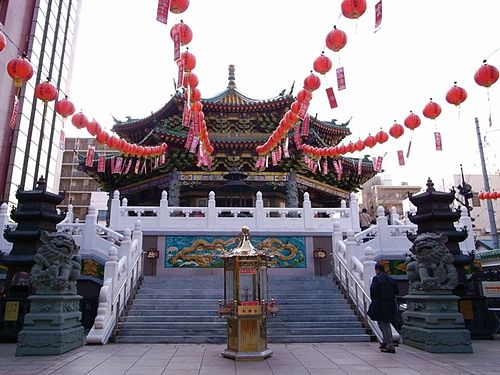
Photo by NaokijpWikimedia CommonsCC BY-SA 4.0

7 min of listening · Section 1 of 5: Welcome to Jufuku-ji

Prefer reading? The full guide is below

Here in person? Walk on with Mappu

This audio guide tells one place’s story. Walk Mode keeps going as you walk:

  • It knows where you are and talks about what’s in front of you, not only these chapters.
  • It takes you on to the next sight and follows what interests you.
  • Ask about anything you see, and it answers on the spot.
  • Your phone stays in your pocket.

A 2-hour live walk with Mappu, €4.99.

50 credits from the Starter pack. One-time purchase, no subscription.

Self-guided audio walk. No guide accompanies you. Not affiliated with the sites.

Keep exploring

Discover more places in Mappu.

Jufuku-ji • Section 1 of 5

Jufuku-ji: is there a free audio guide?

Quick answer. Yes. Mappu’s Jufuku-ji audio guide (Kamakura, Japan) is free in your browser: 5 sections and about 7 minutes of listening, in 8 languages. It covers “Jufuku-ji and the Shogun Who Never Moved In”, “Eisai, Tea and the Rise of Zen at Jufuku-ji” and “Walking the Stone Path at Jufuku-ji”. In the Mappu app, Walk Mode narrates the places around you as you move and answers your follow-up questions.

Jufuku-ji map

Mappu's own map of the place, with the paths and entrances OpenStreetMap shows around it.

Jufuku-ji mapThe place on the map, with the guide's point marked.

Jufuku-ji: what does the audio guide cover?

  1. 01

    Welcome to Jufuku-ji

    Welcome to Jufuku-ji, known in Japanese as 寿福寺, a quiet Zen temple in the Ogigayatsu district of Kamakura. It is the oldest Zen temple in the city, and it ranks third among the Kamakura Five Mountains, the elite group of temples that came to define Zen in this former samurai capital. Only two temples outrank it: Kenchō-ji and Engaku-ji. Here is a curious twist. Because the big crowds head for those two neighbors, this one is often called a hidden gem. Yet it stands on ground that might have become the headquarters of the whole Kamakura shogunate. We will get to that story shortly. If you are walking from Kamakura Station, leave by the west exit and go straight for about 100 meters. Turn right at the crossing with the traffic light, beside the supermarket, and follow the road north for seven or eight minutes, parallel to the railway. You will pass the Yasaka shrine on your left, and just beyond it you reach the temple. Let's step in and see what a woman of the twelfth century built here for her husband.

  2. 02

    Jufuku-ji and the Shogun Who Never Moved In

    Long before the temple existed, this valley was known as Kamegayatsu, and it was family land for the Minamoto clan. The mountain behind it is Genji-yama, and Yoritomo's father, Minamoto no Yoshitomo, once had a residence here. In 1180, when Minamoto no Yoritomo first entered Kamakura, he planned to build his residence, the seat of his new government, on this very spot. He changed his mind for two reasons. A man named Okazaki Yoshizane had already raised a hall here to pray for the soul of Yoshitomo, and the land was simply too narrow. So the shogunate took root elsewhere, and this ground stayed a place of memory. The temple came later. Yoritomo died in 1199, reportedly after a fall from his horse. In 1200 his widow, Hōjō Masako, founded Jufuku-ji to honor him, on the old Yoshitomo estate. She invited the monk Eisai to be the first abbot. Masako herself, who lived from 1157 to 1225, became so famous in Japan that she turns up in television period dramas to this day.

  3. 03

    Eisai, Tea and the Rise of Zen at Jufuku-ji

    Eisai, the founding abbot, is a fascinating figure. He is remembered for bringing green tea to Japan. He had returned from China with new ideas, and the Tendai school in Kyoto turned against him for them. He agreed to come to Kamakura instead, where he went on to have a great religious influence. His book on tea and health, the Kissa Yōjōki, was presented to the third shogun, Minamoto no Sanetomo, and it counts among the temple's treasures. Sanetomo himself is said to have visited Jufuku-ji often. That makes this a place where Zen and tea culture meet. Eisai was only the beginning. The second abbot was Taikō Gyōyū, and a line of renowned monks followed, including Shinchi Kakushin, Enni, Rankei Dōryū and Daikyū Shōnen. The temple's rank rose with them. When Ashikaga Yoshimitsu fixed the Five Mountains system in 1386, Jufuku-ji was set in third place among the five Kamakura temples. At its height it had more than 10 subtemples around it.

  4. 04

    Walking the Stone Path at Jufuku-ji

    Now let your feet do the learning. From the outer gate up to the main gate runs a stone path often called the most beautiful in Kamakura. It is laid in a style called katsura-jiki. Irregularly set stones run down the center, held between neat, regular rows on each side. The effect is a little like a loose melody framed by a steady rhythm. Light falls through the trees onto it, and a small stream runs quietly alongside. The old buildings, namely the outer gate, the middle gate and the Buddha hall, sit along this approach. The main image is a seated Shaka Nyorai, the historical Buddha, and beside it stand large guardian figures known as Niō. The temple also holds a bronze Yakushi Nyorai, the healing Buddha, 53.5 centimeters tall. It came from the Tsurugaoka Hachimangū shrine, where it sat in a hall at the corner of the cloister, and was moved here when Shinto and Buddhism were officially separated. The grounds are a national historic site, designated in 1966. In 2008 the designation was extended to the cave tombs, called yagura, and the cut cliffs at the foot of Ishikiriyama, the hill behind the temple.

  5. 05

    Before You Head Off

    Part of Jufuku-ji's charm today is its calm, and the way it draws visitors who come simply for the stillness of a Zen precinct. Many also come for the graves of well-known figures. One is the Mutsu family grave, belonging to the Meiji foreign minister Mutsu Munemitsu, though cliff collapse has made that spot off limits. His British wife, Iso Mutsu, loved Kamakura and visited its temples and shrines, collecting stories as she went. She turned them into the book Kamakura: Fact and Legend, a classic for anyone who wants to read about Kamakura's temples in English. Perhaps you will carry a little of her curiosity as you leave. There is plenty more to explore close by. Zeniarai Benzaiten shrine, Eishō-ji temple and the Kawakita Film Museum are all in the same part of Kamakura. As you walk out, glance back along the stone path and ask yourself what Yoritomo would have made of a quiet temple where his government might have stood.

About this guide

AI-generated from 6 sources; reviewed for accuracy and last updated on October 31, 2026. Verify tickets and opening hours on the official site. Independent guide by Mappu. Not affiliated with or endorsed by the site or its managers.

Run a travel site or blog? Embed this audio guide for free.

Walk on from here

The nearest places with a Mappu audio guide, in walking order: about 2.6 km and 35 minutes on foot in all.

Route map: walking on from Jufuku-ji3 numbered stops in walking order. Stop 1: Jufuku-ji; Stop 2: Zeniarai Benzaiten Ugafuku Shrine; Stop 3: Tsurugaoka Hachimangū.Stop 1: Jufuku-ji1Stop 2: Zeniarai Benzaiten Ugafuku Shrine2Stop 3: Tsurugaoka Hachimangū3
Distances are estimates: the straight line between places plus 30%.

Indicative route. While you walk, watch where you're going, mind the traffic and follow local signs and rules. The map is an aid, not a safety guide. Terms

  1. Jufuku-jiThis guide

    about 0.9 km · about 11 min on foot

  2. Zeniarai Benzaiten Ugafuku Shrine

    about 1.7 km · about 23 min on foot

  3. Tsurugaoka Hachimangū
Photo attribution

Walk Mode, in the free Mappu app: 2 hours for 50 credits (€4.99 Starter pack)

Planning a trip to Kamakura?

Get your plan

Mappu sketches your days free in the chat, no account needed. Then take the full plan with you:

  • Weekend trip, €9.99: Your day-by-day plan plus 2 live walks
  • Save your trip’s free guides on your phone in the Mappu app: they play with no signal
See the trip packs

Already going? The 2-hour live walk in Kamakura is €4.99

Plan your trip on a map and get an audio guide for almost any place nearby: just tap it on the Mappu map.

Common questions

Jufuku-ji: how long is the free audio guide?

About 7 minutes of listening in 5 sections: “Welcome to Jufuku-ji”, “Jufuku-ji and the Shogun Who Never Moved In”, “Eisai, Tea and the Rise of Zen at Jufuku-ji”, “Walking the Stone Path at Jufuku-ji”, and “Before You Head Off”.

Jufuku-ji: what can I ask Mappu after the guide?

You can ask follow-up questions such as “Why did Minamoto no Yoritomo give up his plan to build his residence on the ground where Jufuku-ji now stands?” and keep asking in Mappu, with the guide connected to your map and trip plan.