Tokyo National Museum Audio Guide

Audio guide for Tokyo National Museum

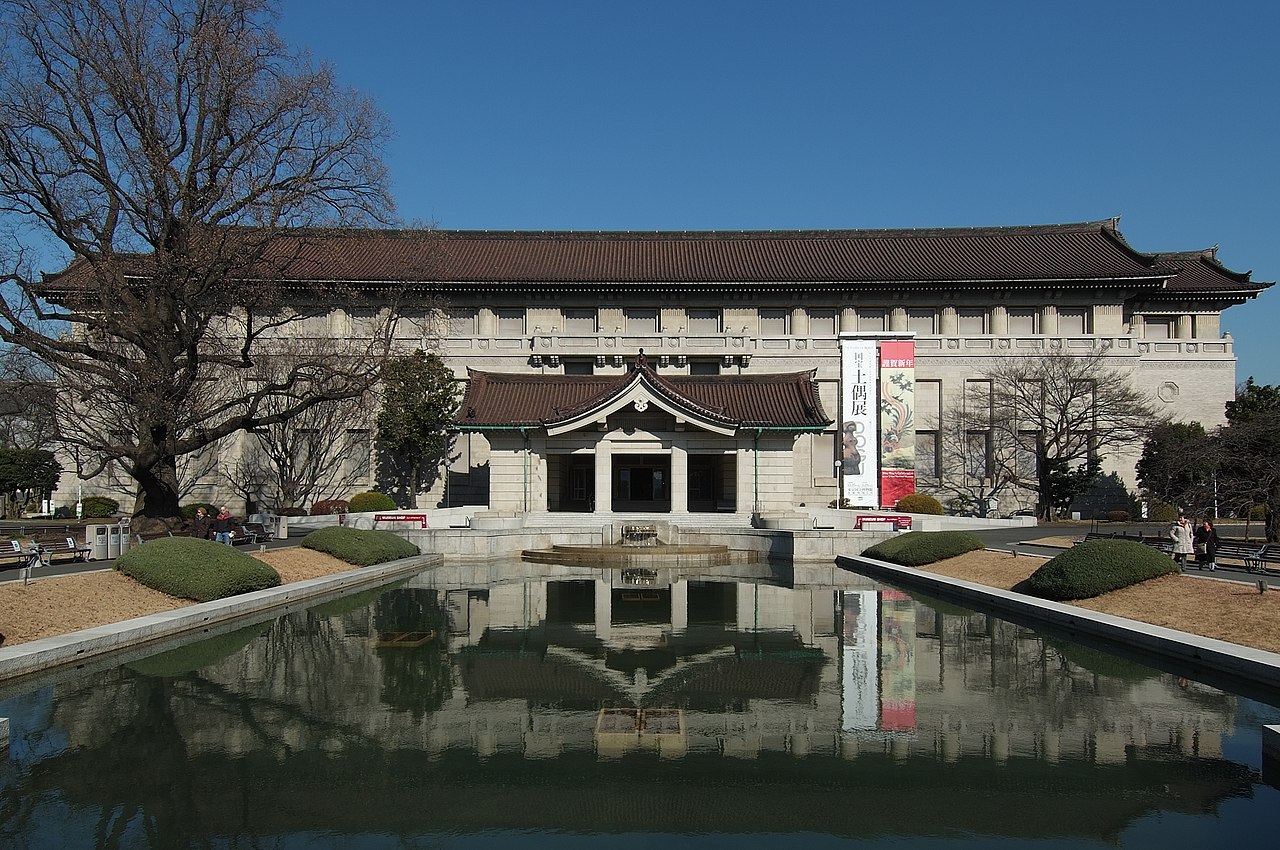
Tokyo National Museum
Photo by WiiiiWikimedia CommonsCC BY-SA 3.0

6 min of listening · Section 1 of 5: Welcome to Tokyo National Museum

Prefer reading? The full guide is below

Here in person? Walk on with Mappu

This audio guide tells one place’s story. Walk Mode keeps going as you walk:

  • It knows where you are and talks about what’s in front of you, not only these chapters.
  • It takes you on to the next sight and follows what interests you.
  • Ask about anything you see, and it answers on the spot.
  • Your phone stays in your pocket.

A 2-hour live walk with Mappu, €4.99.

50 credits from the Starter pack. One-time purchase, no subscription.

Self-guided audio walk. No guide accompanies you. Not affiliated with the sites.

Keep exploring

Discover more places in Mappu.

Tokyo National Museum • Section 1 of 5

Tokyo National Museum: is there a free audio guide?

Quick answer. Yes. Mappu’s Tokyo National Museum audio guide (Tokyo, Japan) is free in your browser: 5 sections and about 6 minutes of listening, in 8 languages. It covers “Tokyo National Museum: A Museum Born in a Shrine Hall”, “Tokyo National Museum: Buildings with Stories” and “Tokyo National Museum: Finding Your Way Through the Honkan”. In the Mappu app, Walk Mode narrates the places around you as you move and answers your follow-up questions.

Tokyo National Museum map

Mappu's own map of the place, with the paths and entrances OpenStreetMap shows around it.

Tokyo National Museum mapThe place on the map, with the guide's point marked.

Tokyo National Museum: what does the audio guide cover?

  1. 01

    Welcome to Tokyo National Museum

    Welcome to Tokyo National Museum, known in Japanese as Tokyo Kokuritsu Hakubutsukan and affectionately nicknamed Tohaku. You are standing in Ueno Park, in Tokyo's Taito ward, at the oldest and largest museum in Japan. It collects, preserves and displays the cultural treasures of Japan and the wider East: works of art, archaeological finds and much more. The museum is not one building but a small campus. Five exhibition halls share the grounds: the Honkan, the Hyokeikan, the Toyokan, the Heiseikan and the Horyuji Homotsukan, along with a research and information center and other facilities. The museum is run by the National Institutes for Cultural Heritage, and its founding year is counted as 1872. Over the next few minutes I will take you through how this museum began in a Confucian shrine hall, how its buildings have survived fire, earthquake and changing tastes, and how to find your way through its galleries. Settle in, and let us begin at the very start.

  2. 02

    Tokyo National Museum: A Museum Born in a Shrine Hall

    Our story begins not in Ueno but across town in Yushima. On the tenth of March, 1872, an exposition opened in the Taiseiden hall of the Yushima Seido and ran for 20 days. It was the first exposition organized by the Museum Bureau of the Ministry of Education, which had been set up the year before. That event gave rise to the Ministry of Education Museum, and the museum has counted that year as its founding ever since. The display was mostly made up of items intended for the Vienna World Exposition of 1873. Pictures from the period show glass cases packed into every corner, holding paintings and calligraphy, antiques and even stuffed animals and plants. It was part museum, part curiosity cabinet. The institution moved on, changing names and ministries several times. In 1876 a Satsuma-born official named Machida Hisanari was appointed head of the museum. He had worked hard in the early Meiji years to establish museums and protect cultural properties, and the museum regards him as its first director. A monument honoring him stands in the back garden. Later the museum came under the Ministry of Agriculture and Commerce in 1881 and the Imperial Household Ministry in 1886, and it took on its home in Ueno Park, on the site of the former main residence of Kaneiji temple.

  3. 03

    Tokyo National Museum: Buildings with Stories

    The buildings here tell the story of Japan's changing ideas about architecture. Start with the Hyokeikan, the oldest exhibition hall on the grounds. It opened in 1909 and was named in honor of the wedding of Crown Prince Yoshihito, the future Emperor Taisho. It is a fine example of Western-influenced late Meiji architecture and was designated an Important Cultural Property in 1978. Look beside the entrance and you will see a pair of lion statues, one with mouth open and one closed, the famous Aun pair. The Honkan has a more dramatic past. The original main building was badly damaged in the Great Kanto earthquake of 1923, and exhibits were moved into the undamaged Hyokeikan. The museum closed until 1924, and for a time only the Hyokeikan could host displays. The collapse of a building once promoted as unmatched in solidity left many people disillusioned with the style it represented. The present Honkan opened in 1938, designed by Watanabe Jin, the architect behind the Hotel New Grand in Yokohama and the Dai-ichi Seimei building in Marunouchi. It came out of a public design competition that called for an Oriental style based on Japanese taste, in harmony with the art inside. It was designated an Important Cultural Property in 2001. Step into the grand entrance hall, a soaring space of marble and granite, and look for the lounge facing the back garden, with its decoration of mosaic tile.

  4. 04

    Tokyo National Museum: Finding Your Way Through the Honkan

    The Honkan, also called the Japanese Gallery, is a good place to start. On the second floor, rooms one to ten are arranged as a single journey called the flow of Japanese art. You begin in room one, titled the dawn of Japanese art, and end in room 10 with ukiyo-e prints and costumes. Walk them in order and you get the broad sweep of Japanese art history in one loop. The first floor works differently. Rooms eleven to nineteen are arranged by genre. Here you will find sculpture, lacquerware, metalwork, swords and ceramics, along with ethnographic materials from the Ainu and the Ryukyu islands and historical materials. Room twenty is the museum shop, where original museum goods are sold, a pleasant place to end your visit. The museum is also a place of learning. The large auditorium in the Heiseikan hosts monthly lectures, and commemorative lectures are given when special exhibitions are held. Gallery talks, where specialists explain the works while you stand in front of them, take place about twice a month. Volunteer-led guided tours and workshops are offered from time to time, including programs for schools and families.

  5. 05

    Before You Head Off

    Before you move on, remember that this museum's story stretches from a twenty-day exposition in a shrine hall in 1872 to the halls you see today. Along the way it passed through several ministries, changed its name more than once, lost its first main building to an earthquake and rebuilt it. As you wander the grounds, look for the small things: the Aun lions at the Hyokeikan, the mosaic tiles in the Honkan lounge, the monument to Machida Hisanari in the back garden. Each one links back to a chapter we have just walked through. And the park around you holds more. Ueno Park is also home to the National Museum of Western Art and the National Museum of Nature and Science. Whichever direction you choose next, there is plenty more to discover here, and the galleries are waiting.

About this guide

AI-generated from 6 sources; checked automatically and last updated on October 31, 2026. Verify tickets and opening hours on the official site. Independent guide by Mappu. Not affiliated with or endorsed by the site or its managers.

Run a travel site or blog? Embed this audio guide for free.

Walk on from here

This place is stop 3 of 5 of a self-guided walk: Yanaka to Ueno, Tokyo. About 3.3 km and 45 minutes on foot, plus about 28 minutes of listening.

Route map: walking on from Tokyo National Museum5 numbered stops in walking order. Stop 1: Yanaka Cemetery; Stop 2: Kan'eiji Temple; Stop 3: Tokyo National Museum; Stop 4: Ueno Tōshō-gū Shrine; Stop 5: Ameya-Yokochō.Stop 1: Yanaka Cemetery1Stop 2: Kan'eiji Temple2Stop 3: Tokyo National Museum3Stop 4: Ueno Tōshō-gū Shrine4Stop 5: Ameya-Yokochō5
Distances are estimates along the walking route, from OpenStreetMap.

Indicative route. While you walk, watch where you're going, mind the traffic and follow local signs and rules. The map is an aid, not a safety guide. Terms

  1. Yanaka Cemetery

    about 0.6 km · about 9 min on foot

  2. Kan'eiji Temple

    about 0.9 km · about 12 min on foot

  3. Tokyo National MuseumThis guide

    about 0.9 km · about 11 min on foot

  4. Ueno Tōshō-gū Shrine

    about 0.8 km · about 11 min on foot

  5. Ameya-Yokochō
Photo attribution

Walk Mode, in the free Mappu app: 2 hours for 50 credits (€4.99 Starter pack)

See the whole walk

Planning a trip to Tokyo?

Get your plan

Mappu sketches your days free in the chat, no account needed. Then take the full plan with you:

  • Weekend trip, €9.99: Your day-by-day plan plus 2 live walks
  • Save your trip’s free guides on your phone in the Mappu app: they play with no signal
See the trip packs

Already going? The 2-hour live walk in Tokyo is €4.99

Plan your trip

Photo attribution
  • Tokyo 3-Day Itinerary: Alex
  • Japan First Trip 10-Day Itinerary: Stefan K

Plan your trip on a map and get an audio guide for almost any place nearby: just tap it on the Mappu map.

Common questions

Tokyo National Museum: how long is the free audio guide?

About 6 minutes of listening in 5 sections: “Welcome to Tokyo National Museum”, “Tokyo National Museum: A Museum Born in a Shrine Hall”, “Tokyo National Museum: Buildings with Stories”, “Tokyo National Museum: Finding Your Way Through the Honkan”, and “Before You Head Off”.

Tokyo National Museum: what can I ask Mappu after the guide?

You can ask follow-up questions such as “How did a twenty-day exposition at the Yushima Seido in 1872 grow into Japan's oldest museum?” and keep asking in Mappu, with the guide connected to your map and trip plan.