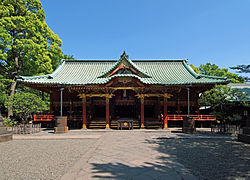
Kanda-Jinbōchō Audio Guide

Tokyo's book town

Jinbōchō
Photo by LombrosoWikimedia CommonsPublic domain

6 min of listening · Section 1 of 5: Welcome to Kanda-Jinbōchō

Prefer reading? The full guide is below

Here in person? Walk on with Mappu

This audio guide tells one place’s story. Walk Mode keeps going as you walk:

  • It knows where you are and talks about what’s in front of you, not only these chapters.
  • It takes you on to the next sight and follows what interests you.
  • Ask about anything you see, and it answers on the spot.
  • Your phone stays in your pocket.

A 2-hour live walk with Mappu, €4.99.

50 credits from the Starter pack. One-time purchase, no subscription.

Self-guided audio walk. No guide accompanies you. Not affiliated with the sites.

Keep exploring

Discover more places in Mappu.

Jinbōchō • Section 1 of 5

Jinbōchō: is there a free audio guide?

Quick answer. Yes. Mappu’s Kanda-Jinbōchō audio guide (Tokyo, Japan) is free in your browser: 5 sections and about 6 minutes of listening, in 8 languages. It covers “How a Book Town Was Born”, “Fire, Earthquake and Rebuilding” and “Publishers, Manga and Presents of the Past”. In the Mappu app, Walk Mode narrates the places around you as you move and answers your follow-up questions.

Kanda-Jinbōchō map

Mappu's own map of the place, with the paths and entrances OpenStreetMap shows around it.

Kanda-Jinbōchō mapThe place on the map, with the guide's point marked.

Jinbōchō: what does the audio guide cover?

  1. 01

    Welcome to Kanda-Jinbōchō

    Welcome to Kanda-Jinbōchō, a district of Chiyoda in central Tokyo that everyone simply calls Jinbōchō, or sometimes Jimbōchō. This guide tells the story of the whole neighborhood rather than a single building, because the district itself is the attraction. Its official name, the one you see in addresses, is Kanda-Jinbōchō, and it belongs to what was once the ward of Kanda. Jinbōchō is known as Tokyo's center of used-book stores and publishing houses, and it is also a popular place to hunt for antiques and curios. Around you, shelves spill onto the pavement and whole buildings are devoted to a single subject. The area sits within walking distance of several major universities, including Nihon, Senshu, Meiji, Hosei and Juntendo, so students have been part of the street life here for generations. Over the next few minutes we will follow the book town from its beginnings in a period of rapid modernization, through two disasters that reshaped it, to the publishers and shops that keep it alive today. Let your eyes drift over the signs and shopfronts as we go. This is a neighborhood that rewards slow walking.

  2. 02

    How a Book Town Was Born

    Why here? The answer begins with schools. In 1857 the Tokugawa shogunate founded an institute for the study of foreign books in an area of Kanda. After the Meiji revolution, the new government converted that institution into a university, and on that basis the University of Tokyo was founded in 1877. During the late nineteenth century, foreign studies schools such as Bansho Shirabesho, the Institute for Research of Foreign Documents, and Tokyo Gaikokugo Gakko, the Tokyo School of Foreign Languages, opened in the area. These later grew into the University of Tokyo and Hitotsubashi University. Many other universities and high schools were founded in and around Kanda, and their professors and students needed books. Some of those universities, such as Gakushuin, Ochanomizu, Chuo and Hitotsubashi, later moved elsewhere, but the booksellers stayed. The first secondhand bookstore, Yuhikaku, opened in 1877, and many others followed. Until about 1880, publishers and new bookstores were mostly found in older commercial districts such as Nihonbashi and Kyobashi. Gradually they moved into Jinbōchō, and by the beginning of the twentieth century this neighborhood had become the center of book culture in Tokyo. Two names from that early period, Sanseido and Tokyodo, are still operating in the same locations.

  3. 03

    Fire, Earthquake and Rebuilding

    A district made of paper has always been vulnerable, and Jinbōchō's story includes two great fires. In 1913, a large fire destroyed much of the area. In its wake, a former teacher named Shigeo Iwanami opened a bookstore here, and it eventually grew into today's Iwanami Shoten publishing house. A disaster ended up planting the seed of one of Japan's best-known publishers. Then came 1923. The Great Kanto Earthquake caused a fire that destroyed much of the former Kanda ward, including the Jinbōchō library and campus of the University of Tokyo, which was subsequently relocated to Bunkyo ward. Studio Ghibli's film The Wind Rises depicts that earthquake and the fire that destroyed the former Jinbōchō campus of Tokyo Imperial University, so you may have seen a version of this history on screen. The rebuilding left marks you can still look for. The present building of the long-established bookstore Isseido-Shoten was built in the devastation that followed the Great Kanto Earthquake, and it is counted among the most impressive bookstore buildings in Kanda. Keep an eye out for older facades as you walk, because some of them belong to that period of recovery.

  4. 04

    Publishers, Manga and Presents of the Past

    Jinbōchō is not only about old volumes. Many companies are located here, including the headquarters of Tōkyōdō Shoten, a retail book chain, and Shueisha, the manga company known for the anthology magazine Shonen Jump. So the same neighborhood that sells antique curios and secondhand scholarship is also home to the publisher behind one of the best-known manga magazines. That mix is part of the charm. There is also an organization here with the wonderful name of the Tokyo Book Binding Club, and a Literature Preservation Society, both described as prestigious, which hints at how seriously the neighborhood takes the book as an object, not just as a text. The broader Kanda, Jinbōchō and Ochanomizu area is also known for an old downtown atmosphere and an academic mood. A popular way to spend a day is to browse the bookshops, have lunch at one of Jinbōchō's curry restaurants, visit the quiet garden of Yushima Seido in the afternoon, and finish with an evening stroll along the Kanda River as the setting sun reflects off the water and the buildings.

  5. 05

    Before You Head Off

    Jinbōchō is close to Kanda station, which opened on the first of March in 1919, and the neighboring station area has long been seen as the literary heart of Tokyo. The district is also within easy reach of the main railway station, so it fits easily into a day of exploring the center of the city. As you wander, try reading the neighborhood as a layered story. Notice which shops look like they have been here since the early twentieth century, which buildings suggest rebuilding after the earthquake, and how many streets still lead you toward a bookshop door. Consider how a foreign books institute founded in 1857 and a secondhand shop opened in 1877 could lead, over generations, to this crowded, wonderful street scene. Pick a single shelf, in any shop that appeals to you, and see where it takes you. In a place like this, one book often leads to another.

About this guide

AI-generated from 6 sources; checked automatically and last updated on October 31, 2026. Verify tickets and opening hours on the official site. Independent guide by Mappu. Not affiliated with or endorsed by the site or its managers.

Run a travel site or blog? Embed this audio guide for free.

Walk on from here

This place is stop 1 of 5 of a self-guided walk: Jinbocho to Nezu Shrine, Tokyo. About 4.9 km and 65 minutes on foot, plus about 32 minutes of listening.

Route map: walking on from Jinbōchō5 numbered stops in walking order. Stop 1: Jinbōchō; Stop 2: Kanda Myojin; Stop 3: Yushima Tenmangu; Stop 4: Kyu-Iwasaki-Tei Garden; Stop 5: Nezu Shrine.Stop 1: Jinbōchō1Stop 2: Kanda Myojin2Stop 3: Yushima Tenmangu3Stop 4: Kyu-Iwasaki-Tei Garden4Stop 5: Nezu Shrine5
Distances are estimates along the walking route, from OpenStreetMap.

Indicative route. While you walk, watch where you're going, mind the traffic and follow local signs and rules. The map is an aid, not a safety guide. Terms

  1. JinbōchōThis guide

    about 1.5 km · about 20 min on foot

  2. Kanda Myojin

    about 0.8 km · about 11 min on foot

  3. Yushima Tenmangu

    about 0.7 km · about 9 min on foot

  4. Kyu-Iwasaki-Tei Garden

    about 1.9 km · about 26 min on foot

  5. Nezu Shrine
Photo attribution

Walk Mode, in the free Mappu app: 2 hours for 50 credits (€4.99 Starter pack)

See the whole walk

Planning a trip to Tokyo?

Get your plan

Mappu sketches your days free in the chat, no account needed. Then take the full plan with you:

  • Weekend trip, €9.99: Your day-by-day plan plus 2 live walks
  • Save your trip’s free guides on your phone in the Mappu app: they play with no signal
See the trip packs

Already going? The 2-hour live walk in Tokyo is €4.99

Plan your trip

Photo attribution
  • Tokyo 3-Day Itinerary: Alex
  • Japan First Trip 10-Day Itinerary: Stefan K

Plan your trip on a map and get an audio guide for almost any place nearby: just tap it on the Mappu map.

Common questions

Kanda-Jinbōchō: how long is the free audio guide?

About 6 minutes of listening in 5 sections: “Welcome to Kanda-Jinbōchō”, “How a Book Town Was Born”, “Fire, Earthquake and Rebuilding”, “Publishers, Manga and Presents of the Past”, and “Before You Head Off”.

Kanda-Jinbōchō: what can I ask Mappu after the guide?

You can ask follow-up questions such as “Why did schools and universities in Kanda lead so many booksellers to settle in Jinbōchō?” and keep asking in Mappu, with the guide connected to your map and trip plan.