Kyū-Iwasaki-tei Garden Audio Guide

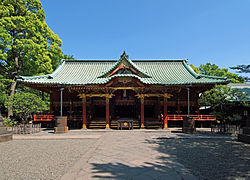
The Iwasaki family's Meiji estate with a Western house by Josiah Conder

Kyu-Iwasaki-Tei Garden
Photo by WiiiiWikimedia CommonsCC BY-SA 3.0

7 min of listening · Section 1 of 5: Welcome to Kyu-Iwasaki-Tei Garden

Prefer reading? The full guide is below

Here in person? Walk on with Mappu

This audio guide tells one place’s story. Walk Mode keeps going as you walk:

  • It knows where you are and talks about what’s in front of you, not only these chapters.
  • It takes you on to the next sight and follows what interests you.
  • Ask about anything you see, and it answers on the spot.
  • Your phone stays in your pocket.

A 2-hour live walk with Mappu, €4.99.

50 credits from the Starter pack. One-time purchase, no subscription.

Self-guided audio walk. No guide accompanies you. Not affiliated with the sites.

Keep exploring

Discover more places in Mappu.

Kyu-Iwasaki-Tei Garden • Section 1 of 5

Kyu-Iwasaki-Tei Garden: is there a free audio guide?

Quick answer. Yes. Mappu’s Kyū-Iwasaki-tei Garden audio guide (Tokyo, Japan) is free in your browser: 5 sections and about 7 minutes of listening, in 8 languages. It covers “Kyu-Iwasaki-Tei Garden: Samurai Lords and a Famous Swordsman”, “Kyu-Iwasaki-Tei Garden: Conder's Western House” and “Kyu-Iwasaki-Tei Garden: The Japanese Hall and Wartime Aftermath”. In the Mappu app, Walk Mode narrates the places around you as you move and answers your follow-up questions.

Kyū-Iwasaki-tei Garden map

Mappu's own map of the place, with the paths and entrances OpenStreetMap shows around it.

Kyū-Iwasaki-tei Garden mapThe place on the map, with the guide's point marked.

Kyu-Iwasaki-Tei Garden: what does the audio guide cover?

  1. 01

    Welcome to Kyu-Iwasaki-Tei Garden

    Welcome to Kyu-Iwasaki-Tei Garden, known in Japanese as 旧岩崎邸庭園. It is a metropolitan garden in the Ikenohata district of Taito Ward, Tokyo, and your map places it along Shinobazu Avenue. The estate began as the main residence of the Iwasaki family, the founders of Mitsubishi, and it now opens its grounds to the public. The house was completed in 1896 and combined two ways of living. A grand Western-style mansion stood beside a traditional Japanese residence, all set within a broad lawn garden. At its height the property covered 15,000 tsubo, a traditional Japanese unit of area, and held more than 20 buildings. Only a fraction of that survives today, but what remains still conveys the ambition of a family at the center of Japan's rush toward modernity. Over the next few minutes we will look at the people who owned this hillside before the Iwasaki family, the Western house and the Japanese hall that still stand, and the long, strange period after the Second World War. Stay with me, because this land has had more lives than almost any garden in the city.

  2. 02

    Kyu-Iwasaki-Tei Garden: Samurai Lords and a Famous Swordsman

    Long before the Iwasaki family arrived, this ground belonged to the samurai class. In the Edo period it was a daimyo estate of the Sakakibara clan of Echigo-Takada domain. When the old order collapsed in the early Meiji years, the land passed to the Makino family of the former Maizuru domain. In 1871 the abolition of the domains sent many lords home to their old territories, and the Tokyo estates were left almost empty and overgrown. The government took them over, and this plot was then handed to Kirino Toshiaki, a Satsuma army officer who is better remembered as Nakamura Hanjiro, nicknamed the man-slayer Hanjiro. He was a subordinate of Saigo Takamori. In 1878 the founder of Mitsubishi, Iwasaki Yataro, established his residence here, and the estate later passed to his son Iwasaki Hisaya. Because the land changed hands so many times, no plans of the Iwasaki-era garden survive, and much about how it first looked is unclear. What is known is that the new estate kept the spirit of a daimyo garden, with garden stones, stone lanterns and artificial hills, alongside a broad Western-style lawn.

  3. 03

    Kyu-Iwasaki-Tei Garden: Conder's Western House

    The Western house is the star of the estate. It was designed by the British architect Josiah Conder, who was invited to Japan to build Western-style architecture. It is a wooden building in the style of seventeenth-century English Jacobean architecture, with touches of the Renaissance and Islamic design woven in. In the Meiji era, building in a Western manner was practically a national mission, and receiving guests in a Western house was how an important family showed its standing. The Iwasaki mansion went up at the peak of that Western architectural fashion. Conder also taught architects such as Tatsuno Kingo and Sone Tatsuzo, so his influence spread far beyond this one house. Look for the sunroom beside the house. Photographs survive of Iwasaki Hisaya, the third head of Mitsubishi, and his family gathered there. Near the main gate, a little way up the slope, you will also see a grand sleeve wall bearing the family crest, the three-tiered diamond. That crest later became the basis of the Mitsubishi company emblem. Plans of the house show how it was altered and enlarged again and again over time.

  4. 04

    Kyu-Iwasaki-Tei Garden: The Japanese Hall and Wartime Aftermath

    The Western house was the formal reception space. Daily life in a grand Meiji home usually took place in the Japanese wing, and it was the same here. The Japanese residence, built in the shoin style, was linked to the Western house by a corridor with a ceiling shaped like a ship's hull. Tradition names a master carpenter, Okawa Kijuro, as its designer. Look for the family's diamond crest worked into the nail covers. At its peak the Japanese residence covered 550 tsubo. After the Second World War, American forces took over the estate. In 1953 it passed into state ownership and became a training institute for court clerks. Around 1969 about 460 tsubo of the Japanese living quarters were pulled down. Only the great hall, the next room and the third room, plus a tea room waiting area, the corridor and a toilet, remain. One scholar, Muramatsu Teijiro, reportedly said that the Japanese wing might have been more valuable as cultural heritage than the Western house, a realization that came only after the demolition. Most of the original furnishings are gone. The bookshelves in the study survive because they had been moved to the family's villa in Atami before the seizure. In 1996 the institute moved away to Wako in Saitama, and the grounds you walk today became possible.

  5. 05

    Before You Head Off from Kyu-Iwasaki-Tei Garden

    As you wander, try reading the land in layers. Beneath the lawn is a daimyo estate, then a swordsman's residence, then the home of a business dynasty, and finally a government training campus. Each left its mark, and some of those marks are still easy to spot. Look for the three-tiered diamond crest on the sleeve wall and on the Japanese hall's fittings, and compare it with the three diamonds you may know from the Mitsubishi emblem. Notice how the Western house and the Japanese rooms speak two different architectural languages, yet were designed to live side by side. Try to picture the vanished wing that once stretched out across the grounds. The Iwasaki family had another garden too. Tonogayato Garden in Kokubunji, in western Tokyo, became a villa of the family in 1929 under Iwasaki Hikoyata. If this place leaves you curious, it makes a natural next chapter in the family's story.

About this guide

AI-generated from 6 sources; reviewed for accuracy and last updated on October 31, 2026. Verify tickets and opening hours on the official site. Independent guide by Mappu. Not affiliated with or endorsed by the site or its managers.

Run a travel site or blog? Embed this audio guide for free.

Walk on from here

This place is stop 4 of 5 of a self-guided walk: Jinbocho to Nezu Shrine, Tokyo. About 4.9 km and 65 minutes on foot, plus about 32 minutes of listening.

Route map: walking on from Kyu-Iwasaki-Tei Garden5 numbered stops in walking order. Stop 1: Jinbōchō; Stop 2: Kanda Myojin; Stop 3: Yushima Tenmangu; Stop 4: Kyu-Iwasaki-Tei Garden; Stop 5: Nezu Shrine.Stop 1: Jinbōchō1Stop 2: Kanda Myojin2Stop 3: Yushima Tenmangu3Stop 4: Kyu-Iwasaki-Tei Garden4Stop 5: Nezu Shrine5
Distances are estimates along the walking route, from OpenStreetMap.

Indicative route. While you walk, watch where you're going, mind the traffic and follow local signs and rules. The map is an aid, not a safety guide. Terms

  1. Jinbōchō

    about 1.5 km · about 20 min on foot

  2. Kanda Myojin

    about 0.8 km · about 11 min on foot

  3. Yushima Tenmangu

    about 0.7 km · about 9 min on foot

  4. Kyu-Iwasaki-Tei GardenThis guide

    about 1.9 km · about 26 min on foot

  5. Nezu Shrine
Photo attribution

Walk Mode, in the free Mappu app: 2 hours for 50 credits (€4.99 Starter pack)

See the whole walk

Planning a trip to Tokyo?

Get your plan

Mappu sketches your days free in the chat, no account needed. Then take the full plan with you:

  • Weekend trip, €9.99: Your day-by-day plan plus 2 live walks
  • Save your trip’s free guides on your phone in the Mappu app: they play with no signal
See the trip packs

Already going? The 2-hour live walk in Tokyo is €4.99

Plan your trip

Photo attribution
  • Tokyo 3-Day Itinerary: Alex
  • Japan First Trip 10-Day Itinerary: Stefan K

Plan your trip on a map and get an audio guide for almost any place nearby: just tap it on the Mappu map.

Common questions

Kyū-Iwasaki-tei Garden: how long is the free audio guide?

About 7 minutes of listening in 5 sections: “Welcome to Kyu-Iwasaki-Tei Garden”, “Kyu-Iwasaki-Tei Garden: Samurai Lords and a Famous Swordsman”, “Kyu-Iwasaki-Tei Garden: Conder's Western House”, “Kyu-Iwasaki-Tei Garden: The Japanese Hall and Wartime Aftermath”, and “Before You Head Off from Kyu-Iwasaki-Tei Garden”.

Kyū-Iwasaki-tei Garden: what can I ask Mappu after the guide?

You can ask follow-up questions such as “How did the estate change hands between the Edo period and the Iwasaki family?” and keep asking in Mappu, with the guide connected to your map and trip plan.