Nezu Shrine Audio Guide

A Shinto shrine in Bunkyo with Edo-period halls from 1706

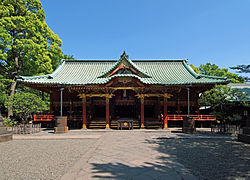
Nezu Shrine
Photo by WiiiiWikimedia CommonsCC BY-SA 3.0

6 min of listening · Section 1 of 5: Welcome to Nezu Shrine

Prefer reading? The full guide is below

Here in person? Walk on with Mappu

This audio guide tells one place’s story. Walk Mode keeps going as you walk:

  • It knows where you are and talks about what’s in front of you, not only these chapters.
  • It takes you on to the next sight and follows what interests you.
  • Ask about anything you see, and it answers on the spot.
  • Your phone stays in your pocket.

A 2-hour live walk with Mappu, €4.99.

50 credits from the Starter pack. One-time purchase, no subscription.

Self-guided audio walk. No guide accompanies you. Not affiliated with the sites.

Keep exploring

Discover more places in Mappu.

Nezu Shrine • Section 1 of 5

Nezu Shrine: is there a free audio guide?

Quick answer. Yes. Mappu’s Nezu Shrine audio guide (Tokyo, Japan) is free in your browser: 5 sections and about 6 minutes of listening, in 8 languages. It covers “Nezu Shrine and the Shogun's Birthplace”, “Nezu Shrine's Edo Masterpiece in Gongen-zukuri” and “Nezu Shrine in Festival, Flowers and Literature”. In the Mappu app, Walk Mode narrates the places around you as you move and answers your follow-up questions.

Nezu Shrine map

Mappu's own map of the place, with the paths and entrances OpenStreetMap shows around it.

Nezu Shrine mapThe place on the map, with the guide's point marked.

Nezu Shrine: what does the audio guide cover?

  1. 01

    Welcome to Nezu Shrine

    Welcome to Nezu Shrine, known in Japanese as 根津神社. It sits in the Nezu district of Bunkyo Ward, in a part of Tokyo where the old downtown mood still lingers. It is one of the city's most treasured shrines, and it counts among the Tokyo Ten Shrines. Tradition holds that Nezu Shrine was founded about 1,900 years ago by the legendary prince Yamato Takeru. That is a story rather than a dated record, but it tells you how deep the shrine's roots are meant to run. The buildings you will admire today are a much more solid matter. They date from 1706, and every one of the seven major structures is an Important Cultural Property of Japan. Over this guide we will follow the shrine through three threads: the shogun's family story that shaped it, the architecture that survived, and the festivals, flowers and writers that give it a living pulse. Along the way, the old name Nezu Gongen will keep appearing, because that is how many Tokyoites still say it.

  2. 02

    Nezu Shrine and the Shogun's Birthplace

    Here is the story that turned a venerable shrine into a showpiece. The ground where the present shrine stands was once the residence of Tsunashige, Lord of Kofu and elder brother of the fifth shogun, Tokugawa Tsunayoshi. It was also the birthplace of the sixth shogun, Tsunatoyo, who later took the name Ienobu. Because of that birth, Nezu Shrine became the guardian deity of his birthplace, the ubusunagami. The shrine itself is far older than the shogunate. Tradition says Yamato Takeru founded it at Sendagi, and that Ota Dokan, the famous warlord, had shrine buildings erected there in the Bunmei era. Then Tsunayoshi brought the shrine from its old site at Sendagi to its present ground and, in 1706, built new halls for it. The deities enshrined here are Susanoo, Oyamakui and Homuwake, with Okuninushi and Sugawara no Michizane enshrined alongside. In the Edo period, a Tendai temple named Shosen-in served as the shrine's administrator, and the shrine was worshipped as a gongen shrine. That is why you will still hear the nickname Nezu Gongen. There is even a playful reading of the name. A guidebook of 1662 described it as the Gongen that never sleeps, a night watchman among the gods.

  3. 03

    Nezu Shrine's Edo Masterpiece in Gongen-zukuri

    Now look closely at the buildings, because this is where Nezu Shrine truly shines. Completed in 1706 with a donation from Tokugawa Tsunayoshi, the main sanctuary, offering hall and worship hall are celebrated as a masterpiece of gongen-zukuri. This is the Edo-period style that joins the halls of a shrine into one connected complex. Splendid carvings and lacquer adorn them. What makes the place unusual is how complete it is. Seven structures survive and are designated Important Cultural Properties: the main sanctuary, the offering hall, the worship hall, the karamon gate, the west gate, the openwork fence called the sukibei, and the two-storied gate known as the romon. Take your time with the fence in particular. An openwork fence lets you glimpse the sacred buildings beyond while still marking a boundary. Seen together, these structures carry the refinement and craftsmanship of the Edo period, and few places in Tokyo preserve such a full set so beautifully.

  4. 04

    Nezu Shrine in Festival, Flowers and Literature

    Nezu Shrine is also a place of seasons and stories. The great festival of the year takes place each September, and its roots reach back to 1714, when the sixth shogun, Ienobu, established the shrine's festival. The Tenka Matsuri held that year was so grand that people spoke of it for generations. Today, a large portable shrine is carried through the streets of Sendagi and Nezu, and the Sanza no Mai offering dance, a Bunkyo Ward intangible cultural property, is performed along with the Urayasu no Mai. Spring brings the azaleas. About 3,000 plants bloom here, usually from mid to late April, and the Bunkyo Azalea Festival is timed to coincide with them. Then there are the writers. Mori Ogai belonged to the shrine's parish, and the shrine appears in his novel Seinen under the name Nezu Gongen. Natsume Soseki lived close by as well, in a house that Ogai had occupied before him. Now a project is bringing the old residence where Ogai lived with his first wife, beginning in May 1889, to the shrine, so the literary link is growing stronger.

  5. 05

    Before You Head Off

    As you wander on, notice how the shrine feels like a bridge between very different Tokyos: the old legend of a prince, the grand ambitions of a shogun's family, and the quiet streets of Nezu and Sendagi where writers once strolled. If you are arriving or leaving by public transport, Nezu Station, Sendagi Station and Todaimae Station are the nearest stops, and the Toei bus stop called Nezu Jinja Iriguchi is about one minute away on foot. Before you go, try a small game. Find the gate that frames your first look at the inner buildings, then watch how the openwork fence reveals and hides what lies behind it. And if the neighborhood tempts you, follow the lanes toward Sendagi, where the memory of Mori Ogai and Natsume Soseki still hangs in the air.

About this guide

AI-generated from 6 sources; reviewed for accuracy and last updated on October 31, 2026. Verify tickets and opening hours on the official site. Independent guide by Mappu. Not affiliated with or endorsed by the site or its managers.

Run a travel site or blog? Embed this audio guide for free.

Walk on from here

This place is stop 5 of 5 of a self-guided walk: Jinbocho to Nezu Shrine, Tokyo. About 4.9 km and 65 minutes on foot, plus about 32 minutes of listening.

Route map: walking on from Nezu Shrine5 numbered stops in walking order. Stop 1: Jinbōchō; Stop 2: Kanda Myojin; Stop 3: Yushima Tenmangu; Stop 4: Kyu-Iwasaki-Tei Garden; Stop 5: Nezu Shrine.Stop 1: Jinbōchō1Stop 2: Kanda Myojin2Stop 3: Yushima Tenmangu3Stop 4: Kyu-Iwasaki-Tei Garden4Stop 5: Nezu Shrine5
Distances are estimates along the walking route, from OpenStreetMap.

Indicative route. While you walk, watch where you're going, mind the traffic and follow local signs and rules. The map is an aid, not a safety guide. Terms

  1. Jinbōchō

    about 1.5 km · about 20 min on foot

  2. Kanda Myojin

    about 0.8 km · about 11 min on foot

  3. Yushima Tenmangu

    about 0.7 km · about 9 min on foot

  4. Kyu-Iwasaki-Tei Garden

    about 1.9 km · about 26 min on foot

  5. Nezu ShrineThis guide

Photo attribution

Walk Mode, in the free Mappu app: 2 hours for 50 credits (€4.99 Starter pack)

See the whole walk

Planning a trip to Tokyo?

Get your plan

Mappu sketches your days free in the chat, no account needed. Then take the full plan with you:

  • Weekend trip, €9.99: Your day-by-day plan plus 2 live walks
  • Save your trip’s free guides on your phone in the Mappu app: they play with no signal
See the trip packs

Already going? The 2-hour live walk in Tokyo is €4.99

Plan your trip

Photo attribution
  • Tokyo 3-Day Itinerary: Alex
  • Japan First Trip 10-Day Itinerary: Stefan K

Plan your trip on a map and get an audio guide for almost any place nearby: just tap it on the Mappu map.

Common questions

Nezu Shrine: how long is the free audio guide?

About 6 minutes of listening in 5 sections: “Welcome to Nezu Shrine”, “Nezu Shrine and the Shogun's Birthplace”, “Nezu Shrine's Edo Masterpiece in Gongen-zukuri”, “Nezu Shrine in Festival, Flowers and Literature”, and “Before You Head Off”.

Nezu Shrine: what can I ask Mappu after the guide?

You can ask follow-up questions such as “How did the birth of the sixth shogun on this ground shape the story of Nezu Shrine?” and keep asking in Mappu, with the guide connected to your map and trip plan.