Kitanomaru Park Audio Guide

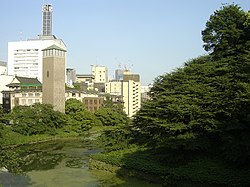
Edo Castle's northern enclosure, now a woodland retreat in central Tokyo

Kitanomaru Park
Photo by Gary Bembridge from London/ New York, UKWikimedia CommonsCC BY 2.0

6 min of listening · Section 1 of 5: Welcome to Kitanomaru Park

Prefer reading? The full guide is below

Here in person? Walk on with Mappu

This audio guide tells one place’s story. Walk Mode keeps going as you walk:

  • It knows where you are and talks about what’s in front of you, not only these chapters.
  • It takes you on to the next sight and follows what interests you.
  • Ask about anything you see, and it answers on the spot.
  • Your phone stays in your pocket.

A 2-hour live walk with Mappu, €4.99.

50 credits from the Starter pack. One-time purchase, no subscription.

Self-guided audio walk. No guide accompanies you. Not affiliated with the sites.

Keep exploring

Discover more places in Mappu.

Kitanomaru Park • Section 1 of 5

Kitanomaru Park: is there a free audio guide?

Quick answer. Yes. Mappu’s Kitanomaru Park audio guide (Tokyo, Japan) is free in your browser: 5 sections and about 6 minutes of listening, in 8 languages. It covers “From Edo Castle to Imperial Guard”, “Gates and Moats That Survived” and “Pond, Seasons and Wildlife”. In the Mappu app, Walk Mode narrates the places around you as you move and answers your follow-up questions.

Kitanomaru Park map

Mappu's own map of the place, with the paths and entrances OpenStreetMap shows around it.

Kitanomaru Park mapThe place on the map, with the guide's point marked.

Kitanomaru Park: what does the audio guide cover?

  1. 01

    Welcome to Kitanomaru Park

    Welcome to Kitanomaru Park, a stretch of woodland, pond and old stone gateways in the Chiyoda district of central Tokyo, just north of the Imperial Palace. Step in and the city's roar drops away surprisingly fast. The runners looping the palace moat are only steps away, yet here you can stroll, sit under trees and feel almost as if you were out in the countryside. The name tells you where you are. Kitanomaru means the northern enclosure, and this was the northernmost section of Edo Castle, the great fortress of the Tokugawa rulers. Over the next few stops we will follow the park through several lives: a castle precinct, a military post, a public park, and a home for museums and a famous arena. A practical pointer before we wander. Entrance to the park is free, and a marked walking trail circles it in roughly 40 minutes.

  2. 02

    From Edo Castle to Imperial Guard

    Picture this ground in the Edo period, which ran from 1603 to 1867. This was part of the vast castle of the Tokugawa shoguns, and the Kitanomaru was home to members of the extended Tokugawa family. The grounds are also remembered for a medicinal garden. It was a place of rank and privilege, not a place for a picnic. Then came the end of that world. Edo Castle itself burned down in 1873, and the northern enclosure went on to a very different role: a military outpost for the Imperial Guard. That military connection has left a curious trace even in modern times. As of 2008, the park's registered residents numbered 598, and they were almost all serving members of the Imperial Guard or the National Police Agency, along with their dependents. Very few city parks can say that. The transformation into the green space you see today came in 1969. The grounds opened as a public park to mark the sixtieth birthday of the Showa Emperor, who lived from 1901 to 1989. A fortress precinct became a place where anyone can wander.

  3. 03

    Gates and Moats That Survived

    The best way to touch the Edo past here is through the stonework. The park keeps several original gates and sections of the old moat, and two gateways stand out: Shimizu-mon and Tayasu-mon. Both are designated Important Cultural Properties in Japan. Tayasu-mon is the one most visitors meet first, near Kudanshita Station, and many consider it the more impressive of the two. Its exact date is told two ways. Some accounts place its construction in 1636, others in 1685. Either way, you are walking through a defensive structure from the early centuries of Tokugawa rule, and it still serves as a park entrance. Notice how the gateway forces you to pause and turn before the greenery opens up. That was the point of a castle gate. The moat adds another layer. The park is mostly surrounded by water, which is why it feels set apart from the city. If you follow the moatside path toward Chidorigafuchi, you join a flat walking route that is famous for its cherry blossoms in spring. More than 300 cherry trees are said to line the castle moat here, which makes it one of Tokyo's most popular places for hanami, the tradition of blossom-viewing parties.

  4. 04

    Pond, Seasons and Wildlife

    Now turn to the park's green heart. At its center lies a tree-shaded pond, fed by a small stream, and a little brook seems to play hide-and-seek among the trees. It is the focal point of the park and a wonderful place to sit. The park is a wild bird sanctuary, so keep your eyes and ears open for birds as you stroll. The seasons change this place dramatically. Spring brings cherry blossoms. In autumn the Japanese maples, the keyaki trees, which are a kind of zelkova, and the oaks turn to fiery reds, bright yellows and oranges. Both seasons are the most popular and the busiest, so if you want the quiet version of the park, aim for a calmer moment. The park is also a place to refuel. There is a café within the grounds, and you can bring a picnic to enjoy on the grass. It is the kind of green pause that makes a day of sightseeing in central Tokyo feel much more relaxed.

  5. 05

    Before You Head Off

    Kitanomaru has one more surprise: it holds some of Tokyo's best-known cultural venues. On the southern edge stands the National Museum of Modern Art, Tokyo, along with its Crafts Gallery. Inside the park you will find the Science Museum, a large interactive museum with science and technology exhibits. Then there is the Nippon Budokan. It was built as the indoor arena for martial arts events at the 1964 Olympics, and it is famous for having hosted the Beatles in 1966. Few places let you pass in one short walk from a Tokugawa-era gate to an Olympic arena and a rock and roll legend. As you leave, take a different exit than the one you came in by. Look back at the gate stones, the moat water and the tree line, and ask yourself which of the park's many lives you can still read in the landscape. The castle, the guard post and the public park are all layered here, waiting for a second look.

About this guide

AI-generated from 6 sources; reviewed for accuracy and last updated on October 31, 2026. Verify tickets and opening hours on the official site. Independent guide by Mappu. Not affiliated with or endorsed by the site or its managers.

Run a travel site or blog? Embed this audio guide for free.

Walk on from here

This place is stop 4 of 5 of a self-guided walk: Marunouchi to Kitanomaru Park, Tokyo. About 3.9 km and 50 minutes on foot, plus about 30 minutes of listening.

Route map: walking on from Kitanomaru Park5 numbered stops in walking order. Stop 1: Marunouchi; Stop 2: Mitsubishi Ichigokan Museum; Stop 3: Imperial Palace East Gardens; Stop 4: Kitanomaru Park; Stop 5: National Showa Memorial Museum.Stop 1: Marunouchi1Stop 2: Mitsubishi Ichigokan Museum2Stop 3: Imperial Palace East Gardens3Stop 4: Kitanomaru Park4Stop 5: National Showa Memorial Museum5
Distances are estimates along the walking route, from OpenStreetMap.

Indicative route. While you walk, watch where you're going, mind the traffic and follow local signs and rules. The map is an aid, not a safety guide. Terms

  1. Marunouchi

    about 0.5 km · about 7 min on foot

  2. Mitsubishi Ichigokan Museum

    about 1.7 km · about 23 min on foot

  3. Imperial Palace East Gardens

    about 1.0 km · about 14 min on foot

  4. Kitanomaru ParkThis guide

    about 0.7 km · about 9 min on foot

  5. National Showa Memorial Museum
Photo attribution

Walk Mode, in the free Mappu app: 2 hours for 50 credits (€4.99 Starter pack)

See the whole walk

Planning a trip to Tokyo?

Get your plan

Mappu sketches your days free in the chat, no account needed. Then take the full plan with you:

  • Weekend trip, €9.99: Your day-by-day plan plus 2 live walks
  • Save your trip’s free guides on your phone in the Mappu app: they play with no signal
See the trip packs

Already going? The 2-hour live walk in Tokyo is €4.99

Plan your trip

Photo attribution
  • Tokyo 3-Day Itinerary: Alex
  • Japan First Trip 10-Day Itinerary: Stefan K

Plan your trip on a map and get an audio guide for almost any place nearby: just tap it on the Mappu map.

Common questions

Kitanomaru Park: how long is the free audio guide?

About 6 minutes of listening in 5 sections: “Welcome to Kitanomaru Park”, “From Edo Castle to Imperial Guard”, “Gates and Moats That Survived”, “Pond, Seasons and Wildlife”, and “Before You Head Off”.

Kitanomaru Park: what can I ask Mappu after the guide?

You can ask follow-up questions such as “How did Kitanomaru change from part of Edo Castle into a public park?” and keep asking in Mappu, with the guide connected to your map and trip plan.