Marunouchi Audio Guide

Inside the circle: from a drained inlet to the heart of modern Tokyo

Marunouchi
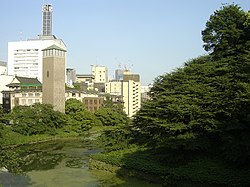
Photo by Basile MorinWikimedia CommonsCC BY-SA 4.0

6 min of listening · Section 1 of 5: Welcome to Marunouchi

Prefer reading? The full guide is below

Here in person? Walk on with Mappu

This audio guide tells one place’s story. Walk Mode keeps going as you walk:

  • It knows where you are and talks about what’s in front of you, not only these chapters.
  • It takes you on to the next sight and follows what interests you.
  • Ask about anything you see, and it answers on the spot.
  • Your phone stays in your pocket.

A 2-hour live walk with Mappu, €4.99.

50 credits from the Starter pack. One-time purchase, no subscription.

Self-guided audio walk. No guide accompanies you. Not affiliated with the sites.

Keep exploring

Discover more places in Mappu.

Marunouchi • Section 1 of 5

Marunouchi: is there a free audio guide?

Quick answer. Yes. Mappu’s Marunouchi audio guide (Tokyo, Japan) is free in your browser: 5 sections and about 6 minutes of listening, in 8 languages. It covers “From Inlet to Inside the Circle”, “Brick Dreams and Londontown” and “Tokyo Station and the Art of Restoration”. In the Mappu app, Walk Mode narrates the places around you as you move and answers your follow-up questions.

Marunouchi map

Mappu's own map of the place, with the paths and entrances OpenStreetMap shows around it.

Marunouchi mapThe place on the map, with the guide's point marked.

Marunouchi: what does the audio guide cover?

  1. 01

    Welcome to Marunouchi

    Welcome to Marunouchi, the district that sits between Tokyo Station and the Imperial Palace in Chiyoda, Tokyo. This guide tells the story of the whole neighborhood rather than a single doorway or building, so think of it as a walk through an entire quarter. Look around and you will see glass towers, brick facades, wide avenues and, not far away, the green of the palace grounds. The name gives you the first clue. Marunouchi means "inside the circle," and the circle in question is the outer moat of the palace. Today this is the core of Tokyo's central business district and one of the main financial centers in Japan, but the layout you see began as a story about water, castles and ambition. Over the next few minutes we will go back to a time when this ground was part of Tokyo Bay. We will look at the brick dreams of the Meiji era and at the red-brick station that anchors the area. Then we will see how a district of skyscrapers has learned to keep its past in plain view.

  2. 02

    From Inlet to Inside the Circle

    Picture this place in 1590, before the shogun Tokugawa Ieyasu entered Edo Castle. The area we now call Marunouchi was an inlet of Tokyo Bay, and it went by the name Hibiya. There were no avenues and no offices, only shoreline and water lapping at the edge of the castle's future. Then the castle grew. As it expanded, the inlet was filled in, beginning in 1592. A new outer moat was dug, and the earlier moat took on a new role as the inner moat. The ground that lay within that new outer moat is the origin of the district's name, Marunouchi, meaning inside the circle. That reshaping of land and water set the pattern for everything that followed. When you stand here today, you are standing on ground that was deliberately made, on the edge of the seat of power. Keep that in mind when you look toward the palace greenery. The moat that defined this district shaped its geography, its name and its identity long before the first office tower rose.

  3. 03

    Brick Dreams and Londontown

    Fast forward to the Meiji and Taisho periods, when Marunouchi came to embody national aspirations. The first building of the district's 1894 phase was the Mitsubishi Ichigokan, designed by the British architect Josiah Conder in the Queen Anne style. The district that grew around it was largely built of brick, and it came to be nicknamed the Mitsubishi "Londontown." Most of that brick city is gone. Only fragments survive, and Conder's original building came down in 1968. Yet its memory lives on in the Mitsubishi Ichigokan Museum, Tokyo, where you can enjoy retro architecture alongside artworks. The grand projects of this era were more than buildings. Gyoko-dori Avenue, built between 1903 and 1923, ran toward the palace as a ceremonial axis. The Marunouchi Building opened in 1923, and Tokyo Station followed in 1914. Together they formed a new visual culture for the capital, with European-style monumental architecture at the center of Japan's modernization. Walking here, you are moving through the stage set of a nation reinventing itself.

  4. 04

    Tokyo Station and the Art of Restoration

    Now turn toward Tokyo Station, the district's great landmark. Its Marunouchi building was designed by Kingo Tatsuno, and its handsome look reflects his architectural training. The station dates to 1914, and it reopened on the first of October 2012 after a five-year refurbishment that brought the Marunouchi side back to its 1914 glory. The station is also the gateway to the district's present. It serves shinkansen lines, the Yamanote Line and many other urban and suburban train and subway lines. Beside the Marunouchi South Exit, the Tokyo Station Hotel, registered as an Important Cultural Property, reopened after the same careful renovations. Preservation here was not only a matter of sentiment. Researchers studying Marunouchi's redevelopment point out that concern for heritage alone was not enough to drive restoration. Economic leverage and negotiation were critical to making preservation succeed. They also describe a deliberate use of historical continuity, with old and new woven into one story. When you admire the brick, you are looking at a deal as much as a monument.

  5. 05

    Before You Head Off

    Marunouchi rewards slow walking. Sandwiched between the station and the palace greenery, it is a place where history and modernity sit side by side, with cultural spots tucked between the skyscrapers. Stroll along Marunouchi-Nakadori Avenue and watch for the outdoor art along the way. If you want a different angle, the terraces of the Marunouchi Building and the Shin-Marunouchi Building offer panoramic views of Tokyo Station. Seeing the station from above, with the towers around it, makes the contrast between the eras easy to read. The lower floors of those buildings are lined with boutiques, cafes and restaurants, so there is room to pause. As you wander, try a small game. Look up for the brick, look down the avenues toward the palace, and see if you can sense where the old moat once drew its circle. The district keeps offering new layers, and the next one might be waiting just around the corner.

About this guide

AI-generated from 6 sources; checked automatically and last updated on October 31, 2026. Verify tickets and opening hours on the official site. Independent guide by Mappu. Not affiliated with or endorsed by the site or its managers.

Run a travel site or blog? Embed this audio guide for free.

Walk on from here

This place is stop 1 of 5 of a self-guided walk: Marunouchi to Kitanomaru Park, Tokyo. About 3.9 km and 50 minutes on foot, plus about 30 minutes of listening.

Route map: walking on from Marunouchi5 numbered stops in walking order. Stop 1: Marunouchi; Stop 2: Mitsubishi Ichigokan Museum; Stop 3: Imperial Palace East Gardens; Stop 4: Kitanomaru Park; Stop 5: National Showa Memorial Museum.Stop 1: Marunouchi1Stop 2: Mitsubishi Ichigokan Museum2Stop 3: Imperial Palace East Gardens3Stop 4: Kitanomaru Park4Stop 5: National Showa Memorial Museum5
Distances are estimates along the walking route, from OpenStreetMap.

Indicative route. While you walk, watch where you're going, mind the traffic and follow local signs and rules. The map is an aid, not a safety guide. Terms

  1. MarunouchiThis guide

    about 0.5 km · about 7 min on foot

  2. Mitsubishi Ichigokan Museum

    about 1.7 km · about 23 min on foot

  3. Imperial Palace East Gardens

    about 1.0 km · about 14 min on foot

  4. Kitanomaru Park

    about 0.7 km · about 9 min on foot

  5. National Showa Memorial Museum
Photo attribution

Walk Mode, in the free Mappu app: 2 hours for 50 credits (€4.99 Starter pack)

See the whole walk

Planning a trip to Tokyo?

Get your plan

Mappu sketches your days free in the chat, no account needed. Then take the full plan with you:

  • Weekend trip, €9.99: Your day-by-day plan plus 2 live walks
  • Save your trip’s free guides on your phone in the Mappu app: they play with no signal
See the trip packs

Already going? The 2-hour live walk in Tokyo is €4.99

Plan your trip

Photo attribution
  • Tokyo 3-Day Itinerary: Alex
  • Japan First Trip 10-Day Itinerary: Stefan K

Plan your trip on a map and get an audio guide for almost any place nearby: just tap it on the Mappu map.

Common questions

Marunouchi: how long is the free audio guide?

About 6 minutes of listening in 5 sections: “Welcome to Marunouchi”, “From Inlet to Inside the Circle”, “Brick Dreams and Londontown”, “Tokyo Station and the Art of Restoration”, and “Before You Head Off”.

Marunouchi: what can I ask Mappu after the guide?

You can ask follow-up questions such as “How did the filling in of the Hibiya inlet and the digging of a new outer moat shape the Marunouchi we see today?” and keep asking in Mappu, with the guide connected to your map and trip plan.