Imperial Palace East Garden Audio Guide

Audio guide for Imperial Palace East Garden

Imperial Palace East Gardens
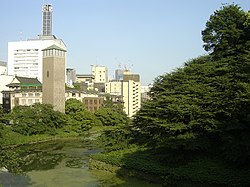
Photo by Don Ramey LoganWikimedia CommonsCC BY-SA 3.0

6 min of listening · Section 1 of 5: Welcome to Imperial Palace East Garden

Prefer reading? The full guide is below

Here in person? Walk on with Mappu

This audio guide tells one place’s story. Walk Mode keeps going as you walk:

  • It knows where you are and talks about what’s in front of you, not only these chapters.
  • It takes you on to the next sight and follows what interests you.
  • Ask about anything you see, and it answers on the spot.
  • Your phone stays in your pocket.

A 2-hour live walk with Mappu, €4.99.

50 credits from the Starter pack. One-time purchase, no subscription.

Self-guided audio walk. No guide accompanies you. Not affiliated with the sites.

Keep exploring

Discover more places in Mappu.

Imperial Palace East Gardens • Section 1 of 5

Imperial Palace East Gardens: is there a free audio guide?

Quick answer. Yes. Mappu’s Imperial Palace East Garden audio guide (Tokyo, Japan) is free in your browser: 5 sections and about 6 minutes of listening, in 8 languages. It covers “The Heart of Edo Castle”, “The Tower That Burned” and “From Palace Grounds to Public Park”. In the Mappu app, Walk Mode narrates the places around you as you move and answers your follow-up questions.

Imperial Palace East Garden map

Mappu's own map of the place, with the paths and entrances OpenStreetMap shows around it.

Imperial Palace East Garden mapThe place on the map, with the guide's point marked.

Imperial Palace East Gardens: what does the audio guide cover?

  1. 01

    Welcome to Imperial Palace East Garden

    Welcome to the Imperial Palace East Garden, known in Japanese as Kōkyo Higashi Gyoen. You are standing in the heart of Tokyo, in Chiyoda Ward, on a piece of land that feels like a pause button pressed in the middle of a very fast city. This calm green oasis sits only about a ten-minute walk from Tokyo Station and the tall towers of the Marunouchi financial district. The garden is part of the inner palace area, and it is one of the few parts of the Imperial Palace you can enter freely. Behind the lawns and trees lies something much older than any skyscraper. This was the innermost circle of Edo Castle, home of the Tokugawa shoguns, who ruled Japan from 1603 to 1867. The whole palace grounds cover about 1.15 square kilometers, and the East Garden is your open door into that world. Over the next few stops we will walk through the castle layers beneath your feet, follow the story of how a shogun's fortress became a public park, and look at the surprising mix of old stone and modern buildings that share this ground.

  2. 02

    The Heart of Edo Castle

    Before this was a garden, it was the command center of a nation. The East Garden covers the former honmaru, the main circle, and the ninomaru, the secondary circle. These were the innermost defensive rings of Edo Castle. The honmaru was the luxurious innermost part of the palace and the main residence of the shogun himself. The ninomaru had a different role. Under the Tokugawa shogunate it was made as a place for the heirs, with a palace for them to live in. Fire was the great enemy of this place. Several fires burned the palace, and this area suffered especially. People kept trying to rebuild it right up until the Meiji era. As you wander the honmaru today, you will find lawns, trees and flowers where shogunal rooms once stood. The remains of the castle's main tower are here too. It is a strange feeling to stroll across open grass and realize you are crossing the former private quarters of one of the most powerful households in Japanese history.

  3. 03

    The Tower That Burned

    Look for the great stone foundation of the castle tower, the tenshukaku. It is one of the most striking sights in the garden, and you can climb it. The tower that stood on this base burned down over 350 years ago, and the stone platform is what remains. That is the charm of Edo Castle's remains: what survives is mostly the foundation, the walls, the gates and the guardhouses. The garden holds layers of architecture built up over centuries, from the castle's original stone walls and guardhouses to buildings of the twentieth century. The East Garden contains over a dozen named structures and sites, so it rewards a slow wander rather than a sprint. When you stand on top of the foundation, take a moment to look out over the lawns. The scale of the platform tells you how imposing the tower must have been, and the quiet around you tells you how completely the castle's story has turned into a peaceful one.

  4. 04

    From Palace Grounds to Public Park

    The garden you see today is surprisingly young. After the Second World War, the area was renamed Imperial Residence in 1948, and the eastern part was renamed East Garden. It became a public park in 1968. Getting there took real work. Stables and housing were removed to create the garden in its present configuration. Construction began in 1961 with a new pond in the ninomaru, along with the repair and restoration of various keeps and structures from the Edo period. On May 30, 1963, the Japanese government declared the area a Special Historic Relic under the Cultural Properties Protection Law. Modern buildings sit comfortably among the old stones. The Tokagakudo, the Imperial Concert Hall, dates from 1966. In the sannomaru, the third circle, stands the Sannomaru Shozokan, the Museum of the Imperial Collections. Nearby you will also see the Imperial Household Agency building, and a bridge leading to the Sakashita-mon gate. Beyond the garden, the modern Kyuden, the palace for court functions and receptions, was completed in 1968 and put into use in April 1969. It stands in a separate zone, not part of the public garden.

  5. 05

    Before You Head Off

    The East Garden is free to enter, and it is generally open daily except on Mondays, Fridays and designated holidays, so it is worth planning your day around that. It is especially popular for its cherry blossoms in spring and its vibrant foliage in autumn, though the lawns and stone walls have a quiet appeal in any season. As you leave, notice how many layers share this one piece of land. A shogun's residence, heirs' palaces, a burned tower, a twentieth-century concert hall and a museum of imperial treasures all sit within a short walk of one another. Beyond the garden, the rest of the palace grounds remain the home of the Imperial Family, and the Fukiage Palace, the emperor's residence completed in 1993, lies in the Fukiage Garden out of public view. Before you go, pick one corner you have not yet explored. A gate, a guardhouse or a stretch of stone wall may tell you more about this fortress than any single viewpoint. The garden has plenty left to show you.

About this guide

AI-generated from 6 sources; checked automatically and last updated on October 31, 2026. Verify tickets and opening hours on the official site. Independent guide by Mappu. Not affiliated with or endorsed by the site or its managers.

Run a travel site or blog? Embed this audio guide for free.

Walk on from here

This place is stop 3 of 5 of a self-guided walk: Marunouchi to Kitanomaru Park, Tokyo. About 3.9 km and 50 minutes on foot, plus about 30 minutes of listening.

Route map: walking on from Imperial Palace East Gardens5 numbered stops in walking order. Stop 1: Marunouchi; Stop 2: Mitsubishi Ichigokan Museum; Stop 3: Imperial Palace East Gardens; Stop 4: Kitanomaru Park; Stop 5: National Showa Memorial Museum.Stop 1: Marunouchi1Stop 2: Mitsubishi Ichigokan Museum2Stop 3: Imperial Palace East Gardens3Stop 4: Kitanomaru Park4Stop 5: National Showa Memorial Museum5
Distances are estimates along the walking route, from OpenStreetMap.

Indicative route. While you walk, watch where you're going, mind the traffic and follow local signs and rules. The map is an aid, not a safety guide. Terms

  1. Marunouchi

    about 0.5 km · about 7 min on foot

  2. Mitsubishi Ichigokan Museum

    about 1.7 km · about 23 min on foot

  3. Imperial Palace East GardensThis guide

    about 1.0 km · about 14 min on foot

  4. Kitanomaru Park

    about 0.7 km · about 9 min on foot

  5. National Showa Memorial Museum
Photo attribution

Walk Mode, in the free Mappu app: 2 hours for 50 credits (€4.99 Starter pack)

See the whole walk

Planning a trip to Tokyo?

Get your plan

Mappu sketches your days free in the chat, no account needed. Then take the full plan with you:

  • Weekend trip, €9.99: Your day-by-day plan plus 2 live walks
  • Save your trip’s free guides on your phone in the Mappu app: they play with no signal
See the trip packs

Already going? The 2-hour live walk in Tokyo is €4.99

Plan your trip

Photo attribution
  • Tokyo 3-Day Itinerary: Alex
  • Japan First Trip 10-Day Itinerary: Stefan K

Useful for your visit

Tickets, tours and practical extras for this trip, from Mappu's partners.

Partner links (Airalo, Amazon, Booking.com, GetYourGuide, Klook, Tiqets, Trip.com, Viator, Welcome Pickups): if you book or buy through them, Mappu may earn a commission, at no extra cost to you.

Plan your trip on a map and get an audio guide for almost any place nearby: just tap it on the Mappu map.

Common questions

Imperial Palace East Garden: how long is the free audio guide?

About 6 minutes of listening in 5 sections: “Welcome to Imperial Palace East Garden”, “The Heart of Edo Castle”, “The Tower That Burned”, “From Palace Grounds to Public Park”, and “Before You Head Off”.

Imperial Palace East Garden: what can I ask Mappu after the guide?

You can ask follow-up questions such as “What was daily life like for the shogun in the honmaru, and how did it differ from life for the heirs in the ninomaru?” and keep asking in Mappu, with the guide connected to your map and trip plan.