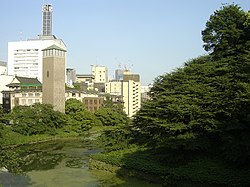
National Museum of Modern Art, Tokyo Audio Guide

Japan's first national art museum, beside the old moat of Edo Castle

National Museum of Modern Art, Tokyo
Photo by KakidaiWikimedia CommonsCC BY-SA 4.0

6 min of listening · Section 1 of 5: Welcome to National Museum of Modern Art, Tokyo (MOMAT)

Prefer reading? The full guide is below

Here in person? Walk on with Mappu

This audio guide tells one place’s story. Walk Mode keeps going as you walk:

  • It knows where you are and talks about what’s in front of you, not only these chapters.
  • It takes you on to the next sight and follows what interests you.
  • Ask about anything you see, and it answers on the spot.
  • Your phone stays in your pocket.

A 2-hour live walk with Mappu, €4.99.

50 credits from the Starter pack. One-time purchase, no subscription.

Self-guided audio walk. No guide accompanies you. Not affiliated with the sites.

Keep exploring

Discover more places in Mappu.

National Museum of Modern Art, Tokyo • Section 1 of 5

National Museum of Modern Art, Tokyo: is there a free audio guide?

Quick answer. Yes. Mappu’s National Museum of Modern Art, Tokyo audio guide (Tokyo, Japan) is free in your browser: 5 sections and about 6 minutes of listening, in 8 languages. It covers “A First for Japan: The Story of National Museum of Modern Art, Tokyo (MOMAT)”. In the Mappu app, Walk Mode narrates the places around you as you move and answers your follow-up questions.

National Museum of Modern Art, Tokyo map

Mappu's own map of the place, with the paths and entrances OpenStreetMap shows around it.

National Museum of Modern Art, Tokyo mapThe place on the map, with the guide's point marked.

National Museum of Modern Art, Tokyo: what does the audio guide cover?

  1. 01

    Welcome to National Museum of Modern Art, Tokyo (MOMAT)

    Welcome to the National Museum of Modern Art, Tokyo, known as MOMAT, or Tōkyō Kokuritsu Kindai Bijutsukan in Japanese. You are in Chiyoda ward, in the green space of Kitanomaru Park, just beside the old moat of Edo Castle. It is an unusual spot for a modern art museum, with the Imperial Palace, the park and the cherry-blossom waters of Chidorigafuchi all close by. This is the foremost museum collecting and exhibiting modern Japanese art. Its collection has more than 13,000 items, including works designated as National Important Cultural Properties. They span the end of the nineteenth century to the present, with some masterpieces from abroad, and they include both Western-style painting and Nihonga, the Japanese-style tradition. Over the next few stops, we will follow the museum's journey from a converted office building in Kyobashi to this concrete building at Takebashi. We will look at the architecture, walk through how the galleries are arranged, and meet a sister museum that once lived in a very different building nearby. Take a breath, look up at the building, and let's begin.

  2. 02

    A First for Japan: The Story of National Museum of Modern Art, Tokyo (MOMAT)

    The story begins somewhere else entirely. On December 1, 1952, the museum opened its doors in Kyobashi, in Chuo ward, as Japan's first national art museum. The long-awaited national facility, where visitors could enjoy modern art, was housed in the former headquarters of the Nikkatsu Corporation. The architect Maekawa Kunio had designed and refurbished the building for its new purpose. From the very start the museum thought across disciplines. In 1953 it organized an exhibition of contemporary photography from Japan and America. In 1954 came Gropius and Bauhaus. Together they reached into photography, design and architecture, well beyond painting and sculpture. A branch of the museum in Kyoto grew too, and in 1967 it became the independent National Museum of Modern Art, Kyoto. Back in Tokyo, the collection kept growing through new acquisitions, transfers of artworks from the Cultural Properties Protection Commission, and gifts from artists and collectors. Eventually the Kyobashi building was simply too small. In June 1969 the museum reopened here at Takebashi, in a brand-new building.

  3. 03

    Concrete, Columns and a Gift: The Architecture of National Museum of Modern Art, Tokyo (MOMAT)

    The building you see here was a gift. The industrialist Ishibashi Shojiro, founder of Bridgestone and a trustee of the museum, funded the new building and donated it. He chose the architect Taniguchi Yoshiro, an engineering doctor who also designed the Toyokan at the Tokyo National Museum. Look at how the structure carries itself. The building sits on pilotis, thick columns that lift the main body off the ground, and undulating beams run across the top. Their neat rhythm gives a Japanese flavor to an exterior finished in modern concrete. It looks heavy and solid, yet it seems to hover. Taniguchi gave this site a meaning. In his 1974 book Kenchiku ni Ikiru, Living for Architecture, he described Takebashi, near the moat of Edo Castle and the Marunouchi business district, as being at the interface between past Japan and the modern city of Tokyo. That idea shaped the design, and it also points to the museum's mission as a bearer of history. Stand by the moat and you can see exactly what he meant: old stone and water on one side, the modern business district on the other.

  4. 04

    Inside the Galleries of National Museum of Modern Art, Tokyo (MOMAT)

    Now let's step inside. The museum has about 4,500 square meters of exhibition space, and the layout is easy to read from top to bottom. The collection galleries on the fourth, third and second floors present the MOMAT Collection, with 200 pieces selected from the museum's holdings for each exhibition period. The selection changes, so the walk through is never quite the same twice. The story these floors tell is one of turbulence. It follows Japan's rapid modernization, when artists searched for an epoch-making form of expression between the traditional Japanese sense of beauty and the very different culture of Western art. You will find masterpieces in many genres, from the end of the nineteenth century to the present. On the first floor, the gallery hosts special thematic exhibitions of Japanese and overseas art several times a year. Keep an eye out for the relaxation space called A Room With a View. It is a place to pause between galleries, and it offers a view well worth stopping for.

  5. 05

    Before You Head Off

    There is one more chapter to this story, and it lives next door in memory. In 1977 the museum's Crafts Gallery opened in the former headquarters of the Imperial Guards, a building raised in 1910 north of the Imperial Palace and designated an Important Cultural Property in 1972. In October 2020 the crafts collection moved to Kanazawa and reopened as the National Crafts Museum, in a building made from the relocated and restored former Ninth Division headquarters and the Kanazawa Kaikosha. As you leave, take a slow walk through Kitanomaru Park. Notice how the museum sits among the trees and moat, just as Taniguchi imagined, between old Japan and the modern city. Chidorigafuchi and the Imperial Palace are close, so the afternoon can go on. And perhaps carry one question with you: when you look back at those thick columns and rolling beams, do you see Japan's past, its modern age, or the line where they meet?

About this guide

AI-generated from 6 sources; checked automatically and last updated on October 31, 2026. Verify tickets and opening hours on the official site. Independent guide by Mappu. Not affiliated with or endorsed by the site or its managers.

Run a travel site or blog? Embed this audio guide for free.

Walk on from here

The nearest places with a Mappu audio guide, in walking order: about 2.6 km and 35 minutes on foot in all.

Route map: walking on from National Museum of Modern Art, Tokyo5 numbered stops in walking order. Stop 1: National Museum of Modern Art, Tokyo; Stop 2: Kitanomaru Park; Stop 3: National Showa Memorial Museum; Stop 4: Imperial Palace East Gardens; Stop 5: Museum of the Imperial Collections.Stop 1: National Museum of Modern Art, Tokyo1Stop 2: Kitanomaru Park2Stop 3: National Showa Memorial Museum3Stop 4: Imperial Palace East Gardens4Stop 5: Museum of the Imperial Collections5
Distances are estimates: the straight line between places plus 30%.

Indicative route. While you walk, watch where you're going, mind the traffic and follow local signs and rules. The map is an aid, not a safety guide. Terms

  1. National Museum of Modern Art, TokyoThis guide

    about 0.4 km · about 6 min on foot

  2. Kitanomaru Park

    about 0.5 km · about 7 min on foot

  3. National Showa Memorial Museum

    about 1.3 km · about 18 min on foot

  4. Imperial Palace East Gardens

    about 0.3 km · about 4 min on foot

  5. Museum of the Imperial Collections
Photo attribution

Walk Mode, in the free Mappu app: 2 hours for 50 credits (€4.99 Starter pack)

Planning a trip to Tokyo?

Get your plan

Mappu sketches your days free in the chat, no account needed. Then take the full plan with you:

  • Weekend trip, €9.99: Your day-by-day plan plus 2 live walks
  • Save your trip’s free guides on your phone in the Mappu app: they play with no signal
See the trip packs

Already going? The 2-hour live walk in Tokyo is €4.99

Plan your trip

Photo attribution
  • Tokyo 3-Day Itinerary: Alex
  • Japan First Trip 10-Day Itinerary: Stefan K

Plan your trip on a map and get an audio guide for almost any place nearby: just tap it on the Mappu map.

Common questions

National Museum of Modern Art, Tokyo: how long is the free audio guide?

About 6 minutes of listening in 5 sections: “Welcome to National Museum of Modern Art, Tokyo (MOMAT)”, “A First for Japan: The Story of National Museum of Modern Art, Tokyo (MOMAT)”, “Concrete, Columns and a Gift: The Architecture of National Museum of Modern Art, Tokyo (MOMAT)”, “Inside the Galleries of National Museum of Modern Art, Tokyo (MOMAT)”, and “Before You Head Off”.

National Museum of Modern Art, Tokyo: what can I ask Mappu after the guide?

You can ask follow-up questions such as “How did the museum grow from its start in Kyobashi in 1952 to the building at Takebashi?” and keep asking in Mappu, with the guide connected to your map and trip plan.