Chidorigafuchi National Cemetery Audio Guide

Audio guide for Chidorigafuchi National Cemetery

Chidorigafuchi National Cemetery
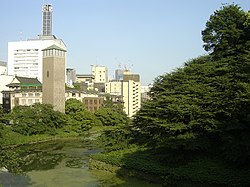
Photo by AbasaaWikimedia CommonsPublic domain

6 min of listening · Section 1 of 5: Welcome to Chidorigafuchi National Cemetery

Prefer reading? The full guide is below

Here in person? Walk on with Mappu

This audio guide tells one place’s story. Walk Mode keeps going as you walk:

  • It knows where you are and talks about what’s in front of you, not only these chapters.
  • It takes you on to the next sight and follows what interests you.
  • Ask about anything you see, and it answers on the spot.
  • Your phone stays in your pocket.

A 2-hour live walk with Mappu, €4.99.

50 credits from the Starter pack. One-time purchase, no subscription.

Self-guided audio walk. No guide accompanies you. Not affiliated with the sites.

Keep exploring

Discover more places in Mappu.

Chidorigafuchi National Cemetery • Section 1 of 5

Chidorigafuchi National Cemetery: is there a free audio guide?

Quick answer. Yes. Mappu’s Chidorigafuchi National Cemetery audio guide (Tokyo, Japan) is free in your browser: 5 sections and about 6 minutes of listening, in 8 languages. It covers “Why Chidorigafuchi National Cemetery Was Built”, “The Hexagonal Pavilion and the Golden Urn at Chidorigafuchi National Cemetery” and “Design, Stones and a Poem at Chidorigafuchi National Cemetery”. In the Mappu app, Walk Mode narrates the places around you as you move and answers your follow-up questions.

Chidorigafuchi National Cemetery map

Mappu's own map of the place, with the paths and entrances OpenStreetMap shows around it.

Chidorigafuchi National Cemetery mapThe place on the map, with the guide's point marked.

Chidorigafuchi National Cemetery: what does the audio guide cover?

  1. 01

    Welcome to Chidorigafuchi National Cemetery

    Welcome to Chidorigafuchi National Cemetery, known in Japanese as 千鳥ヶ淵戦没者墓苑. It sits beside the waters of Chidorigafuchi in Chiyoda Ward, in the heart of Tokyo. This is a quiet place of remembrance, and the pace of the visit is a gentle one. The cemetery holds the remains of people who died in the Sino-Japanese War and the Pacific War and whose remains could not be handed back to their families. It is laid out as a cemetery park, and it is one of the national parks and gardens overseen by the Ministry of the Environment. Over the next few minutes I will tell you why it was built, how it was designed, and what you will find as you walk in. The grounds cover roughly 5,000 tsubo, the traditional Japanese unit of land area. From Kudanshita Station, take exit 2 and walk about 12 minutes along the Chidorigafuchi Greenway. Please keep your voice low and your steps unhurried as you arrive.

  2. 02

    Why Chidorigafuchi National Cemetery Was Built

    To understand this place, start with a number. Those who died on overseas battlefields in the last war are counted at about 2.1 million soldiers and military civilian staff, plus about 300,000 civilians caught up in the fighting. That makes roughly 2.4 million people in all. From around 1952, the Japanese government began collecting remains from abroad, and a hard question came with them. What should be done with remains that could not be identified, and so could not be returned to a family? In December 1953 the state set out to bury them together. Remains brought home by returning units and by individuals were added to those gathered by government delegations from 1953 onward. The site chosen was land beside Chidorigafuchi that had been managed by the Imperial Household Agency. Construction began in July 1958. The cemetery was completed on March 28, 1959, and on that day Emperor Showa and the Empress attended a solemn ceremony of homage here. Civilians who died overseas are among those laid to rest, not only soldiers.

  3. 03

    The Hexagonal Pavilion and the Golden Urn at Chidorigafuchi National Cemetery

    At the center of the grounds stands the hexagonal pavilion, the Rokkakudo. Inside it rests a symbol of everyone who fell. Emperor Showa gave an urn for the cemetery's completion, shaped like a tea jar, about 28.3 centimeters tall and 23.8 centimeters across at its widest. Its surface is covered in gold leaf, an act of care so that the spirits of the dead might rest in peace. Into this urn were placed small portions of remains representing the war dead of every battlefield. The urn rests inside a brown ceramic coffin at the center of the pavilion. Beneath the grounds, the burial chambers and an added chamber hold more than 358,000 sets of remains. After the homage ceremony held on May 29, 2023, the government counted a total of 370,485. The added chamber is managed by the Ministry of Health, Labour and Welfare, while the Ministry of the Environment looks after the grounds themselves.

  4. 04

    Design, Stones and a Poem at Chidorigafuchi National Cemetery

    The designers set out clear principles: simple and dignified, large enough to hold many people for memorial events, and not tied to any one religious style. Landscape designer Tsuyoshi Tamura chose a Japanese approach that is simple, pure and solemn. All the materials are domestic, and the trees are species associated with the Musashino plain. Most are evergreens, with few flowering trees. The paving stones of the plaza come from Nebukawa in Izu and are laid irregularly so the ground blends with nature. Straight lines tie it all together, and ornate Western-style decoration is avoided. There is almost no writing here. Choosing words and an author for an inscription proved too difficult, so the only markers are stones at the two entrances. The front bears the cemetery's name in the hand of Prime Minister Kishi. The back records the completion date in the hand of Health Minister Sakata. Kishi's stone uses an older variant of the character for fuchi, the word for deep water or pool. To the left of the pavilion stands a granite monument carved with a poem Emperor Showa gave in the autumn of 1959. It runs roughly: when I think of those who gave their lives for the country, my heart is filled with emotion. Princess Chichibu Setsuko wrote out the calligraphy, and the monument was unveiled on March 28, 1960, the cemetery's first anniversary.

  5. 05

    Before You Head Off

    Remembrance here is not only a matter of the past. Every year the Ministry of Health, Labour and Welfare holds a homage ceremony at the cemetery, and a foundation organizes an autumn memorial service. Associations of former army and navy personnel, together with those from the Self-Defense Forces, continue to pay monthly visits. Cadets from the National Defense Academy walk through the night from their campus in Yokosuka to pay respects here and at Yasukuni Shrine. Before you leave, think about how little is written on these grounds. The spaces between the stones and the evergreens say a great deal. The cemetery is open during daytime only. In summer, from April to September, it is open from 9 a.m. to 5 p.m. In winter, from October to March, it closes at four. Free parking is available for visitors. Notice which entrance stone you passed and which way the plaza stones lie, and let the water of Chidorigafuchi be the last thing you see as you walk back along the greenway.

About this guide

AI-generated from 6 sources; checked automatically and last updated on October 31, 2026. Verify tickets and opening hours on the official site. Independent guide by Mappu. Not affiliated with or endorsed by the site or its managers.

Run a travel site or blog? Embed this audio guide for free.

Walk on from here

The nearest places with a Mappu audio guide, in walking order: about 2.9 km and 40 minutes on foot in all.

Route map: walking on from Chidorigafuchi National Cemetery5 numbered stops in walking order. Stop 1: Chidorigafuchi National Cemetery; Stop 2: Kitanomaru Park; Stop 3: National Museum of Modern Art, Tokyo; Stop 4: Imperial Palace East Gardens; Stop 5: National Showa Memorial Museum.Stop 1: Chidorigafuchi National Cemetery1Stop 2: Kitanomaru Park2Stop 3: National Museum of Modern Art, Tokyo3Stop 4: Imperial Palace East Gardens4Stop 5: National Showa Memorial Museum5
Distances are estimates: the straight line between places plus 30%.

Indicative route. While you walk, watch where you're going, mind the traffic and follow local signs and rules. The map is an aid, not a safety guide. Terms

  1. Chidorigafuchi National CemeteryThis guide

    about 0.5 km · about 7 min on foot

  2. Kitanomaru Park

    about 0.4 km · about 6 min on foot

  3. National Museum of Modern Art, Tokyo

    about 0.6 km · about 7 min on foot

  4. Imperial Palace East Gardens

    about 1.3 km · about 18 min on foot

  5. National Showa Memorial Museum
Photo attribution

Walk Mode, in the free Mappu app: 2 hours for 50 credits (€4.99 Starter pack)

Planning a trip to Tokyo?

Get your plan

Mappu sketches your days free in the chat, no account needed. Then take the full plan with you:

  • Weekend trip, €9.99: Your day-by-day plan plus 2 live walks
  • Save your trip’s free guides on your phone in the Mappu app: they play with no signal
See the trip packs

Already going? The 2-hour live walk in Tokyo is €4.99

Plan your trip

Photo attribution
  • Tokyo 3-Day Itinerary: Alex
  • Japan First Trip 10-Day Itinerary: Stefan K

More historic cemeteries with a free audio guide

Photo attribution

Plan your trip on a map and get an audio guide for almost any place nearby: just tap it on the Mappu map.

Common questions

Chidorigafuchi National Cemetery: how long is the free audio guide?

About 6 minutes of listening in 5 sections: “Welcome to Chidorigafuchi National Cemetery”, “Why Chidorigafuchi National Cemetery Was Built”, “The Hexagonal Pavilion and the Golden Urn at Chidorigafuchi National Cemetery”, “Design, Stones and a Poem at Chidorigafuchi National Cemetery”, and “Before You Head Off”.

Chidorigafuchi National Cemetery: what can I ask Mappu after the guide?

You can ask follow-up questions such as “Why did the government decide to build a shared cemetery for remains that could not be returned to families?” and keep asking in Mappu, with the guide connected to your map and trip plan.