Atago Shrine Audio Guide

Audio guide for Atago Shrine

Atago Shrine
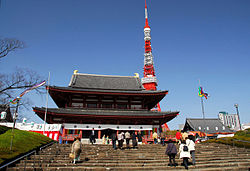
Photo by Chris 73Wikimedia CommonsCC BY-SA 3.0

5 min of listening · Section 1 of 5: Welcome to Atago Shrine

Prefer reading? The full guide is below

Here in person? Walk on with Mappu

This audio guide tells one place’s story. Walk Mode keeps going as you walk:

  • It knows where you are and talks about what’s in front of you, not only these chapters.
  • It takes you on to the next sight and follows what interests you.
  • Ask about anything you see, and it answers on the spot.
  • Your phone stays in your pocket.

A 2-hour live walk with Mappu, €4.99.

50 credits from the Starter pack. One-time purchase, no subscription.

Self-guided audio walk. No guide accompanies you. Not affiliated with the sites.

Keep exploring

Discover more places in Mappu.

Atago Shrine • Section 1 of 5

Atago Shrine: is there a free audio guide?

Quick answer. Yes. Mappu’s Atago Shrine audio guide (Tokyo, Japan) is free in your browser: 5 sections and about 5 minutes of listening, in 8 languages. It covers “Atago Shrine and the Order of a Shogun”, “The Stone Steps to Success at Atago Shrine” and “Atago Shrine in the Modern Minato Ward”. In the Mappu app, Walk Mode narrates the places around you as you move and answers your follow-up questions.

Atago Shrine map

Mappu's own map of the place, with the paths and entrances OpenStreetMap shows around it.

Atago Shrine mapThe place on the map, with the guide's point marked.

Atago Shrine: what does the audio guide cover?

  1. 01

    Welcome to Atago Shrine

    Welcome to Atago Shrine, known in Japanese as 愛宕神社, a Shinto shrine in the Minato ward of Tokyo. It stands on Atagoyama, a hill in the middle of one of the busiest business districts in the city. The detailed record of this particular place is fairly short, so this guide sticks to what is firmly established: when the shrine was founded, who ordered it, what you can see today, and the famous story attached to its staircase. The shrine's address is Atago, first district, in Minato. The nearest station is Kamiyacho, on the Hibiya subway line, so you can arrive by train and step almost straight from skyscraper streets into a hillside shrine. As you begin, keep one idea in mind: this is a place where very old Edo-period history sits right beside modern Tokyo. Over the next few minutes we will look at the founding, the steep stone steps that made the shrine famous, and the ward that surrounds it today.

  2. 02

    Atago Shrine and the Order of a Shogun

    Atago Shrine was established in 1603, the eighth year of the Keicho era, and it was founded on the order of the shogun Tokugawa Ieyasu. That date is worth pausing over. Ieyasu is the man who founded the Tokugawa shogunate and made Edo, today's Tokyo, the seat of power. A shrine ordered in 1603 belongs to the very first chapter of that story, when Edo was being shaped into the capital of a new political order. The shrine sits on Atagoyama, a hill rising above the surrounding streets. Hills like this gave the city a natural vantage point and a sense of separation from the bustle below, which is part of why a shrine feels so at home here. The main enshrined deity is Homusubi-no-mikoto, written with characters that include the character for fire. So as you stand in the grounds, you are visiting a shrine with a founding date, a famous patron, and a divine figure all clearly on record.

  3. 03

    The Stone Steps to Success at Atago Shrine

    Atago Shrine is probably best known for its staircase. Rising from the main torii gate, the stone steps are very steep, and they are nicknamed the stone steps to success. Look up from the bottom and you will understand why people hesitate before the first step. The nickname comes from a famous tale. According to the story, the shogun Tokugawa Iemitsu gave an order, and a samurai from Shikoku named Magaki Heikuro answered it in the boldest way imaginable. He rode his horse up this staircase to collect plum blossoms that were in full bloom in the shrine grounds. It is a story told as part of the shrine's character, and it is the reason the climb is linked with ambition and achievement. Whether you take the steps slowly or simply admire them from the bottom, picture a rider and horse on that narrow, steep stone. It is hard to imagine, and that is exactly why the story has lasted.

  4. 04

    Atago Shrine in the Modern Minato Ward

    The shrine you see today is not the original wooden complex from 1603. The current shrine buildings on the site date from 1958, so what stands before you is a modern rebuilding on a very old foundation. Even so, it carries the original founding story of the Tokugawa era on the same hill. Around it lies Minato, a special ward of Tokyo formed in 1947 by merging the former wards of Akasaka, Azabu and Shiba. Today it is one of the city's largest business areas, home to the headquarters of major companies, and it is also one of the wealthiest residential districts in Japan, with many embassies and a sizeable international community. That contrast is the charm of this stop. Within a short walk of corporate towers, you can climb a steep stone staircase to a shrine whose origin goes back more than four centuries. Past and present sit on the same hillside.

  5. 05

    Before You Head Off

    As you finish your visit to Atago Shrine, take one more look at the staircase and ask yourself what it would have taken to ride a horse up it. The tale of Magaki Heikuro and the plum blossoms is still the thing most visitors remember. If you have time, notice how the quiet of the hilltop differs from the streets below, and how quickly the city seems to fall away once you climb. The founding in 1603, the buildings of 1958 and the towers of modern Minato are all there to be seen from one spot. When you walk back toward Kamiyacho, you might find yourself looking at the rest of the neighborhood differently, wondering what other small hills and shrines are tucked among the skyscrapers of Tokyo.

About this guide

AI-generated from 6 sources; checked automatically and last updated on October 31, 2026. Verify tickets and opening hours on the official site. Independent guide by Mappu. Not affiliated with or endorsed by the site or its managers.

Run a travel site or blog? Embed this audio guide for free.

Walk on from here

The nearest places with a Mappu audio guide, in walking order: about 3.0 km and 40 minutes on foot in all.

Route map: walking on from Atago Shrine4 numbered stops in walking order. Stop 1: Atago Shrine; Stop 2: Tokyo Tower; Stop 3: Zōjō-ji; Stop 4: Ni-Tele Really Big Clock.Stop 1: Atago Shrine1Stop 2: Tokyo Tower2Stop 3: Zōjō-ji3Stop 4: Ni-Tele Really Big Clock4
Distances are estimates: the straight line between places plus 30%.

Indicative route. While you walk, watch where you're going, mind the traffic and follow local signs and rules. The map is an aid, not a safety guide. Terms

  1. Atago ShrineThis guide

    about 1.0 km · about 13 min on foot

  2. Tokyo Tower

    about 0.4 km · about 5 min on foot

  3. Zōjō-ji

    about 1.7 km · about 22 min on foot

  4. Ni-Tele Really Big Clock
Photo attribution

Walk Mode, in the free Mappu app: 2 hours for 50 credits (€4.99 Starter pack)

Planning a trip to Tokyo?

Get your plan

Mappu sketches your days free in the chat, no account needed. Then take the full plan with you:

  • Weekend trip, €9.99: Your day-by-day plan plus 2 live walks
  • Save your trip’s free guides on your phone in the Mappu app: they play with no signal
See the trip packs

Already going? The 2-hour live walk in Tokyo is €4.99

Plan your trip

Photo attribution
  • Tokyo 3-Day Itinerary: Alex
  • Japan First Trip 10-Day Itinerary: Stefan K

Plan your trip on a map and get an audio guide for almost any place nearby: just tap it on the Mappu map.

Common questions

Atago Shrine: how long is the free audio guide?

About 5 minutes of listening in 5 sections: “Welcome to Atago Shrine”, “Atago Shrine and the Order of a Shogun”, “The Stone Steps to Success at Atago Shrine”, “Atago Shrine in the Modern Minato Ward”, and “Before You Head Off”.

Atago Shrine: what can I ask Mappu after the guide?

You can ask follow-up questions such as “Why was a shrine ordered by Tokugawa Ieyasu in 1603 so significant for the early days of Edo?” and keep asking in Mappu, with the guide connected to your map and trip plan.