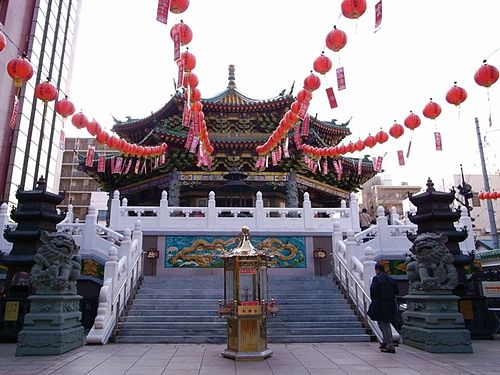
Hie Shrine Audio Guide

Audio guide for Hie Shrine

Hie Shrine
Photo by MaedaAkihikoWikimedia CommonsCC BY-SA 4.0

7 min of listening · Section 1 of 5: Welcome to Hie Shrine

Prefer reading? The full guide is below

Here in person? Walk on with Mappu

This audio guide tells one place’s story. Walk Mode keeps going as you walk:

  • It knows where you are and talks about what’s in front of you, not only these chapters.
  • It takes you on to the next sight and follows what interests you.
  • Ask about anything you see, and it answers on the spot.
  • Your phone stays in your pocket.

A 2-hour live walk with Mappu, €4.99.

50 credits from the Starter pack. One-time purchase, no subscription.

Self-guided audio walk. No guide accompanies you. Not affiliated with the sites.

Keep exploring

Discover more places in Mappu.

Hie Shrine • Section 1 of 5

Hie Shrine: is there a free audio guide?

Quick answer. Yes. Mappu’s Hie Shrine audio guide (Tokyo, Japan) is free in your browser: 5 sections and about 7 minutes of listening, in 8 languages. It covers “Hie Shrine: A Guardian Who Moved With the City”, “Hie Shrine: Mountain Gods and Vermilion Halls” and “Hie Shrine: Festival, Swords and Shogun Treasures”. In the Mappu app, Walk Mode narrates the places around you as you move and answers your follow-up questions.

Hie Shrine map

Mappu's own map of the place, with the paths and entrances OpenStreetMap shows around it.

Hie Shrine mapThe place on the map, with the guide's point marked.

Hie Shrine: what does the audio guide cover?

  1. 01

    Welcome to Hie Shrine

    Welcome to Hie Shrine, known in Japanese as 日枝神社, and affectionately called Sanno-san by Tokyoites. You are in Nagatacho, in Tokyo's Chiyoda ward, right in the political and historical heart of the capital. The shrine is dedicated to the Sanno faith, and it is the home of the Sanno Festival, one of the three great festivals of old Edo. What makes this place so striking is its position. The shrine has long been honored as the guardian of the Imperial Palace, a title written in Japanese as Kojo no Chin, which means the protector of the imperial castle. It sits on rising ground above modern streets, and it has watched over the city through the eras of samurai, emperors, and skyscrapers. Over the next few minutes, I will walk you through how this shrine followed Edo's rulers from castle to castle site, what its rebuilt main hall tells us about the war years, the treasures kept here, and the festival that once swept right into the shogun's castle. Let's begin.

  2. 02

    Hie Shrine: A Guardian Who Moved With the City

    The story of Hie Shrine begins long before modern Tokyo. In the Kamakura period, the Edo clan enshrined a Sanno shrine in this region. Later, during the Bunmei years, the warrior Ota Dokan invited the Sanno deity from Kawagoe into Edo Castle, and that act laid the foundation of today's shrine. Then history turned. In 1590, Tokugawa Ieyasu made Edo Castle his residence, and he revered the shrine as the guardian deity of the Tokugawa family and the birth deity of Edo. As the castle grew, the shrine was moved to Kojimachi Hayabusacho, and then in the second year of Manji, which is 1659, it settled on its present hill in Nagatacho. The centuries kept changing its title. When the castle became the Imperial Palace, the shrine was honored as its protector. In 1868, it formally took the name Hie Shrine, though it had long been called names such as Hie Sanno Shrine, Edo Sanno Gongen, and Kojimachi Sanno. For parishioners it is simply the mountain, and for everyone else it has always been Sanno-san.

  3. 03

    Hie Shrine: Mountain Gods and Vermilion Halls

    The deity of this shrine has a very old pedigree. The ancient chronicle Kojiki names Oyamakui no Kami, also called Yamasue no Onushi no Kami, as a god who dwells on Mount Hie in the old province of Omi, today's Shiga prefecture, and also at Matsuo in Kadono near Kyoto. So the mountain spirit you honor here traces back to the hills near Kyoto. Now look at the main hall. This vermilion-lacquered building was rebuilt in 1958 in the gongen-zukuri style, a traditional form of Shinto shrine architecture. It follows the form of the Edo period hall, which had been a National Treasure before it was lost to war. So what you see is a postwar rebuilding that carries the memory of a vanished masterpiece. There is another wartime tale on the grounds. The small Sanno Inari shrine began as a shrine inside the residence of Lord Matsudaira Tadafusa. In the Tokyo air raids, its shrine building alone survived, and the sacred object of Hie Shrine was enshrined there for a time. Its row of torii gates is admired, and the shrine is also honored for protection against fire.

  4. 04

    Hie Shrine: Festival, Swords and Shogun Treasures

    Every June, Hie Shrine comes alive with the Sanno Festival, which lasts about 10 days. It ranks as one of the three great festivals of Edo, alongside the Kanda and Fukagawa festivals. In the Edo period it was a festival watched by the shogun himself, and its portable shrines and floats were permitted to enter Edo Castle. Today, in alternating years, a procession about 300 meters long winds through central Tokyo. The festival's roots reach deep into the shrine's modern story too. In 1977, a committee was formed to celebrate 500 years since the deity was enshrined in Edo Castle. The great ceremony of 1978 revived a Sanno procession worthy of the old festival, and it also left lasting gifts, including a published history of the shrine and repairs to the shrine buildings. One gift is the treasure hall, built the following year. It houses 31 swords, including a National Treasure and Important Cultural Properties, along with many treasures connected to the Tokugawa shogun family. If you enjoy swords or shogunate history, this is a rewarding corner to know about.

  5. 05

    Before You Head Off

    Hie Shrine is also easy to reach. The traditional main approach is the steep stairway called Otoko-zaka, the men's slope. The nearest entrance is about three minutes on foot from exit 5 of Tameike-Sanno Station, and Kokkai-gijidomae Station is about five minutes away from its exit 5. From Tokyo Station, the whole journey takes about 15 minutes by train and on foot. As you wander, try to notice how many layers this one hill holds: a mountain deity from the hills near Kyoto, a warrior's invitation into Edo Castle, a shogun's protector, an imperial guardian, and a rebuilt hall standing where a lost treasure once stood. The shrine is also known for blessings related to love, business success, and career advancement, so you may see visitors pausing with their own hopes. Before you leave, look back down the slope and ask yourself what the festival procession must once have looked like, climbing toward the castle that this shrine was created to protect.

About this guide

AI-generated from 6 sources; checked automatically and last updated on October 31, 2026. Verify tickets and opening hours on the official site. Independent guide by Mappu. Not affiliated with or endorsed by the site or its managers.

Run a travel site or blog? Embed this audio guide for free.

Walk on from here

The nearest places with a Mappu audio guide, in walking order: about 2.2 km and 30 minutes on foot in all.

Route map: walking on from Hie Shrine4 numbered stops in walking order. Stop 1: Hie Shrine; Stop 2: Hikawa-jinja; Stop 3: Suntory Museum of Art; Stop 4: Nogi Shrine.Stop 1: Hie Shrine1Stop 2: Hikawa-jinja2Stop 3: Suntory Museum of Art3Stop 4: Nogi Shrine4
Distances are estimates: the straight line between places plus 30%.

Indicative route. While you walk, watch where you're going, mind the traffic and follow local signs and rules. The map is an aid, not a safety guide. Terms

  1. Hie ShrineThis guide

    about 1.1 km · about 14 min on foot

  2. Hikawa-jinja

    about 0.7 km · about 9 min on foot

  3. Suntory Museum of Art

    about 0.4 km · about 6 min on foot

  4. Nogi Shrine
Photo attribution

Walk Mode, in the free Mappu app: 2 hours for 50 credits (€4.99 Starter pack)

Planning a trip to Tokyo?

Get your plan

Mappu sketches your days free in the chat, no account needed. Then take the full plan with you:

  • Weekend trip, €9.99: Your day-by-day plan plus 2 live walks
  • Save your trip’s free guides on your phone in the Mappu app: they play with no signal
See the trip packs

Already going? The 2-hour live walk in Tokyo is €4.99

Plan your trip

Photo attribution
  • Tokyo 3-Day Itinerary: Alex
  • Japan First Trip 10-Day Itinerary: Stefan K

Plan your trip on a map and get an audio guide for almost any place nearby: just tap it on the Mappu map.

Common questions

Hie Shrine: how long is the free audio guide?

About 7 minutes of listening in 5 sections: “Welcome to Hie Shrine”, “Hie Shrine: A Guardian Who Moved With the City”, “Hie Shrine: Mountain Gods and Vermilion Halls”, “Hie Shrine: Festival, Swords and Shogun Treasures”, and “Before You Head Off”.

Hie Shrine: what can I ask Mappu after the guide?

You can ask follow-up questions such as “How did the shrine come to be moved from Edo Castle to its present hill in Nagatacho?” and keep asking in Mappu, with the guide connected to your map and trip plan.