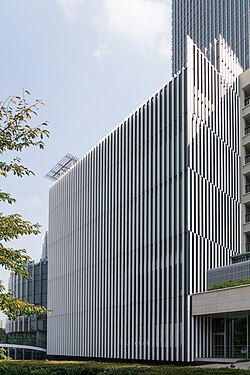
Suntory Museum of Art Audio Guide

A museum of Japanese art in life, redesigned by Kengo Kuma

Suntory Museum of Art
Photo by Rs1421Wikimedia CommonsCC BY-SA 3.0

6 min of listening · Section 1 of 5: Welcome to Suntory Museum of Art

Prefer reading? The full guide is below

Here in person? Walk on with Mappu

This audio guide tells one place’s story. Walk Mode keeps going as you walk:

  • It knows where you are and talks about what’s in front of you, not only these chapters.
  • It takes you on to the next sight and follows what interests you.
  • Ask about anything you see, and it answers on the spot.
  • Your phone stays in your pocket.

A 2-hour live walk with Mappu, €4.99.

50 credits from the Starter pack. One-time purchase, no subscription.

Self-guided audio walk. No guide accompanies you. Not affiliated with the sites.

Keep exploring

Discover more places in Mappu.

Suntory Museum of Art • Section 1 of 5

Suntory Museum of Art: is there a free audio guide?

Quick answer. Yes. Mappu’s Suntory Museum of Art audio guide (Tokyo, Japan) is free in your browser: 5 sections and about 6 minutes of listening, in 8 languages. It covers “Suntory Museum of Art: A Collection Born from Zero”, “Suntory Museum of Art and the Architecture of Kengo Kuma” and “Suntory Museum of Art: Treasures of Art in Life”. In the Mappu app, Walk Mode narrates the places around you as you move and answers your follow-up questions.

Suntory Museum of Art map

Mappu's own map of the place, with the paths and entrances OpenStreetMap shows around it.

Suntory Museum of Art mapThe place on the map, with the guide's point marked.

Suntory Museum of Art: what does the audio guide cover?

  1. 01

    Welcome to Suntory Museum of Art

    Welcome to the Suntory Museum of Art, known in Japanese as サントリー美術館. You will find it inside Tokyo Midtown in Roppongi, in the Minato area of Tokyo. It is also connected to Roppongi Station, so you can arrive without ever stepping outside. This guide focuses on the museum's story, its guiding idea, its architecture and a couple of the treasures in its collection. It does not describe any particular exhibition, because the displays change from one special exhibition to the next. The museum is owned by the Suntory corporation, and its whole identity rests on a simple phrase: Art in Life. The collection is made up mostly of Japanese antiques, the kind of things that people once used, wore, served tea in or gathered around. Beauty here is not locked away from daily living. It grew out of it. As you go in, keep that phrase in mind. It explains why a museum inside a modern city complex can feel so close to everyday Japanese life across the centuries.

  2. 02

    Suntory Museum of Art: A Collection Born from Zero

    The Suntory Museum of Art opened in 1961 in Marunouchi, the work of Keizo Saji, then president of Suntory. What makes the beginning memorable is how modest it was. Saji pointed out that, unlike other museums, this one started with its artworks at zero. It had no famous holdings to build on, only an idea. That idea was a hope. He wanted people to value the spirit of the beautiful culture of art in life that their ancestors created. So he set out to create special exhibitions that look at Japanese art of the past from a contemporary point of view. The aim was to make old objects feel alive to the people looking at them today. The museum then moved twice. In 1975 it went to the Suntory Building in Akasaka, in Minato, Tokyo. In 2007 it moved again, to its current home in Tokyo Midtown. So three homes in a few decades, and one steady purpose running through all of them.

  3. 03

    Suntory Museum of Art and the Architecture of Kengo Kuma

    When the museum settled into Tokyo Midtown in 2007, the architect Kengo Kuma redesigned the space. Kuma is known for bringing natural materials into contemporary buildings, and here he made generous use of Japanese materials such as wood and Japanese paper. The result is a relaxing, modern Japanese space with a natural warmth. It sits inside a busy urban complex, in an area known for skyscrapers, luxury shops, restaurants and hotels, yet the interior is meant to calm you down rather than overwhelm you. Notice the textures as you walk through. Soft, warm surfaces suit the quiet looking that old Japanese art invites. There is a pleasing logic here. Many of the objects in the collection were made from the same kinds of materials, for rooms and daily rituals. Seeing them in a setting that echoes those materials makes the old things feel a little more at home.

  4. 04

    Suntory Museum of Art: Treasures of Art in Life

    The collection holds around 3,000 objects, mainly Japanese antiques, and it includes works designated by the Japanese government as national treasures and important cultural properties. Because the museum shows its collection through changing special exhibitions, which pieces you meet will depend on when you visit. Two important cultural properties give a sense of its range. One is a ceramic container by Ogata Kenzan, made in the first half of the eighteenth century in the Edo period. Kenzan is celebrated as a potter, and a vessel like this shows how everyday objects could become art. The other is a Nanban folding screen by Kano Sanraku, from the Azuchi-Momoyama period. Nanban screens are a distinctive genre of Japanese painting. They show the arrival of foreign traders in Japan, a moment when new faces and new goods entered the country. One piece is a vessel for the hand and the table, and the other is a painted screen for a room. Both fit the museum's idea of art woven into life.

  5. 05

    Before You Head Off from Suntory Museum of Art

    As you finish your visit to the Suntory Museum of Art, think back to the founder's starting point: a collection at zero and a hope that people would value the beauty their ancestors made in daily life. Today that hope fills a museum of around 3,000 works inside one of Tokyo's most polished districts. Before you leave, look again at the materials around you, the wood and the paper of Kengo Kuma's design, and ask yourself how they relate to the objects you saw. Think about what once sat on a table, hung in a room or stood as a screen, and imagine the lives around it. Roppongi has more to explore nearby, with other places in the area where you can experience art and culture. Let the idea of art in life travel with you as you walk on.

About this guide

AI-generated from 6 sources; reviewed for accuracy and last updated on October 31, 2026. Verify tickets and opening hours on the official site. Independent guide by Mappu. Not affiliated with or endorsed by the site or its managers.

Run a travel site or blog? Embed this audio guide for free.

Walk on from here

The nearest places with a Mappu audio guide, in walking order: about 1.8 km and 25 minutes on foot in all.

Route map: walking on from Suntory Museum of Art4 numbered stops in walking order. Stop 1: Suntory Museum of Art; Stop 2: Nogi Shrine; Stop 3: National Art Center, Tokyo; Stop 4: Mori Art Museum.Stop 1: Suntory Museum of Art1Stop 2: Nogi Shrine2Stop 3: National Art Center, Tokyo3Stop 4: Mori Art Museum4
Distances are estimates: the straight line between places plus 30%.

Indicative route. While you walk, watch where you're going, mind the traffic and follow local signs and rules. The map is an aid, not a safety guide. Terms

  1. Suntory Museum of ArtThis guide

    about 0.4 km · about 6 min on foot

  2. Nogi Shrine

    about 0.6 km · about 7 min on foot

  3. National Art Center, Tokyo

    about 0.8 km · about 10 min on foot

  4. Mori Art Museum
Photo attribution

Walk Mode, in the free Mappu app: 2 hours for 50 credits (€4.99 Starter pack)

Planning a trip to Tokyo?

Get your plan

Mappu sketches your days free in the chat, no account needed. Then take the full plan with you:

  • Weekend trip, €9.99: Your day-by-day plan plus 2 live walks
  • Save your trip’s free guides on your phone in the Mappu app: they play with no signal
See the trip packs

Already going? The 2-hour live walk in Tokyo is €4.99

Plan your trip

Photo attribution
  • Tokyo 3-Day Itinerary: Alex
  • Japan First Trip 10-Day Itinerary: Stefan K

Plan your trip on a map and get an audio guide for almost any place nearby: just tap it on the Mappu map.

Common questions

Suntory Museum of Art: how long is the free audio guide?

About 6 minutes of listening in 5 sections: “Welcome to Suntory Museum of Art”, “Suntory Museum of Art: A Collection Born from Zero”, “Suntory Museum of Art and the Architecture of Kengo Kuma”, “Suntory Museum of Art: Treasures of Art in Life”, and “Before You Head Off from Suntory Museum of Art”.

Suntory Museum of Art: what can I ask Mappu after the guide?

You can ask follow-up questions such as “What does the idea of Art in Life mean for the kinds of objects you can see at the Suntory Museum of Art?” and keep asking in Mappu, with the guide connected to your map and trip plan.