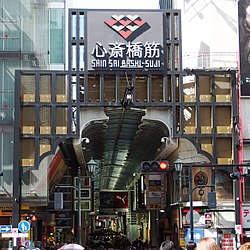
Shinsaibashi Audio Guide

Osaka's great covered shopping corridor and the stories around it

Shinsaibashi
Photo by Mc681Wikimedia CommonsCC BY-SA 4.0

6 min of listening · Section 1 of 5: Welcome to Shinsaibashi

Prefer reading? The full guide is below

Here in person? Walk on with Mappu

This audio guide tells one place’s story. Walk Mode keeps going as you walk:

  • It knows where you are and talks about what’s in front of you, not only these chapters.
  • It takes you on to the next sight and follows what interests you.
  • Ask about anything you see, and it answers on the spot.
  • Your phone stays in your pocket.

A 2-hour live walk with Mappu, €4.99.

50 credits from the Starter pack. One-time purchase, no subscription.

Self-guided audio walk. No guide accompanies you. Not affiliated with the sites.

Keep exploring

Discover more places in Mappu.

Shinsaibashi • Section 1 of 5

Shinsaibashi: is there a free audio guide?

Quick answer. Yes. Mappu’s Shinsaibashi audio guide (Osaka, Japan) is free in your browser: 5 sections and about 6 minutes of listening, in 8 languages. It covers “A Bridge That Named a District”, “From Kimono Shop to Department Store” and “Art Deco Style and Youth Culture”. In the Mappu app, Walk Mode narrates the places around you as you move and answers your follow-up questions.

Shinsaibashi map

Mappu's own map of the place, with the paths and entrances OpenStreetMap shows around it.

Shinsaibashi mapThe place on the map, with the guide's point marked.

Shinsaibashi: what does the audio guide cover?

  1. 01

    Welcome to Shinsaibashi

    Welcome to Shinsaibashi, in the Chuo ward of Osaka. Shinsaibashi is a whole district rather than a single monument, so this guide tells the story of the area and the streets that give it its character. At its heart runs Shinsaibashi-suji, a covered shopping street. It lies north of Dotonbori and Soemoncho, and it runs parallel to the great Midosuji avenue, just to the east of it. Because the arcade has a roof, you can shop here in rain or shine. Just across Midosuji to the west sits Amerika-mura, an American-themed shopping quarter that is the center of Osaka's youth culture. The district ties together a bridge, a department store, a kimono shop and a century of changing fashions. Let's start walking.

  2. 02

    A Bridge That Named a District

    Every Osaka neighborhood has a reason for its name, and here the reason is a bridge. Shinsaibashi began as a crossing, and the shops gathered along the streets that the bridge connected. The timing was lucky. To the north, the district of Shinmachi was growing more popular. To the south, the Dotonbori theatre district was doing the same. The bridge sat between them, and the shops lining the streets it linked became more and more popular too. That is how the area grew into Osaka's main shopping district. The bridge itself had a style of its own. In 1909, when a streetcar line was built along Nagahori-dori road, the iron bridge was replaced with Osaka's first stone bridge. It was a Western-styled, elegant double arch, and its railings were carved with a row of four-leafed clovers.

  3. 03

    From Kimono Shop to Department Store

    Retail here goes back a long way. Shinsaibashi-suji has been a bustling center of shopping since the mid-eighteenth century, when a famed kimono shop called Matsuya opened. That shop later became the Daimaru Department Store. The street's development has mirrored the growth and change of Osaka itself. The merchant culture of the Edo period is the root of it all. Shinsaibashi-suji began as a dry goods marketplace, and by the middle of the nineteenth century it had become one of the most important commercial centers in Osaka. After the Meiji Restoration of 1868, the area took up Western architecture and fashion and became a hub for the latest trends and luxury goods. After the Second World War the street was rapidly rebuilt. By the 1960s and 1970s it had become a symbol of Osaka's prosperity, with department stores and boutiques selling everything from traditional kimonos to cutting-edge electronics.

  4. 04

    Art Deco Style and Youth Culture

    Look up and around you, because Shinsaibashi mixes old and new. The Daimaru Shinsaibashi department store is celebrated for its Art Deco architecture. It is connected directly to Shinsaibashi Station on the Midosuji Line through the south exit, so you can step from the subway straight into a palatial shopping hall of fashion, food and pop culture. Cross to the west side of Midosuji and the mood shifts. Amerika-mura, with its American theme, is the heart of Osaka's youth culture. The street names and attitudes change, and the energy feels younger. The district keeps reinventing itself, too. Shinsaibashi OPA, a fashion-oriented shopping mall that opened in 1994, closed permanently on January 12, 2026, after 31 years of operation. Even in a district this well established, storefronts change.

  5. 05

    Before You Head Off

    Shinsaibashi rewards a slow walk. You can reach it by taking the Midosuji Metro line from Umeda Station to Shinsaibashi Station, then stepping into the covered arcade. As you wander, notice how the district keeps layering its history. A bridge between two lively neighborhoods began the story, and a kimono shop from the mid-eighteenth century grew into a department store. Along the way came Western styles, postwar rebuilding and youthful fashion trends. Keep an eye on the shop fronts as you pass. Each one is a small chapter in Osaka's long habit of buying, selling and reinventing itself, and you might spot a few chapters that nobody has written down yet.

About this guide

AI-generated from 6 sources; checked automatically and last updated on October 31, 2026. Verify tickets and opening hours on the official site. Independent guide by Mappu. Not affiliated with or endorsed by the site or its managers.

Run a travel site or blog? Embed this audio guide for free.

Walk on from here

This place is stop 1 of 5 of a self-guided walk: Shinsaibashi to Shitenno-ji, Osaka. About 4.3 km and 60 minutes on foot, plus about 30 minutes of listening.

Route map: walking on from Shinsaibashi5 numbered stops in walking order. Stop 1: Shinsaibashi; Stop 2: Dōtonbori; Stop 3: Nipponbashi Bridge; Stop 4: Shinsekai; Stop 5: Shitennō-ji.Stop 1: Shinsaibashi1Stop 2: Dōtonbori2Stop 3: Nipponbashi Bridge3Stop 4: Shinsekai4Stop 5: Shitennō-ji5
Distances are estimates along the walking route, from OpenStreetMap.

Indicative route. While you walk, watch where you're going, mind the traffic and follow local signs and rules. The map is an aid, not a safety guide. Terms

  1. ShinsaibashiThis guide

    about 0.6 km · about 7 min on foot

  2. Dōtonbori

    about 0.5 km · about 7 min on foot

  3. Nipponbashi Bridge

    about 2.0 km · about 27 min on foot

  4. Shinsekai

    about 1.3 km · about 17 min on foot

  5. Shitennō-ji
Photo attribution

Walk Mode, in the free Mappu app: 2 hours for 50 credits (€4.99 Starter pack)

See the whole walk

Planning a trip to Osaka?

Get your plan

Mappu sketches your days free in the chat, no account needed. Then take the full plan with you:

  • Weekend trip, €9.99: Your day-by-day plan plus 2 live walks
  • Save your trip’s free guides on your phone in the Mappu app: they play with no signal
See the trip packs

Already going? The 2-hour live walk in Osaka is €4.99

Plan your trip

Photo attribution

Plan your trip on a map and get an audio guide for almost any place nearby: just tap it on the Mappu map.

Common questions

Shinsaibashi: how long is the free audio guide?

About 6 minutes of listening in 5 sections: “Welcome to Shinsaibashi”, “A Bridge That Named a District”, “From Kimono Shop to Department Store”, “Art Deco Style and Youth Culture”, and “Before You Head Off”.

Shinsaibashi: what can I ask Mappu after the guide?

You can ask follow-up questions such as “How are Shinsaibashi-suji and Amerika-mura positioned on either side of Midosuji, and how do they feel different?” and keep asking in Mappu, with the guide connected to your map and trip plan.