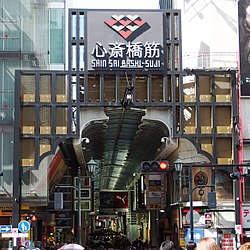
Amerikamura Audio Guide

Osaka's youth fashion district, born from 1970s American clothing shops

American Village
Photo by No machine-readable author provided. Davey 88 assumed (based on copyright claims).Wikimedia CommonsCC BY-SA 3.0

6 min of listening · Section 1 of 5: Welcome to American Village

Prefer reading? The full guide is below

Here in person? Walk on with Mappu

This audio guide tells one place’s story. Walk Mode keeps going as you walk:

  • It knows where you are and talks about what’s in front of you, not only these chapters.
  • It takes you on to the next sight and follows what interests you.
  • Ask about anything you see, and it answers on the spot.
  • Your phone stays in your pocket.

A 2-hour live walk with Mappu, €4.99.

50 credits from the Starter pack. One-time purchase, no subscription.

Self-guided audio walk. No guide accompanies you. Not affiliated with the sites.

Keep exploring

Discover more places in Mappu.

American Village • Section 1 of 5

American Village: is there a free audio guide?

Quick answer. Yes. Mappu’s Amerikamura audio guide (Osaka, Japan) is free in your browser: 5 sections and about 6 minutes of listening, in 8 languages. It covers “From Warehouse Quarter to American Village”, “Surfers, Secondhand Jeans and the American Dream” and “A Living Youth Culture in American Village”. In the Mappu app, Walk Mode narrates the places around you as you move and answers your follow-up questions.

Amerikamura map

Mappu's own map of the place, with the paths and entrances OpenStreetMap shows around it.

Amerikamura mapThe place on the map, with the guide's point marked.

American Village: what does the audio guide cover?

  1. 01

    Welcome to American Village

    Welcome to American Village, known in Japanese as アメリカ村, Amerikamura, and nicknamed Ame-mura by locals. This is not a single building or monument. It is a whole neighborhood, a nickname for a district of Nishi-Shinsaibashi in Osaka's Chuo Ward, part of the lively southern downtown area called Minami. So as we walk, I will be telling you the story of the district itself. The area is a dense cluster of shops selling youth fashion, with secondhand clothing stores, apparel shops and record stores all packed together. It is also a place for cafes, street art and music. Its heart is a small open space called Triangle Park, officially Mitsu Park. No ancient castle or temple built this place. It was made by young people with big ideas and a few old warehouses. Over the next few stops, I will take you from the quiet storage district it once was, through its birth, its boom, and what it is today.

  2. 02

    From Warehouse Quarter to American Village

    Picture this district before it had its famous name. Osaka's main boulevard is Midosuji, and just to its east runs the Shinsaibashi-suji shopping street, a famously busy strip with department stores such as Sogo and Daimaru. Now look west. The area that we call American Village today was formerly known as Sumiyacho, and it was a quiet place of warehouses and parking lots, offices and homes, with a few traditional restaurants. These mostly served the shops on the busy street next door, so the district had almost no commercial buzz of its own. Yet the seeds were already there. The Daimaru department store had a design office nearby, and the fashion figure Kensuke Ishizu, famous for popularizing the Ivy look, ran his company Van Jacket. Young creators were coming and going through the neighborhood. Then in 1969, the space designer Mariko Higen opened a cafe called Loop right in front of Triangle Park. Young designers and trend-conscious people began to gather there, and the mood of the streets slowly changed. A feeling arose that it was a waste to leave the area as a mere warehouse district. That idea, spreading naturally, became the spark for a youth town that could stand up to the grand, mature shopping street across the way.

  3. 03

    Surfers, Secondhand Jeans and the American Dream

    So where did the name come from? Take a look at what filled those old warehouses. Starting in the 1970s, they were converted into shops, and young people, including surfers, began selling American casual clothing imported from the American West Coast and Hawaii. Jeans, T-shirts, secondhand clothes, used records, miscellaneous goods and surfboards were hard to find elsewhere in Japan at the time. The district gradually became known as American Village. The plan worked beautifully. Authentic American items were a rarity then, and they caused a stir. Crowds of young people came, and television and fashion magazines began presenting the district as the trend-setting place called American Village. Visitors came not only from Osaka but from all over the country. Then came two milestones in the early 1980s. The Nikko Hotel Osaka opened in 1982, and the following year the arrival of Muji brought a sharp rise in young visitors. The district began to grow into what was known as a town of young fashion. It is a nice irony that a place named for America was built by a very local, very Osakan kind of enterprise: ordinary young people with an eye for what their peers wanted.

  4. 04

    A Living Youth Culture in American Village

    As the decades went by, American Village kept reinventing itself. In the 1990s, it spread beyond clothing, with more restaurants, nightclubs and entertainment venues, and it became a must-see destination for visitors from abroad. Even so, the crowds and shops remain predominantly Japanese, and locals know it as a place to observe some of the more fashion-intense expressions of Japanese pop culture. By the 2000s, with the spread of the internet, the idea that young people meant American Village was firmly established across the Kansai region, and the district became known more widely and in more detail. People came for more than shopping. They joined the communities of fashion, music and art that fill the streets, looking to connect with others who share their sensibilities. The shops that sold imported goods have since been joined by many other styles. Popularity dipped gradually from the 2010s, though some famous names have come back to where they began. Behind it all stands a local association, the Amerikamura no kai, made up of shop owners and business owners in the area. They take the lead in promoting local business, keeping the streets safe and clean, and supporting the young people who gather here. It is a neighborhood that looks after itself.

  5. 05

    Before You Head Off

    As you wander, try reading the streets like layers. Walk a little way and ask yourself where the quiet warehouse district ends and the shopfronts begin. Notice how the energy changes as you drift from the open space of Triangle Park into the surrounding lanes, and see whether you can imagine the little cafe that once drew young designers to its front door. The district stretches from Nagahori Street toward Dotonbori, so it is easy to let your curiosity carry you onward. Look at the clothing racks, the record shops, the street art, and the people themselves, because their style is as much a part of the place as any building. And if you like old stories, there is more. A shrine nearby, Mitsu Hachimangu, is said to have watched over this area and the wider Shinsaibashi neighborhood for a thousand years. A youth town and a shrine that claims centuries of watching make a wonderful contrast, and the next corner might show you either one.

About this guide

AI-generated from 6 sources; reviewed for accuracy and last updated on October 31, 2026. Verify tickets and opening hours on the official site. Independent guide by Mappu. Not affiliated with or endorsed by the site or its managers.

Run a travel site or blog? Embed this audio guide for free.

Walk on from here

The nearest places with a Mappu audio guide, in walking order: about 1.5 km and 20 minutes on foot in all.

Route map: walking on from American Village5 numbered stops in walking order. Stop 1: American Village; Stop 2: Shinsaibashi; Stop 3: Dōtonbori; Stop 4: Sōemon; Stop 5: Nipponbashi Bridge.Stop 1: American Village1Stop 2: Shinsaibashi2Stop 3: Dōtonbori3Stop 4: Sōemon4Stop 5: Nipponbashi Bridge5
Distances are estimates: the straight line between places plus 30%.

Indicative route. While you walk, watch where you're going, mind the traffic and follow local signs and rules. The map is an aid, not a safety guide. Terms

  1. American VillageThis guide

    about 0.2 km · about 3 min on foot

  2. Shinsaibashi

    about 0.6 km · about 8 min on foot

  3. Dōtonbori

    about 0.3 km · about 5 min on foot

  4. Sōemon

    about 0.3 km · about 4 min on foot

  5. Nipponbashi Bridge
Photo attribution

Walk Mode, in the free Mappu app: 2 hours for 50 credits (€4.99 Starter pack)

Planning a trip to Osaka?

Get your plan

Mappu sketches your days free in the chat, no account needed. Then take the full plan with you:

  • Weekend trip, €9.99: Your day-by-day plan plus 2 live walks
  • Save your trip’s free guides on your phone in the Mappu app: they play with no signal
See the trip packs

Already going? The 2-hour live walk in Osaka is €4.99

Plan your trip

Photo attribution

Plan your trip on a map and get an audio guide for almost any place nearby: just tap it on the Mappu map.

Common questions

Amerikamura: how long is the free audio guide?

About 6 minutes of listening in 5 sections: “Welcome to American Village”, “From Warehouse Quarter to American Village”, “Surfers, Secondhand Jeans and the American Dream”, “A Living Youth Culture in American Village”, and “Before You Head Off”.

Amerikamura: what can I ask Mappu after the guide?

You can ask follow-up questions such as “What did the quiet warehouse district look like before it became American Village?” and keep asking in Mappu, with the guide connected to your map and trip plan.