Nara Park Audio Guide

Audio guide for Nara Park

Nara Park
Photo by DaderotWikimedia CommonsCC0

6 min of listening · Section 1 of 5: Welcome to Nara Park

Prefer reading? The full guide is below

Here in person? Walk on with Mappu

This audio guide tells one place’s story. Walk Mode keeps going as you walk:

  • It knows where you are and talks about what’s in front of you, not only these chapters.
  • It takes you on to the next sight and follows what interests you.
  • Ask about anything you see, and it answers on the spot.
  • Your phone stays in your pocket.

A 2-hour live walk with Mappu, €4.99.

50 credits from the Starter pack. One-time purchase, no subscription.

Self-guided audio walk. No guide accompanies you. Not affiliated with the sites.

Keep exploring

Discover more places in Mappu.

Nara Park • Section 1 of 5

Nara Park: is there a free audio guide?

Quick answer. Yes. Mappu’s Nara Park audio guide (Nara, Japan) is free in your browser: 5 sections and about 6 minutes of listening, in 8 languages. It covers “The Divine Messengers of Nara Park”, “Temples, Shrines and Treasures in Nara Park” and “Nara Park and the Ancient Capital”. In the Mappu app, Walk Mode narrates the places around you as you move and answers your follow-up questions.

Nara Park map

Mappu's own map of the place, with the paths and entrances OpenStreetMap shows around it.

Nara Park mapThe place on the map, with the guide's point marked.

Nara Park: what does the audio guide cover?

  1. 01

    Welcome to Nara Park

    Welcome to Nara Park, known in Japanese as Nara Kōen, a public park in the city of Nara that spreads out at the foot of Mount Wakakusa. Picture open lawns, patches of forest, ancient temple roofs peeking through the trees, and deer wandering about as if they own the place. In a way, they do. This is one of the oldest parks in Japan. It was established in 1880 and is run by Nara Prefecture. It is also one of the places of scenic beauty designated by Japan's Ministry of Education, Culture, Sports, Science and Technology. It covers about 500 hectares, roughly 1,240 acres, so it is less a tidy city garden than a whole landscape that has been left open to everyone. Over the next few minutes we will look at the deer, at the great temples and shrines that share the park, and at the older story of Nara as Japan's early capital. Getting here is simple: the park lies within walking distance of Nara Station, with a short bus ride as another option. Set aside a few hours, because this place rewards slow wandering.

  2. 02

    The Divine Messengers of Nara Park

    Let's start with the residents everybody comes to meet. More than 1,500 sika deer roam Nara Park, and they are tame enough that visitors feed them by hand. But these are not ordinary park animals. For generations they have been treasured as divine messengers at Kasuga Taisha, the shrine at the edge of the park, and in 1957 they were designated national Natural Treasures. Their story reaches back so far that references to deer turn up in some of Japan's oldest historical records, including the Kojiki. Here is the part that surprises people. Research from Fukushima University, published in 2023, found that the Nara deer carry a unique genetic lineage. Researchers think centuries of human protection, lasting more than a thousand years, kept that lineage distinct. In other words, the religious reverence shown to these animals left a mark you can read in their DNA. Look out for a daily ritual too. In the evening the deer are called to a feeding area by the blowing of a trumpet. Managing so many animals is not simple. In 2017 the prefectural government put forward a proposal on managing deer numbers, prompted by agricultural damage in the area, and the question of how to live alongside a sacred herd is still part of the park's story today.

  3. 03

    Temples, Shrines and Treasures in Nara Park

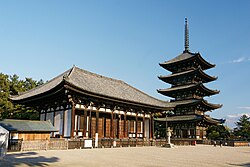
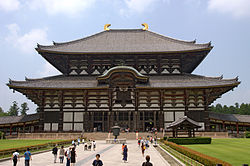
    Nara Park is not only about deer. Most of Nara's most famous temples and cultural relics sit right here, and several belong to the UNESCO World Heritage site called the Historic Monuments of Ancient Nara. Todai-ji is the headline act, home to a gigantic bronze Buddha. Kofuku-ji is another temple worth visiting in its own right, with architecture and sacred images that deserve real time, even if a deer wanders past while you look. Then there is Kasuga Taisha, which balances nature and culture beautifully. You approach it along a path through the woods, lined with countless stone lanterns that are illuminated during the Setsubun Mantoro festival. At the shrine itself, the deep vermilion paint of the buildings seems made to sit against the green of the surrounding trees. If you love art, the Nara National Museum is inside the park too, and it holds an exceptional collection of Buddhist art, including work from the Nara period. Many visitors find that a single day easily disappears among all of this. A useful tip is to treat the park as a chain of short walks between treasures rather than one long hike.

  4. 04

    Nara Park and the Ancient Capital

    To understand why this park feels so layered, remember that Nara was Japan's capital from 710 to 784. The Historic Monuments of Ancient Nara, as UNESCO describes them, give a vivid picture of religion and life in the eighth century, a period of profound political and cultural change. They reflect the cultural links with China and Korea that shaped Japanese architecture and art for centuries afterward. UNESCO's recognition does not stop at buildings. It includes Buddhist temples, a Shinto shrine and its sacred forest, and an archaeological site, a harmonious cultural landscape where traditional worship in Japan can still be seen. That is why a walk through Nara Park feels different from a visit to a museum. The forest, the shrine, the temples and the animals belong to one continuing story. Japan's national tourism organization makes a nice comparison. The temples and shrines of Nara are much older than the often rebuilt buildings of Kyoto. As you walk beneath the trees, you are moving through one of the oldest sacred landscapes in the country. The park itself is younger than its monuments. It was created in 1880 and designated a place of scenic beauty in 1922, giving a modern frame to an ancient setting.

  5. 05

    Before You Head Off from Nara Park

    Before you wander on, here is one more thing to try. Climb up Mount Wakakusa if you have the energy. The hillside offers a unique view of some of Nara's most famous sights, and in the evening it is full of deer and birds, with a magnificent panoramic view over the Nara area. As you walk back through Nara Park, notice how the park changes with the light and with your pace. Listen for the evening trumpet that calls the deer. Watch how the vermilion of the shrine glows among the trees. Look at the lawns and ask yourself where the park ends and the sacred landscape begins. There is more here than one visit can hold, from the great bronze Buddha to the quiet lantern paths. Which of those threads will you follow next?

About this guide

AI-generated from 6 sources; checked automatically and last updated on October 31, 2026. Verify tickets and opening hours on the official site. Independent guide by Mappu. Not affiliated with or endorsed by the site or its managers.

Run a travel site or blog? Embed this audio guide for free.

Walk on from here

This place is stop 5 of 6 of a self-guided walk: Gangō-ji to Kasuga-taisha, Nara. About 4.9 km and 65 minutes on foot, plus about 37 minutes of listening.

Route map: walking on from Nara Park6 numbered stops in walking order. Stop 1: Gangō-ji; Stop 2: Kōfuku-ji; Stop 3: Nara National Museum; Stop 4: Tōdai-ji; Stop 5: Nara Park; Stop 6: Kasuga-taisha.Stop 1: Gangō-ji1Stop 2: Kōfuku-ji2Stop 3: Nara National Museum3Stop 4: Tōdai-ji4Stop 5: Nara Park5Stop 6: Kasuga-taisha6
Distances are estimates along the walking route, from OpenStreetMap.

Indicative route. While you walk, watch where you're going, mind the traffic and follow local signs and rules. The map is an aid, not a safety guide. Terms

  1. Gangō-ji

    about 0.9 km · about 11 min on foot

  2. Kōfuku-ji

    about 0.8 km · about 11 min on foot

  3. Nara National Museum

    about 1.3 km · about 17 min on foot

  4. Tōdai-ji

    about 0.9 km · about 12 min on foot

  5. Nara ParkThis guide

    about 1.1 km · about 14 min on foot

  6. Kasuga-taisha
Photo attribution

Walk Mode, in the free Mappu app: 2 hours for 50 credits (€4.99 Starter pack)

See the whole walk

Planning a trip to Nara?

Get your plan

Mappu sketches your days free in the chat, no account needed. Then take the full plan with you:

  • Weekend trip, €9.99: Your day-by-day plan plus 2 live walks
  • Save your trip’s free guides on your phone in the Mappu app: they play with no signal
See the trip packs

Already going? The 2-hour live walk in Nara is €4.99

Plan your trip

Photo attribution

Useful for your visit

Tickets, tours and practical extras for this trip, from Mappu's partners.

Partner links (Airalo, Amazon, Booking.com, GetYourGuide, Klook, Tiqets, Trip.com, Viator, Welcome Pickups): if you book or buy through them, Mappu may earn a commission, at no extra cost to you.

Plan your trip on a map and get an audio guide for almost any place nearby: just tap it on the Mappu map.

Common questions

Nara Park: how long is the free audio guide?

About 6 minutes of listening in 5 sections: “Welcome to Nara Park”, “The Divine Messengers of Nara Park”, “Temples, Shrines and Treasures in Nara Park”, “Nara Park and the Ancient Capital”, and “Before You Head Off from Nara Park”.

Nara Park: what can I ask Mappu after the guide?

You can ask follow-up questions such as “Why are the deer of Nara Park treated as divine messengers at Kasuga Taisha, and how did that shape their protection?” and keep asking in Mappu, with the guide connected to your map and trip plan.