Shōsōin Audio Guide

Audio guide for Shōsōin

Shōsōin
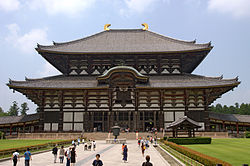
Photo by あずきごはんWikimedia CommonsCC BY-SA 4.0

7 min of listening · Section 1 of 5: Welcome to The Shosoin Repository

Prefer reading? The full guide is below

Here in person? Walk on with Mappu

This audio guide tells one place’s story. Walk Mode keeps going as you walk:

  • It knows where you are and talks about what’s in front of you, not only these chapters.
  • It takes you on to the next sight and follows what interests you.
  • Ask about anything you see, and it answers on the spot.
  • Your phone stays in your pocket.

A 2-hour live walk with Mappu, €4.99.

50 credits from the Starter pack. One-time purchase, no subscription.

Self-guided audio walk. No guide accompanies you. Not affiliated with the sites.

Keep exploring

Discover more places in Mappu.

Shōsōin • Section 1 of 5

Shōsōin: is there a free audio guide?

Quick answer. Yes. Mappu’s Shōsōin audio guide (Nara, Japan) is free in your browser: 5 sections and about 7 minutes of listening, in 8 languages. It covers “The Shosoin Repository: An Empress's Gift”, “The Shosoin Repository: Treasures at the End of the Silk Road” and “The Shosoin Repository: A Name, a Guardian and a World Heritage Listing”. In the Mappu app, Walk Mode narrates the places around you as you move and answers your follow-up questions.

Shōsōin map

Mappu's own map of the place, with the paths and entrances OpenStreetMap shows around it.

Shōsōin mapThe place on the map, with the guide's point marked.

Shōsōin: what does the audio guide cover?

  1. 01

    Welcome to The Shosoin Repository

    Shōsōin: The collection was built around items associated with the imperial couple, and it grew into a treasury of Nara-period culture.

    Welcome to The Shosoin Repository, known in Japanese as 正倉院, tucked into Nara Park in the city of Nara. It stands just north-northwest of the Great Buddha Hall of Todaiji temple, and it is one of the quietest and most remarkable buildings in the whole ancient capital. Here is what you are looking at: a large raised-floor storehouse built in the azekura-zukuri style, a log-cabin-like construction whose walls are made of interlocking timbers. It was created to hold objects linked to Emperor Shomu and Empress Komyo, and it became a vault for the arts of the Tenpyo era, the golden age of eighth-century Japan. A practical note before you go closer. The treasures are no longer kept in this building in any great number, and visitors usually admire the structure from the outside, looking at it across a fence. That suits the place. The real story here is human: a widow, a lost emperor, and objects that were carefully set aside and then left in peace for about 1,300 years. Let's step into that story.

  2. 02

    The Shosoin Repository: An Empress's Gift

    Shōsōin: In the eighth century, the capital at Nara was linked by culture and trade to distant lands, and the objects kept here are proof of it.

    The heart of this place is a love story of sorts, told in objects. Empress Komyo placed the belongings of her late husband, Emperor Shomu, into the care of Todaiji, and those treasures eventually came to rest in this storehouse. The collection was built around items associated with the imperial couple, and it grew into a treasury of Nara-period culture. The building itself is thought to have been completed around the year 759, in the middle of the eighth century, when Todaiji was being established and developed. What makes it extraordinary is how little it has changed. It escaped the wars and the great earthquakes that have damaged so much of Japan's early architecture, and it has come down to us in its original form after nearly 1,300 years. That survival makes it the largest storehouse building to survive from the Nara period. When you look at those heavy timber walls and the raised floor, you are looking at a working piece of eighth-century engineering that kept its secrets safe through an enormous span of time.

  3. 03

    The Shosoin Repository: Treasures at the End of the Silk Road

    Shōsōin: That is why the common word became the proper name of this one building.

    Now picture what the storehouse held. The collection includes paintings, calligraphy, metalwork, lacquerware, woodwork, swords, ceramics, glassware, musical instruments and masks. There are also historical items connected with the eye-opening ceremony of the Great Buddha at Todaiji, ancient medicines, and the Shosoin documents, which are a precious record for understanding daily life and administration in Nara-period Japan. Altogether, the collection is often described as numbering about 9,000 items. Here is a surprise. More than 90 percent of the treasures were made in Japan, many of them using exotic designs. Yet the collection also includes imports from Tang China, from the Western Regions and from Persia. That mix is why the treasury is called the eastern terminus of the Silk Road. One celebrated piece is a five-string biwa, a lute-like instrument, made of rosewood and inlaid with mother-of-pearl. So this humble-looking storehouse is really a window on a cosmopolitan world. In the eighth century, the capital at Nara was linked by culture and trade to distant lands, and the objects kept here are proof of it.

  4. 04

    The Shosoin Repository: A Name, a Guardian and a World Heritage Listing

    Shōsōin: The most intimate part of the story is still the first one: an empress offering her husband's possessions to a great temple.

    The word shosoin has a surprisingly down-to-earth origin. A shoso was originally a storehouse for tax rice, and in the age of the legal codes, government offices kept rice and cloth that arrived from across the provinces in such buildings. Large temples had their own storehouses for goods from their estates and for their treasured possessions, and the walled enclosure around such storehouses was called a shosoin. Each of the Seven Great Temples of Nara had one, but over the centuries all of them vanished except a single storehouse at Todaiji. That is why the common word became the proper name of this one building. Its guardianship also tells a story. Until the Edo period it was managed by Todaiji under the supervision of the imperial court. In 1875 it passed to the Home Ministry, in 1884 to the Imperial Household Ministry, and in 1908 to the Imperial Museum. Today the Shosoin Office of the Imperial Household Agency looks after both the building and its treasures. The building was designated a National Treasure in 1997, and in 1998 it was inscribed on the World Heritage List as part of the Historic Monuments of Ancient Nara, a listing that recalls Nara's years as Japan's capital, from 710 to 784.

  5. 05

    Before You Head Off

    As you look at the storehouse one last time, notice how plain and sturdy it is, and then remember how much delicate beauty the building has protected. The most intimate part of the story is still the first one: an empress offering her husband's possessions to a great temple. If you are curious to see the treasures themselves, a selection is shown in an annual exhibition at the Nara National Museum. It has been held every year since 1946, usually for about three weeks from mid-October to early November, and the objects on display change from year to year. Admission is ticketed with set entry times, so check the museum's official website before you plan your trip. Until then, let your eyes travel from the raised floor to the timber walls and think about the Silk Road, the Great Buddha ceremony and the long quiet centuries in between. Nara has plenty more to offer nearby, and you may find that the Great Buddha Hall just to the south of here adds a new layer to everything you have just heard.

About this guide

AI-generated from 6 sources; checked automatically and last updated on October 31, 2026. Verify tickets and opening hours on the official site. Independent guide by Mappu. Not affiliated with or endorsed by the site or its managers.

Run a travel site or blog? Embed this audio guide for free.

Walk on from here

The nearest places with a Mappu audio guide, in walking order: about 2.6 km and 35 minutes on foot in all.

Route map: walking on from Shōsōin5 numbered stops in walking order. Stop 1: Shōsōin; Stop 2: Tōdai-ji; Stop 3: Nara Park; Stop 4: Nara National Museum; Stop 5: Kōfuku-ji.Stop 1: Shōsōin1Stop 2: Tōdai-ji2Stop 3: Nara Park3Stop 4: Nara National Museum4Stop 5: Kōfuku-ji5
Distances are estimates: the straight line between places plus 30%.

Indicative route. While you walk, watch where you're going, mind the traffic and follow local signs and rules. The map is an aid, not a safety guide. Terms

  1. ShōsōinThis guide

    about 0.4 km · about 6 min on foot

  2. Tōdai-ji

    about 0.7 km · about 9 min on foot

  3. Nara Park

    about 0.9 km · about 12 min on foot

  4. Nara National Museum

    about 0.6 km · about 8 min on foot

  5. Kōfuku-ji
Photo attribution

Walk Mode, in the free Mappu app: 2 hours for 50 credits (€4.99 Starter pack)

Planning a trip to Nara?

Get your plan

Mappu sketches your days free in the chat, no account needed. Then take the full plan with you:

  • Weekend trip, €9.99: Your day-by-day plan plus 2 live walks
  • Save your trip’s free guides on your phone in the Mappu app: they play with no signal
See the trip packs

Already going? The 2-hour live walk in Nara is €4.99

Plan your trip

Photo attribution

Plan your trip on a map and get an audio guide for almost any place nearby: just tap it on the Mappu map.

Common questions

Shōsōin: how long is the free audio guide?

About 7 minutes of listening in 5 sections: “Welcome to The Shosoin Repository”, “The Shosoin Repository: An Empress's Gift”, “The Shosoin Repository: Treasures at the End of the Silk Road”, “The Shosoin Repository: A Name, a Guardian and a World Heritage Listing”, and “Before You Head Off”.

Shōsōin: what can I ask Mappu after the guide?

You can ask follow-up questions such as “What is known about the connection between Emperor Shomu, Empress Komyo and the objects first placed in the storehouse?” and keep asking in Mappu, with the guide connected to your map and trip plan.