Ryōan-ji Audio Guide

Audio guide for Ryōan-ji

Ryōan-ji
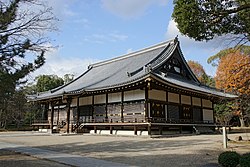
Photo by 663highlandWikimedia CommonsCC BY-SA 4.0

6 min of listening · Section 1 of 5: Welcome to Ryōan-ji

Prefer reading? The full guide is below

Here in person? Walk on with Mappu

This audio guide tells one place’s story. Walk Mode keeps going as you walk:

  • It knows where you are and talks about what’s in front of you, not only these chapters.
  • It takes you on to the next sight and follows what interests you.
  • Ask about anything you see, and it answers on the spot.
  • Your phone stays in your pocket.

A 2-hour live walk with Mappu, €4.99.

50 credits from the Starter pack. One-time purchase, no subscription.

Self-guided audio walk. No guide accompanies you. Not affiliated with the sites.

Keep exploring

Discover more places in Mappu.

Ryōan-ji • Section 1 of 5

Ryōan-ji: is there a free audio guide?

Quick answer. Yes. Mappu’s Ryōan-ji audio guide (Kyoto, Japan) is free in your browser: 5 sections and about 6 minutes of listening, in 8 languages. It covers “Ryōan-ji: A Warlord's Zen Foundation”, “Ryōan-ji: Reading the Dry Landscape” and “Ryōan-ji: Tea Garden, Tsukubai and Worldwide Fame”. In the Mappu app, Walk Mode narrates the places around you as you move and answers your follow-up questions.

Ryōan-ji map

Mappu's own map of the place, with the paths and entrances OpenStreetMap shows around it.

Ryōan-ji mapThe place on the map, with the guide's point marked.

Ryōan-ji: what does the audio guide cover?

  1. 01

    Welcome to Ryōan-ji

    Welcome to Ryōan-ji, a Zen temple in the northwest of Kyoto. Its name, written 龍安寺 in Japanese, means the Temple of the Dragon at Peace. Hold that image for a moment, because this is a place that rewards slow looking and a quiet mind. Ryōan-ji belongs to the Myōshin-ji school of the Rinzai branch of Zen Buddhism. It stands in Kyoto's Ukyō ward and is a sub-temple of the great head temple Myōshin-ji, though it sits outside that temple's own grounds. Its mountain name is Daiunzan, and the Buddha enshrined as its main image is Shaka Nyorai, the historical Buddha. Most people come for one thing: a famous rock garden. But the temple holds more than that, including a tea garden, a long history of fire and rebuilding, and a place on the UNESCO World Heritage list. Over the next few minutes we will look at how it began, how its garden works, and how a quiet Zen temple became known around the world.

  2. 02

    Ryōan-ji: A Warlord's Zen Foundation

    The story starts in 1450, in the Muromachi period. A powerful military figure named Hosokawa Katsumoto, a shugo daimyo serving the Muromachi shogunate, acquired a villa that had belonged to the Tokudaiji family. He turned it into a Zen temple, and he invited a monk from Myōshin-ji named Giten Gensho to become its first abbot. That is why Katsumoto is remembered as the founder and Giten as the first head of the temple. The peace in the temple's name did not last long around it. In 1467 the Ōnin War broke out and flames swept across Kyoto, damaging many temples and shrines. Ryōan-ji burned down as well. The community moved for a time into the city proper, but before long the temple was rebuilt on its original site. The trials did not end there. The temple went through several more fires over the centuries. Yet it endured, and what you see today carries the long memory of a place that was lost and rebuilt more than once.

  3. 03

    Ryōan-ji: Reading the Dry Landscape

    Now to the garden that made Ryōan-ji famous. It is a kare-sansui, a dry landscape. There is no water and no pond. Larger rock formations are set amid a sweep of smooth, carefully chosen pebbles, raked into linear patterns that help the mind settle into meditation. It is considered one of the finest surviving examples of the style. Here is the famous puzzle. Fifteen stones rest on a bed of white gravel, and it is often said that from any single viewing angle you can see only 14 of them at once. Take your seat, count, and then shift along the veranda and count again. The garden seems to invite you to look harder and then to stop trying to solve it. Nobody can say for certain what the arrangement means. Some see islands in a sea or mountain peaks above clouds, and others see nothing but stone and gravel. That openness is part of the point. In 1954 this garden was designated a Special Place of Scenic Beauty, a recognition of how deeply it matters in Japanese culture.

  4. 04

    Ryōan-ji: Tea Garden, Tsukubai and Worldwide Fame

    On the opposite side of the building from the rock garden, there is a quieter treasure that few visitors photograph: the tea garden. Here you will find a tsukubai, a low stone basin of the kind used in tea settings. Over the centuries it has worked as a gentle, humorous visual koan, a riddle in stone, reminding the monks who lived here each day of their vow of poverty. The temple's fame reaches well beyond Kyoto. In 1975 Queen Elizabeth the Second visited the rock garden, and with the Zen boom of that era behind it, Ryōan-ji became known around the world. Today it is also part of the Historic Monuments of Ancient Kyoto, which was inscribed as a UNESCO World Heritage Site in 1994. It is a lovely thought that a temple founded by a military leader is now best known for stillness. In spring, cherry blossom can be seen at the rock garden, adding a soft counterpoint to all that stone and gravel.

  5. 05

    Before You Head Off

    As you wander away from Ryōan-ji, consider how many layers one temple can hold: a villa given a second life as a Zen monastery, a war that burned it, a rebuilding that brought it back, and a garden that people have looked at for generations without agreeing on what it says. Before you leave, try one more experiment. Look at the raked gravel and notice how the lines guide your eye. Then turn toward the tea garden and its tsukubai, and ask yourself which of the two gardens asks more of you: the open puzzle of stones, or the small stone basin with its quiet message about having enough. There is always another angle at Ryōan-ji, and the next time you look, you may see something that you missed the first time.

About this guide

AI-generated from 6 sources; checked automatically and last updated on October 31, 2026. Verify tickets and opening hours on the official site. Independent guide by Mappu. Not affiliated with or endorsed by the site or its managers.

Run a travel site or blog? Embed this audio guide for free.

Walk on from here

The nearest places with a Mappu audio guide, in walking order: about 2.9 km and 40 minutes on foot in all.

Route map: walking on from Ryōan-ji4 numbered stops in walking order. Stop 1: Ryōan-ji; Stop 2: Ninna-ji; Stop 3: Tōji-in Temple; Stop 4: Hirano Shrine.Stop 1: Ryōan-ji1Stop 2: Ninna-ji2Stop 3: Tōji-in Temple3Stop 4: Hirano Shrine4
Distances are estimates: the straight line between places plus 30%.

Indicative route. While you walk, watch where you're going, mind the traffic and follow local signs and rules. The map is an aid, not a safety guide. Terms

  1. Ryōan-jiThis guide

    about 0.7 km · about 10 min on foot

  2. Ninna-ji

    about 1.1 km · about 15 min on foot

  3. Tōji-in Temple

    about 1.0 km · about 14 min on foot

  4. Hirano Shrine
Photo attribution

Walk Mode, in the free Mappu app: 2 hours for 50 credits (€4.99 Starter pack)

Planning a trip to Kyoto?

Get your plan

Mappu sketches your days free in the chat, no account needed. Then take the full plan with you:

  • Weekend trip, €9.99: Your day-by-day plan plus 2 live walks
  • Save your trip’s free guides on your phone in the Mappu app: they play with no signal
See the trip packs

Already going? The 2-hour live walk in Kyoto is €4.99

Plan your trip on a map and get an audio guide for almost any place nearby: just tap it on the Mappu map.

Common questions

Ryōan-ji: how long is the free audio guide?

About 6 minutes of listening in 5 sections: “Welcome to Ryōan-ji”, “Ryōan-ji: A Warlord's Zen Foundation”, “Ryōan-ji: Reading the Dry Landscape”, “Ryōan-ji: Tea Garden, Tsukubai and Worldwide Fame”, and “Before You Head Off”.

Ryōan-ji: what can I ask Mappu after the guide?

You can ask follow-up questions such as “What does the name Temple of the Dragon at Peace suggest about how Ryōan-ji sees itself as a Zen temple?” and keep asking in Mappu, with the guide connected to your map and trip plan.