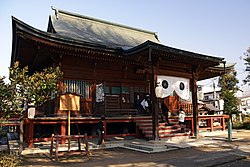
Hie Shrine Audio Guide

Audio guide for Hie Shrine

Hie Shrine
Photo by nnhWikimedia CommonsPublic domain

5 min of listening · Section 1 of 5: Welcome to Hie Shrine

Prefer reading? The full guide is below

Here in person? Walk on with Mappu

This audio guide tells one place’s story. Walk Mode keeps going as you walk:

  • It knows where you are and talks about what’s in front of you, not only these chapters.
  • It takes you on to the next sight and follows what interests you.
  • Ask about anything you see, and it answers on the spot.
  • Your phone stays in your pocket.

A 2-hour live walk with Mappu, €4.99.

50 credits from the Starter pack. One-time purchase, no subscription.

Self-guided audio walk. No guide accompanies you. Not affiliated with the sites.

Keep exploring

Discover more places in Mappu.

Hie Shrine • Section 1 of 5

Hie Shrine: is there a free audio guide?

Quick answer. Yes. Mappu’s Hie Shrine audio guide (Takayama, Japan) is free in your browser: 5 sections and about 5 minutes of listening, in 8 languages. It covers “The Worship Hall of Hie Shrine”, “Wood and Snow Around Hie Shrine” and “Takayama's Story Beyond Hie Shrine”. In the Mappu app, Walk Mode narrates the places around you as you move and answers your follow-up questions.

Hie Shrine map

Mappu's own map of the place, with the paths and entrances OpenStreetMap shows around it.

Hie Shrine mapThe place on the map, with the guide's point marked.

Hie Shrine: what does the audio guide cover?

  1. 01

    Welcome to Hie Shrine

    Welcome to Hie Shrine, known in Japanese as 日枝神社, in the mountain city of Takayama, in Gifu Prefecture. Takayama sits in the old province of Hida, a region of steep valleys, deep winter snow and some of the finest timber in Japan. A word of honesty before we begin. The detailed story of this particular shrine is thinly recorded, so I will keep to what is firmly established: a worship hall of a Hie Shrine appears on Takayama's list of city cultural properties, and the surrounding region has a rich, well-documented past. I will tell you clearly which is which, and I will not borrow the famous Hie Shrine in Tokyo, which is a different place entirely. So think of this visit as a way to read a quiet Hida shrine against its landscape: wood, snow, and the long shadow of Takayama's history.

  2. 02

    The Worship Hall of Hie Shrine

    Takayama's official list of cultural properties, in its section on buildings, includes the worship hall of a Hie Shrine together with its ridgepole tablets. The Japanese term for the hall is haiden, and the tablets are called munafuda. The haiden is the building where visitors stand to offer prayers, usually facing the more secluded sanctuary behind it. Ridgepole tablets are a lovely detail of Japanese carpentry. Traditionally they are wooden boards placed in the roof structure when a building is raised, and they often record when it was built and who was involved. That is why the listing covers the hall and its tablets together, as one heritage unit. When you stand before the hall, look up toward the roofline. The tablets are tucked up in the framing and usually out of sight, but the practice behind them reflects the care taken over wooden buildings in this part of Japan.

  3. 03

    Wood and Snow Around Hie Shrine

    Let us widen the lens to the region around Hie Shrine, because Hida's climate shaped everything built here. This is the story of the area, not of one building, and it explains a lot about what you see. Hida receives a great deal of snow, and it was a production center for timber. In Takayama's surviving Edo period government compound, the Takayama Jin'ya, the roofs are covered in several different styles, with names such as noshi-buki, kokera-buki and ishiokinagakure-buki. Every one of them uses wooden shingles. Compared with clay roof tiles, which were easily worn down by ice and snow, wood was more readily available and held up better to the weather. So if you notice timber, shingles and steep, practical roof shapes as you walk around Takayama, you are looking at centuries of local adaptation to mountains, snow and forest.

  4. 04

    Takayama's Story Beyond Hie Shrine

    The history of Takayama as a town is a dramatic one, and it frames any shrine you visit here. After the Battle of Sekigahara and the rise of the Tokugawa shogunate, Tokugawa Ieyasu awarded Hida Province to Kanamori Nagachika. He became daimyo of the 38,000 koku Hida-Takayama Domain and built Takayama Castle. In 1692 the Kanamori clan was transferred to Kaminoyama Domain in Dewa Province. Hida was rich in gold, silver, copper and its famed timber, so the shogunate kept the whole province under its direct control. Takayama Castle was destroyed, and the lower residence at the castle's foot was converted into the daikansho, the combined home and office of the administrator appointed by the shogun. That compound, the Takayama Jin'ya, served in this role from 1692 until 1871, and it survives today. This is the setting for Takayama's shrines and neighborhoods: a mountain town that was valued, and closely watched, for its resources.

  5. 05

    Before You Head Off from Hie Shrine

    As you leave Hie Shrine, take a moment to look at the wood around you: the beams, the eaves, the way the structures sit against the hills. In Hida, timber and snow are the thread running through everything, from shrine halls to government compounds. If you want to keep exploring, the Takayama Jin'ya shows how the town was governed for almost two centuries, and its shingled roofs and relocated earthen storehouses make a fine companion to a quiet shrine visit. Notice, too, how many different roof styles you can spot as you wander, and ask yourself what they say about life in these mountains.

About this guide

AI-generated from 6 sources; checked automatically and last updated on October 31, 2026. Verify tickets and opening hours on the official site. Independent guide by Mappu. Not affiliated with or endorsed by the site or its managers.

Run a travel site or blog? Embed this audio guide for free.

Walk on from here

This place is stop 1 of 4 of a self-guided walk: Hie Shrine to Sakurayama Hachimangu, Takayama. About 4.4 km and 60 minutes on foot, plus about 22 minutes of listening.

Route map: walking on from Hie Shrine4 numbered stops in walking order. Stop 1: Hie Shrine; Stop 2: Shiroyama Park; Stop 3: Hida Kokubun-ji; Stop 4: Sakurayama Hachiman Shrine.Stop 1: Hie Shrine1Stop 2: Shiroyama Park2Stop 3: Hida Kokubun-ji3Stop 4: Sakurayama Hachiman Shrine4
Distances are estimates along the walking route, from OpenStreetMap.

Indicative route. While you walk, watch where you're going, mind the traffic and follow local signs and rules. The map is an aid, not a safety guide. Terms

  1. Hie ShrineThis guide

    about 1.4 km · about 19 min on foot

  2. Shiroyama Park

    about 1.8 km · about 24 min on foot

  3. Hida Kokubun-ji

    about 1.2 km · about 15 min on foot

  4. Sakurayama Hachiman Shrine
Photo attribution

Walk Mode, in the free Mappu app: 2 hours for 50 credits (€4.99 Starter pack)

See the whole walk

Planning a trip to Takayama?

Get your plan

Mappu sketches your days free in the chat, no account needed. Then take the full plan with you:

  • Weekend trip, €9.99: Your day-by-day plan plus 2 live walks
  • Save your trip’s free guides on your phone in the Mappu app: they play with no signal
See the trip packs

Already going? The 2-hour live walk in Takayama is €4.99

Plan your trip on a map and get an audio guide for almost any place nearby: just tap it on the Mappu map.

Common questions

Hie Shrine: how long is the free audio guide?

About 5 minutes of listening in 5 sections: “Welcome to Hie Shrine”, “The Worship Hall of Hie Shrine”, “Wood and Snow Around Hie Shrine”, “Takayama's Story Beyond Hie Shrine”, and “Before You Head Off from Hie Shrine”.

Hie Shrine: what can I ask Mappu after the guide?

You can ask follow-up questions such as “Why did Takayama's roofs rely on wooden shingles rather than clay tiles?” and keep asking in Mappu, with the guide connected to your map and trip plan.