D. T. Suzuki Museum Audio Guide

A museum to Buddhist philosopher D. T. Suzuki in his home city

D. T. Suzuki Museum
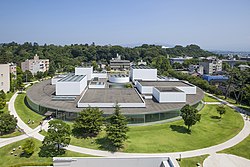
Photo by 金沢市Wikimedia CommonsCC BY 2.1 jp

5 min of listening · Section 1 of 5: Welcome to D. T. Suzuki Museum

Prefer reading? The full guide is below

Here in person? Walk on with Mappu

This audio guide tells one place’s story. Walk Mode keeps going as you walk:

  • It knows where you are and talks about what’s in front of you, not only these chapters.
  • It takes you on to the next sight and follows what interests you.
  • Ask about anything you see, and it answers on the spot.
  • Your phone stays in your pocket.

A 2-hour live walk with Mappu, €4.99.

50 credits from the Starter pack. One-time purchase, no subscription.

Self-guided audio walk. No guide accompanies you. Not affiliated with the sites.

Keep exploring

Discover more places in Mappu.

D. T. Suzuki Museum • Section 1 of 5

D. T. Suzuki Museum: is there a free audio guide?

Quick answer. Yes. Mappu’s D. T. Suzuki Museum audio guide (Kanazawa, Japan) is free in your browser: 5 sections and about 5 minutes of listening, in 8 languages. It covers “The Philosopher Behind the D. T. Suzuki Museum”, “Taniguchi's Architecture at the D. T. Suzuki Museum” and “Kanazawa Around the D. T. Suzuki Museum”. In the Mappu app, Walk Mode narrates the places around you as you move and answers your follow-up questions.

D. T. Suzuki Museum map

Mappu's own map of the place, with the paths and entrances OpenStreetMap shows around it.

D. T. Suzuki Museum mapThe place on the map, with the guide's point marked.

D. T. Suzuki Museum: what does the audio guide cover?

  1. 01

    Welcome to D. T. Suzuki Museum

    Welcome to the D. T. Suzuki Museum in Kanazawa, in Ishikawa Prefecture. In Japanese it is called Suzuki Daisetsu Kan, written 鈴木大拙館. It opened in 2011 and is dedicated to the life, writings and ideas of D. T. Suzuki, the Buddhist philosopher who was born right here in Kanazawa. A quick word on how this guide works. I will keep to the broad strokes that are well established: who Suzuki was, who designed the building, how the museum is laid out, and how it sits among its neighbors. I will not invent small details about individual exhibits or rooms. That suits the place, which is about space and quiet rather than a crowd of objects. The museum stands in the part of Kanazawa where Suzuki was born, about a 10 minute walk from Kenrokuen, one of Japan's three great gardens. So you are in a city of famous gardens and samurai history, and this museum offers a different kind of stillness.

  2. 02

    The Philosopher Behind the D. T. Suzuki Museum

    Suzuki Daisetz Teitaro lived from 1870 to 1966, a span of 96 years, and he became one of the most prominent Buddhist philosophers of his age. He was born in Kanazawa, and this city's claim on him is the reason the museum exists. The name Daisetsu, the second part of the museum's Japanese name, is the form of his name used in Japan, while the world knows him by the initials D. T. The museum's purpose is to share his life, his writings and his ideas, and to let you follow his footsteps through his calligraphy, photographs and books. Notice that this is a museum about a way of thinking rather than a collection of treasures. It is meant to be the kind of place where you take an idea away with you instead of ticking off objects. That is also why the museum sits in the neighborhood where he was born. A thinker who traveled and wrote on a world stage is brought home, in a modest but deliberate way, to the city that first shaped him.

  3. 03

    Taniguchi's Architecture at the D. T. Suzuki Museum

    The building was designed by Yoshio Taniguchi, an architect from Kanazawa. Alongside the architect Yoshiro Taniguchi, he is counted among the great architects the city has produced. The design treats the architecture itself as an interpretation of Suzuki's thought. Its lines are calm and uncluttered, and the structures are kept simple on purpose, so that the building expresses the teachings instead of simply housing them. A contemplative space is part of the facility, and a water mirror garden is one of the places where that calm becomes visible. Greenery drapes over the stone walls and forms a backdrop that is meant to call up an idyllic image of Kanazawa. Architectural writers often read buildings like this through an idea called Critical Regionalism, proposed by the historian Kenneth Frampton. It asks modern design to grow from regional character instead of looking the same anywhere in the world. Here, restrained modern forms and a Kanazawa setting are brought together, and you can judge for yourself how well the walls, water and greenery do that.

  4. 04

    Kanazawa Around the D. T. Suzuki Museum

    The museum is part of a rich cultural neighborhood. Kenrokuen is about a 10 minute walk away, and the 21st Century Museum of Contemporary Art is roughly the same distance. A walking trail through the museum's garden also offers a shortcut to the Kanazawa Nakamura Museum and the Prefectural Museum of Art, so the museum can be one stop in a longer afternoon on foot. It also fits the character of the city. Kanazawa has been described as a place that weaves new threads, meaning modern architecture, into the cloth of its tradition without cutting the old threads of history. Samurai quarters, teahouse districts and craft traditions sit beside contemporary buildings. The wealth of the Kaga domain, the greatest of all the daimyo, shaped the art and culture the city produced through the Edo period. After your visit, you might walk past the water mirror garden from the outside.

  5. 05

    Before You Head Off

    As you leave the D. T. Suzuki Museum, you carry out what the building was designed to offer, which is a slower pace of attention. Few museums ask you to look at the walls, the water and the greenery with as much care as at what is on display. Try noticing how the stone, the water and the plants meet each other, and how the stillness inside differs from the lively streets of Kanazawa outside. Think about how a philosopher who belonged to the wider world is remembered in the neighborhood of his birth. From here, Kenrokuen and the city's other museums are close by on foot. Each offers another way of seeing Kanazawa, and I would be glad to take you through any of them, or to dig deeper into Suzuki's ideas or Taniguchi's design.

About this guide

AI-generated from 6 sources; reviewed for accuracy and last updated on October 31, 2026. Verify tickets and opening hours on the official site. Independent guide by Mappu. Not affiliated with or endorsed by the site or its managers.

Run a travel site or blog? Embed this audio guide for free.

Walk on from here

This place is stop 5 of 6 of a self-guided walk: Oyama Shrine to Myōryū-ji, Kanazawa. About 4.7 km and 65 minutes on foot, plus about 34 minutes of listening.

Route map: walking on from D. T. Suzuki Museum6 numbered stops in walking order. Stop 1: Oyama Shrine; Stop 2: Kanazawa Castle; Stop 3: Kenroku-en; Stop 4: 21st Century Museum of Contemporary Art Kanazawa; Stop 5: D. T. Suzuki Museum; Stop 6: Myōryū-ji Temple.Stop 1: Oyama Shrine1Stop 2: Kanazawa Castle2Stop 3: Kenroku-en3Stop 4: 21st Century Museum of Contemporary Art Kanazawa4Stop 5: D. T. Suzuki Museum5Stop 6: Myōryū-ji Temple6
Distances are estimates along the walking route, from OpenStreetMap.

Indicative route. While you walk, watch where you're going, mind the traffic and follow local signs and rules. The map is an aid, not a safety guide. Terms

  1. Oyama Shrine

    about 0.9 km · about 12 min on foot

  2. Kanazawa Castle

    about 1.0 km · about 13 min on foot

  3. Kenroku-en

    about 0.7 km · about 9 min on foot

  4. 21st Century Museum of Contemporary Art Kanazawa

    about 0.7 km · about 9 min on foot

  5. D. T. Suzuki MuseumThis guide

    about 1.5 km · about 20 min on foot

  6. Myōryū-ji Temple
Photo attribution

Walk Mode, in the free Mappu app: 2 hours for 50 credits (€4.99 Starter pack)

See the whole walk

Planning a trip to Kanazawa?

Get your plan

Mappu sketches your days free in the chat, no account needed. Then take the full plan with you:

  • Weekend trip, €9.99: Your day-by-day plan plus 2 live walks
  • Save your trip’s free guides on your phone in the Mappu app: they play with no signal
See the trip packs

Already going? The 2-hour live walk in Kanazawa is €4.99

Plan your trip on a map and get an audio guide for almost any place nearby: just tap it on the Mappu map.

Common questions

D. T. Suzuki Museum: how long is the free audio guide?

About 5 minutes of listening in 5 sections: “Welcome to D. T. Suzuki Museum”, “The Philosopher Behind the D. T. Suzuki Museum”, “Taniguchi's Architecture at the D. T. Suzuki Museum”, “Kanazawa Around the D. T. Suzuki Museum”, and “Before You Head Off”.

D. T. Suzuki Museum: what can I ask Mappu after the guide?

You can ask follow-up questions such as “Who was D. T. Suzuki, and why is a museum about his ideas located in Kanazawa?” and keep asking in Mappu, with the guide connected to your map and trip plan.