21st Century Museum of Contemporary Art, Kanazawa Audio Guide

Audio guide for 21st Century Museum of Contemporary Art, Kanazawa

21st Century Museum of Contemporary Art Kanazawa
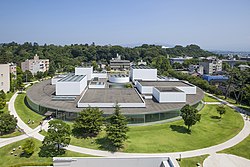
Photo by 金沢市Wikimedia CommonsCC BY 2.1 jp

6 min of listening · Section 1 of 5: Welcome to 21st Century Museum of Contemporary Art, Kanazawa

Prefer reading? The full guide is below

Here in person? Walk on with Mappu

This audio guide tells one place’s story. Walk Mode keeps going as you walk:

  • It knows where you are and talks about what’s in front of you, not only these chapters.
  • It takes you on to the next sight and follows what interests you.
  • Ask about anything you see, and it answers on the spot.
  • Your phone stays in your pocket.

A 2-hour live walk with Mappu, €4.99.

50 credits from the Starter pack. One-time purchase, no subscription.

Self-guided audio walk. No guide accompanies you. Not affiliated with the sites.

Keep exploring

Discover more places in Mappu.

21st Century Museum of Contemporary Art Kanazawa • Section 1 of 5

21st Century Museum of Contemporary Art Kanazawa: is there a free audio guide?

Quick answer. Yes. Mappu’s 21st Century Museum of Contemporary Art, Kanazawa audio guide (Kanazawa, Japan) is free in your browser: 5 sections and about 6 minutes of listening, in 8 languages. It covers “A Museum Built to Bring a City Center Back to Life” and “The Round Glass Building With No Front Door”. In the Mappu app, Walk Mode narrates the places around you as you move and answers your follow-up questions.

21st Century Museum of Contemporary Art, Kanazawa map

Mappu's own map of the place, with the paths and entrances OpenStreetMap shows around it.

21st Century Museum of Contemporary Art, Kanazawa mapThe place on the map, with the guide's point marked.

21st Century Museum of Contemporary Art Kanazawa: what does the audio guide cover?

  1. 01

    Welcome to 21st Century Museum of Contemporary Art, Kanazawa

    Welcome to the 21st Century Museum of Contemporary Art, Kanazawa, known in Japanese as Kanazawa Nijuisseiki Bijutsukan. You are in the middle of Kanazawa, in Ishikawa Prefecture, just a few steps from the famous garden of Kenrokuen and close to Kanazawa Castle and the Ishikawa Prefectural Museum of Art. That makes this an easy stop to pair with the city's older treasures. The museum opened in 2004 and has become one of the most popular art museums in Japan. What strikes you first is the building itself: a low, perfectly circular glass drum. Walk around it and you will look for the front door, and you will not find one. We will come back to why that is deliberate. In this guide we will look at the idea behind the museum, the architecture that makes it feel like a small town, the artworks and spaces that people remember most, and a few practical pointers for your visit. Locals even have an affectionate nickname for the place, Marubii, which simply means the round museum.

  2. 02

    A Museum Built to Bring a City Center Back to Life

    This museum was not built only to hold art. It was created with two stated aims: to nurture new culture and to bring fresh liveliness to the town. The background is a very urban story. During the 1990s, one public institution after another moved out of central Kanazawa, including the prefectural government offices and Kanazawa University. People worried that the city center would lose its vitality, and a museum was proposed as a facility that could draw people back into the heart of town. The project then moved step by step. The basic concept for the museum was drawn up in June 1997, and pre-events began in October 1998. In March 1999, a joint team of Kazuyo Sejima's office and SANAA was chosen as the designer. The name, 21st Century Museum of Contemporary Art, Kanazawa, was settled in May 2001, construction began in April 2002, and the building was completed in August 2004. The museum describes itself as a participatory place that lives in the town and is made together with its citizens, a kind of town square. A friends association was founded the very year it opened, and nearby shopping streets take part as supporting shops. Show a ticket stub from a museum exhibition at a shop displaying a coaster, and you may receive a special service.

  3. 03

    The Round Glass Building With No Front Door

    Now let us look at the architecture. The building was designed by Kazuyo Sejima and Ryue Nishizawa, who work together as the architecture unit SANAA. Its plan is a circle with a diameter of 112.5 meters. The circular form keeps the overall volume of the building low, so it does not tower over its neighbors, and it allows visitors to come in from many different points. That is why there is no proper front or back entrance. You approach the art from whichever direction you happen to arrive. Inside, the museum is organized like a little city. The public zone includes a citizens' gallery and a lecture hall that people can use free of charge. Fourteen exhibition rooms are arranged almost like separate buildings, so wandering between them feels like walking through the back alleys of a town. It is an easy way to lose track of time. The design drew international attention. It won a Golden Lion at the 2004 Venice Biennale International Architecture Exhibition, and SANAA later received the Pritzker Prize in 2010. For a city famous for samurai-era streets and tea houses, this luminous circle is a confident statement about the twenty-first century.

  4. 04

    Art Worth Diving Into: The Collection and the Swimming Pool

    The museum's collection focuses on works made since 1980 that propose new values. Exhibitions often bring together an international mix of styles and genres, while much of the art also reflects Kanazawa and its surroundings. The museum also puts real emphasis on education, with talks and lectures alongside the shows. Among the permanent works, one is especially beloved: Swimming Pool by Leandro Erlich, made in 2004 and part of the museum's collection. It is a favorite among visitors, and it is exactly the kind of work that rewards curiosity. Give yourself time to experience it from more than one angle, and watch how other visitors react to it. Because the museum offers both a free public zone and paid exhibition rooms, you can sample it at your own pace. Admission varies by exhibition and is typically between 500 and 1500 yen. Exhibitions drawn from the museum's own collection are covered by the Kanazawa Cultural Zone Pass, while other exhibitions are not.

  5. 05

    Before You Head Off

    If you are still deciding how to reach the museum from Kanazawa Station, take the Kanazawa Loop Bus or the Kenrokuen Shuttle from the east exit and get off at the Hirosaka bus stop. The ride takes about 20 minutes. JR buses from the east exit also run this way. From here, the garden of Kenrokuen and Kanazawa Castle are close at hand. Before you go, it is worth checking the museum's current opening schedule, since a repair closure of just under a year is planned to begin in May 2027. As you wander, try a small experiment: enter by one door, leave by another, and notice how the circle keeps changing the way you see the city outside the glass. Which route through the 14 exhibition rooms feels most like a stroll through a back alley, and which feels like a town square? The museum seems built to let you find your own answer.

About this guide

AI-generated from 6 sources; checked automatically and last updated on October 31, 2026. Verify tickets and opening hours on the official site. Independent guide by Mappu. Not affiliated with or endorsed by the site or its managers.

Run a travel site or blog? Embed this audio guide for free.

Walk on from here

This place is stop 4 of 6 of a self-guided walk: Oyama Shrine to Myōryū-ji, Kanazawa. About 4.7 km and 65 minutes on foot, plus about 34 minutes of listening.

Route map: walking on from 21st Century Museum of Contemporary Art Kanazawa6 numbered stops in walking order. Stop 1: Oyama Shrine; Stop 2: Kanazawa Castle; Stop 3: Kenroku-en; Stop 4: 21st Century Museum of Contemporary Art Kanazawa; Stop 5: D. T. Suzuki Museum; Stop 6: Myōryū-ji Temple.Stop 1: Oyama Shrine1Stop 2: Kanazawa Castle2Stop 3: Kenroku-en3Stop 4: 21st Century Museum of Contemporary Art Kanazawa4Stop 5: D. T. Suzuki Museum5Stop 6: Myōryū-ji Temple6
Distances are estimates along the walking route, from OpenStreetMap.

Indicative route. While you walk, watch where you're going, mind the traffic and follow local signs and rules. The map is an aid, not a safety guide. Terms

  1. Oyama Shrine

    about 0.9 km · about 12 min on foot

  2. Kanazawa Castle

    about 1.0 km · about 13 min on foot

  3. Kenroku-en

    about 0.7 km · about 9 min on foot

  4. 21st Century Museum of Contemporary Art KanazawaThis guide

    about 0.7 km · about 9 min on foot

  5. D. T. Suzuki Museum

    about 1.5 km · about 20 min on foot

  6. Myōryū-ji Temple
Photo attribution

Walk Mode, in the free Mappu app: 2 hours for 50 credits (€4.99 Starter pack)

See the whole walk

Planning a trip to Kanazawa?

Get your plan

Mappu sketches your days free in the chat, no account needed. Then take the full plan with you:

  • Weekend trip, €9.99: Your day-by-day plan plus 2 live walks
  • Save your trip’s free guides on your phone in the Mappu app: they play with no signal
See the trip packs

Already going? The 2-hour live walk in Kanazawa is €4.99

Plan your trip on a map and get an audio guide for almost any place nearby: just tap it on the Mappu map.

Common questions

21st Century Museum of Contemporary Art, Kanazawa: how long is the free audio guide?

About 6 minutes of listening in 5 sections: “Welcome to 21st Century Museum of Contemporary Art, Kanazawa”, “A Museum Built to Bring a City Center Back to Life”, “The Round Glass Building With No Front Door”, “Art Worth Diving Into: The Collection and the Swimming Pool”, and “Before You Head Off”.

21st Century Museum of Contemporary Art, Kanazawa: what can I ask Mappu after the guide?

You can ask follow-up questions such as “Why did Kanazawa decide to build a contemporary art museum in the city center during the 1990s?” and keep asking in Mappu, with the guide connected to your map and trip plan.