Sakurayama Hachimangū Audio Guide

The shrine of Takayama's autumn festival and its floats

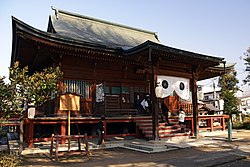
Sakurayama Hachiman Shrine
Photo by 663highlandWikimedia CommonsCC BY 2.5

6 min of listening · Section 1 of 5: Welcome to Sakurayama Hachiman Shrine

Prefer reading? The full guide is below

Here in person? Walk on with Mappu

This audio guide tells one place’s story. Walk Mode keeps going as you walk:

  • It knows where you are and talks about what’s in front of you, not only these chapters.
  • It takes you on to the next sight and follows what interests you.
  • Ask about anything you see, and it answers on the spot.
  • Your phone stays in your pocket.

A 2-hour live walk with Mappu, €4.99.

50 credits from the Starter pack. One-time purchase, no subscription.

Self-guided audio walk. No guide accompanies you. Not affiliated with the sites.

Keep exploring

Discover more places in Mappu.

Sakurayama Hachiman Shrine • Section 1 of 5

Sakurayama Hachiman Shrine: is there a free audio guide?

Quick answer. Yes. Mappu’s Sakurayama Hachimangū audio guide (Takayama, Japan) is free in your browser: 5 sections and about 6 minutes of listening, in 8 languages. It covers “Sakurayama Hachiman Shrine and the Two-Faced Monster”, “Sakurayama Hachiman Shrine and the Autumn Takayama Festival” and “Sakurayama Hachiman Shrine Today: Floats, Weddings and Wind Chimes”. In the Mappu app, Walk Mode narrates the places around you as you move and answers your follow-up questions.

Sakurayama Hachimangū map

Mappu's own map of the place, with the paths and entrances OpenStreetMap shows around it.

Sakurayama Hachimangū mapThe place on the map, with the guide's point marked.

Sakurayama Hachiman Shrine: what does the audio guide cover?

  1. 01

    Welcome to Sakurayama Hachiman Shrine

    Welcome to Sakurayama Hachiman Shrine, known in Japanese as 桜山八幡宮, in the northern part of Takayama, in Gifu Prefecture. Its address is on Sakuramachi, and that street name fits the place nicely. You are standing in the heart of the old Hida region, a land of mountains and forests, and this shrine is often described as the main shrine of Takayama. This guide stays with what is well documented: the shrine's founding tradition, its role in the great autumn festival, the festival floats displayed on its grounds, and the ways the shrine is still part of local life today. Takayama grew up as a timber town and a distribution center for the whole area. Sake brewers, cloth merchants, woodworkers and many other craftsmen were drawn here, and their skills are the quiet hero of everything you will hear about. So take a slow breath, look around the grounds, and let us begin with the stories that gave this shrine its name and its importance.

  2. 02

    Sakurayama Hachiman Shrine and the Two-Faced Monster

    The shrine's founding tradition reads like an adventure story. It begins in the reign of Emperor Nintoku, when the emperor asked Prince Takefurukuma-no-mikoto to subdue a monster named Ryomen Sukuna. This creature was said to have two faces, four arms and four legs, and it had appeared in the Hida region. Accounts differ on exactly which years that reign covers, so it is best to treat the date as tradition rather than a precise founding year. Before setting out, the prince is said to have enshrined his father, Emperor Ojin, as the deity of this sanctuary, and he prayed for success in his mission. Ojin is the figure closely associated with the Hachiman faith, and Hachiman is revered as a protector and a god of war. That helps explain why this kind of shrine has long been linked with warrior families. Historians would not read the monster tale as a straightforward news report. Ryomen Sukuna is a figure known from the Hida and Mino regions, and the story is best enjoyed as the shrine's own origin legend, a way of saying that this sanctuary reaches very far back in time.

  3. 03

    Sakurayama Hachiman Shrine and the Autumn Takayama Festival

    If Takayama has a heartbeat, you can hear it in its festivals. The autumn festival belongs to Sakurayama Hachiman Shrine, and it is the shrine's annual festival. Its spring counterpart belongs to Hie Shrine. Together they form the Takayama Festival, which is designated an Important Intangible Folk Cultural Property of Japan, and is counted among the three most beautiful festivals in the country. The festival's true beginnings are unknown. It is said to have been celebrated first sometime between 1586 and 1692, while the Kanamori family governed the Hida-Takayama area. What is certain is how much craft lies behind it. A town built by woodworkers, merchants and artisans had both the skill and the pride to build magnificent festival floats. Those floats are called yatai. In autumn they are drawn through the streets, and the whole town gathers around the shrine that is the festival's home. The shrine's status also reflects that importance. It is a former prefectural shrine, and it is one of five shrines in Gifu Prefecture that hold the special rank of beppyo shrine under the national association of Shinto shrines.

  4. 04

    Sakurayama Hachiman Shrine Today: Floats, Weddings and Wind Chimes

    You do not have to wait for October to meet the festival. The Takayama Festival Float Exhibition Hall, called the Yatai Kaikan, stands on the shrine grounds. It displays throughout the year the actual floats that are pulled out during the autumn festival. Entry is paid, and it gives you a close look at the craftsmanship that a timber town could produce. The shrine is also a living part of family life. Shrine weddings are held here, with shrine maidens performing sacred kagura dances. The same dances accompany prayers for safe childbirth, first visits for newborn babies, and the Shichi-Go-San celebration for children. There is a gathering hall too, used for wedding receptions and small banquets. In summer the grounds take on a different mood during the Sakurayama wind chime festival. Colorful wind chimes hang across the precinct and ring softly in the breeze, which gives a hot day a cooler feeling. Visitors have also remarked on how kind and welcoming the people at the shrine are.

  5. 05

    Before You Head Off

    As you finish your visit to Sakurayama Hachiman Shrine, notice how many different threads meet in one place. There is a legend of a two-faced monster, a god of protection, and a festival that has been celebrated for centuries. There are also floats built by generations of skilled hands, and ordinary family moments such as weddings and children's blessings. The shrine stands about five minutes' walk northeast of the Kusakabe Mingeikan, so it fits easily into a stroll through the old town. Takayama itself also makes a good base for exploring the wider Hida region, including the thatched-roof villages of Shirakawa-go and Gokayama to the northwest. Before you leave, look once more at the grounds and ask yourself what you would hear here on festival day, with the floats gathered and the town in celebration. Each season gives the place a different voice, and there is always more to discover.

About this guide

AI-generated from 6 sources; reviewed for accuracy and last updated on October 31, 2026. Verify tickets and opening hours on the official site. Independent guide by Mappu. Not affiliated with or endorsed by the site or its managers.

Run a travel site or blog? Embed this audio guide for free.

Walk on from here

This place is stop 4 of 4 of a self-guided walk: Hie Shrine to Sakurayama Hachimangu, Takayama. About 4.4 km and 60 minutes on foot, plus about 22 minutes of listening.

Route map: walking on from Sakurayama Hachiman Shrine4 numbered stops in walking order. Stop 1: Hie Shrine; Stop 2: Shiroyama Park; Stop 3: Hida Kokubun-ji; Stop 4: Sakurayama Hachiman Shrine.Stop 1: Hie Shrine1Stop 2: Shiroyama Park2Stop 3: Hida Kokubun-ji3Stop 4: Sakurayama Hachiman Shrine4
Distances are estimates along the walking route, from OpenStreetMap.

Indicative route. While you walk, watch where you're going, mind the traffic and follow local signs and rules. The map is an aid, not a safety guide. Terms

  1. Hie Shrine

    about 1.4 km · about 19 min on foot

  2. Shiroyama Park

    about 1.8 km · about 24 min on foot

  3. Hida Kokubun-ji

    about 1.2 km · about 15 min on foot

  4. Sakurayama Hachiman ShrineThis guide

Photo attribution

Walk Mode, in the free Mappu app: 2 hours for 50 credits (€4.99 Starter pack)

See the whole walk

Planning a trip to Takayama?

Get your plan

Mappu sketches your days free in the chat, no account needed. Then take the full plan with you:

  • Weekend trip, €9.99: Your day-by-day plan plus 2 live walks
  • Save your trip’s free guides on your phone in the Mappu app: they play with no signal
See the trip packs

Already going? The 2-hour live walk in Takayama is €4.99

Plan your trip on a map and get an audio guide for almost any place nearby: just tap it on the Mappu map.

Common questions

Sakurayama Hachimangū: how long is the free audio guide?

About 6 minutes of listening in 5 sections: “Welcome to Sakurayama Hachiman Shrine”, “Sakurayama Hachiman Shrine and the Two-Faced Monster”, “Sakurayama Hachiman Shrine and the Autumn Takayama Festival”, “Sakurayama Hachiman Shrine Today: Floats, Weddings and Wind Chimes”, and “Before You Head Off”.

Sakurayama Hachimangū: what can I ask Mappu after the guide?

You can ask follow-up questions such as “Who was Ryomen Sukuna, the two-faced monster in the shrine's founding story, and how is he remembered in the Hida region?” and keep asking in Mappu, with the guide connected to your map and trip plan.