Kitano Tenmangū Audio Guide

Audio guide for Kitano Tenmangū

Kitano Tenmangū
Photo by 663highlandWikimedia CommonsCC BY 2.5

6 min of listening · Section 1 of 5: Welcome to Kitano Tenman Shrine

Prefer reading? The full guide is below

Here in person? Walk on with Mappu

This audio guide tells one place’s story. Walk Mode keeps going as you walk:

  • It knows where you are and talks about what’s in front of you, not only these chapters.
  • It takes you on to the next sight and follows what interests you.
  • Ask about anything you see, and it answers on the spot.
  • Your phone stays in your pocket.

A 2-hour live walk with Mappu, €4.99.

50 credits from the Starter pack. One-time purchase, no subscription.

Self-guided audio walk. No guide accompanies you. Not affiliated with the sites.

Keep exploring

Discover more places in Mappu.

Kitano Tenmangū • Section 1 of 5

Kitano Tenmangū: is there a free audio guide?

Quick answer. Yes. Mappu’s Kitano Tenmangū audio guide (Kyoto, Japan) is free in your browser: 5 sections and about 6 minutes of listening, in 8 languages. It covers “Kitano Tenman Shrine: A Guardian of the Heavenly Gate”, “Kitano Tenman Shrine: From Oracle to Imperial Shrine” and “Kitano Tenman Shrine: Tea, Theater and Plum Blossoms”. In the Mappu app, Walk Mode narrates the places around you as you move and answers your follow-up questions.

Kitano Tenmangū map

Mappu's own map of the place, with the paths and entrances OpenStreetMap shows around it.

Kitano Tenmangū mapThe place on the map, with the guide's point marked.

Kitano Tenmangū: what does the audio guide cover?

  1. 01

    Welcome to Kitano Tenman Shrine

    Welcome to Kitano Tenman Shrine, known in Japanese as Kitano Tenmangu. You are in Kamigyo Ward, in the northern part of central Kyoto, at one of the city's best-loved shrines. Locals call it Tenjin-san or Kitano-san, and the names say a lot about the affection people feel for it. This shrine is the head shrine of about 12,000 Tenmangu and Tenjin shrines across Japan. It honors Sugawara no Michizane, a scholar, statesman and poet, and it is the center of the Tenjin faith, together with Dazaifu Tenmangu in Fukuoka Prefecture. Today it is especially cherished as a place to pray for success in exams and studies, and for the arts. It also belongs to the historic group of Twenty-Two Shrines, and its crest is a plum blossom with a star-like center. Over the next few minutes we will look at why this corner of Kyoto was chosen, how a tragedy turned into a shrine, and what the place offers visitors today. Let's begin where the story starts, with the ground beneath your feet.

  2. 02

    Kitano Tenman Shrine: A Guardian of the Heavenly Gate

    Long before this was a shrine of scholars, the Kitano district had a special job. It lies to the northwest of the old Imperial Palace, in the direction of what was called the heavenly gate of the capital, and it was considered an important place for protecting the city. Two small shrines already stood here: Jinushi, which honored the gods of heaven and earth, and Hinomiko, which honored a thunder deity. Both still exist today as auxiliary shrines within the grounds. That thunder connection matters for what comes next. Michizane lived from 845 to 903, and in 901 he was sent away from Kyoto after losing a power struggle at court. He died in exile two years later. Soon afterward, the capital was struck by disease and natural disasters, and people came to believe his anger was the cause. The most dramatic moment came in the year 930, when lightning hit the Seiryoden, the emperor's own hall in the palace. Two court officials, Fujiwara no Kiyotsura and Taira no Marekiyo, were killed. Three months later Emperor Daigo died, and the court was convinced that Michizane's spirit was at work. Over time, his spirit came to be linked with the thunder deity of this very district.

  3. 03

    Kitano Tenman Shrine: From Oracle to Imperial Shrine

    So how did fear turn into devotion? Tradition tells it through oracles. In the year 942, a girl named Tajihi no Ayako, who lived in the Seventh Avenue area of the capital's western half, received a message from Michizane asking for a shrine to be built at Kitano. Five years later, a young child named Tarōmaru, the son of a priest in Omi Province, received a similar message. In the year 947, by order of the court, a shrine hall was built here. The monk Saichin of Asahi-dera, a temple that is now known as Higashimuki Kannonji, took part in the work, and the temple became the shrine's companion temple. A monk named Zesan, from the Sugawara family and of Manshuin temple, became the first head administrator, and Manshuin's abbots held that role for generations afterward. The shrine's prestige grew quickly. Fujiwara no Morosuke had a grand new hall built in 959. In 987, an imperial envoy was sent to pray for the nation's peace, and Emperor Ichijo bestowed the divine title Kitano Tenman Daijizai Tenjin. Michizane was now honored as Tenjin, the heavenly deity. In 1004 the emperor himself visited, and the imperial family continued to revere the shrine for generations.

  4. 04

    Kitano Tenman Shrine: Tea, Theater and Plum Blossoms

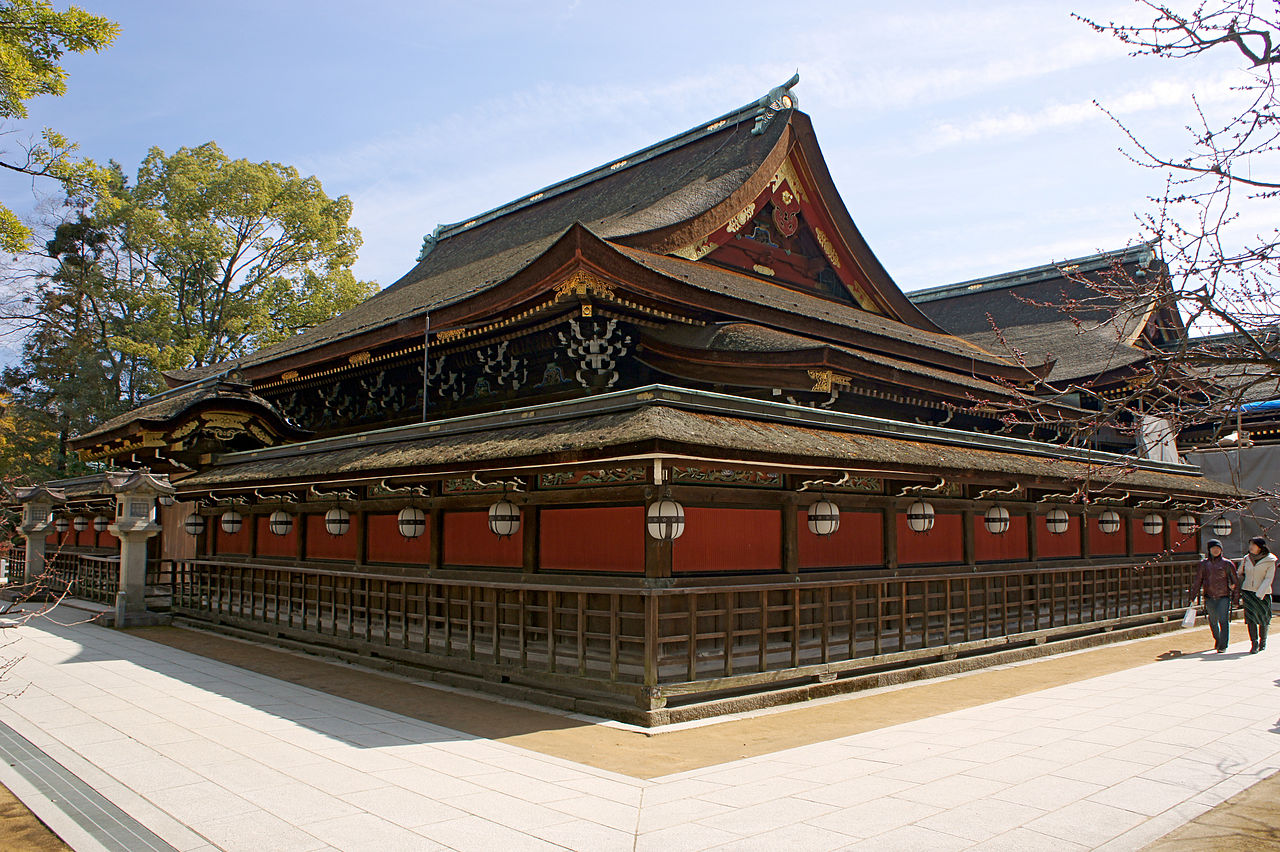
    This corner of Kyoto has long been a stage for culture. In the Tensho era, the ruler Toyotomi Hideyoshi held the Kitano Grand Tea Gathering across the pine grove that once surrounded the shrine. In the Keicho era, the performer Izumo no Okuni is said to have given the first yayako dance, an early form of kabuki, here in Kyoto. That is why Kitano is honored not only as a shrine of learning but also of culture and the performing arts. The main hall, a national treasure, is celebrated for its lavish Momoyama-period style and was built under Toyotomi Hideyori. The Sankomon Gate is an important cultural property and is often called the symbol of the shrine. Visitors also look for the Seven Mysteries of Tenjin-sama, a set of curiosities scattered around the grounds. A treasure hall holds offerings given over the centuries, including artworks, swords and armor. The seasons shape a visit here too. The shrine is famous for plum blossoms, and Michizane is closely associated with plum trees. Autumn brings red foliage. On the twenty-fifth of every month, a market is held in the grounds, and it is especially known for its kimono and vintage stalls. The twenty-fifth is a day tied to Michizane, so it feels fitting that the shrine fills with people then.

  5. 05

    Before You Head Off from Kitano Tenman Shrine

    Kitano Tenman Shrine began as a response to fear and grew into a place of hope for students, artists and anyone seeking protection from misfortune. Around exam season, the grounds fill with people hoping for success, much as generations of nobles, warriors and imperial family members came before them. As you wander on, look for the star-centered plum crest and notice how often it appears. Try to find some of the Seven Mysteries of Tenjin-sama. Think about how a place guarding the northwest edge of an ancient capital, once tied to thunder, became a place where people come to ask for a good result on a test. And if you can, keep an eye on the calendar. The twenty-fifth of the month, plum blossom time and the autumn colors each show a different side of this place. Which one will you come back for?

About this guide

AI-generated from 6 sources; checked automatically and last updated on October 31, 2026. Verify tickets and opening hours on the official site. Independent guide by Mappu. Not affiliated with or endorsed by the site or its managers.

Run a travel site or blog? Embed this audio guide for free.

Walk on from here

The nearest places with a Mappu audio guide, in walking order: about 2.9 km and 40 minutes on foot in all.

Route map: walking on from Kitano Tenmangū4 numbered stops in walking order. Stop 1: Kitano Tenmangū; Stop 2: Hirano Shrine; Stop 3: Tōji-in Temple; Stop 4: Kinkaku-ji.Stop 1: Kitano Tenmangū1Stop 2: Hirano Shrine2Stop 3: Tōji-in Temple3Stop 4: Kinkaku-ji4
Distances are estimates: the straight line between places plus 30%.

Indicative route. While you walk, watch where you're going, mind the traffic and follow local signs and rules. The map is an aid, not a safety guide. Terms

  1. Kitano TenmangūThis guide

    about 0.6 km · about 8 min on foot

  2. Hirano Shrine

    about 1.0 km · about 14 min on foot

  3. Tōji-in Temple

    about 1.3 km · about 17 min on foot

  4. Kinkaku-ji
Photo attribution

Walk Mode, in the free Mappu app: 2 hours for 50 credits (€4.99 Starter pack)

Planning a trip to Kyoto?

Get your plan

Mappu sketches your days free in the chat, no account needed. Then take the full plan with you:

  • Weekend trip, €9.99: Your day-by-day plan plus 2 live walks
  • Save your trip’s free guides on your phone in the Mappu app: they play with no signal
See the trip packs

Already going? The 2-hour live walk in Kyoto is €4.99

Plan your trip on a map and get an audio guide for almost any place nearby: just tap it on the Mappu map.

Common questions

Kitano Tenmangū: how long is the free audio guide?

About 6 minutes of listening in 5 sections: “Welcome to Kitano Tenman Shrine”, “Kitano Tenman Shrine: A Guardian of the Heavenly Gate”, “Kitano Tenman Shrine: From Oracle to Imperial Shrine”, “Kitano Tenman Shrine: Tea, Theater and Plum Blossoms”, and “Before You Head Off from Kitano Tenman Shrine”.

Kitano Tenmangū: what can I ask Mappu after the guide?

You can ask follow-up questions such as “Why was the Kitano district considered such an important place for protecting the old capital?” and keep asking in Mappu, with the guide connected to your map and trip plan.