Nanzen-ji Audio Guide

Audio guide for Nanzen-ji

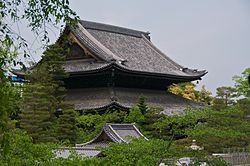
Nanzen-ji
Photo by 663highlandWikimedia CommonsCC BY-SA 4.0

6 min of listening · Section 1 of 5: Welcome to Nanzen-ji

Prefer reading? The full guide is below

Here in person? Walk on with Mappu

This audio guide tells one place’s story. Walk Mode keeps going as you walk:

  • It knows where you are and talks about what’s in front of you, not only these chapters.
  • It takes you on to the next sight and follows what interests you.
  • Ask about anything you see, and it answers on the spot.
  • Your phone stays in your pocket.

A 2-hour live walk with Mappu, €4.99.

50 credits from the Starter pack. One-time purchase, no subscription.

Self-guided audio walk. No guide accompanies you. Not affiliated with the sites.

Keep exploring

Discover more places in Mappu.

Nanzen-ji • Section 1 of 5

Nanzen-ji: is there a free audio guide?

Quick answer. Yes. Mappu’s Nanzen-ji audio guide (Kyoto, Japan) is free in your browser: 5 sections and about 6 minutes of listening, in 8 languages. It covers “From Palace to Temple at Nanzen-ji”, “Nanzen-ji Above the Five Mountains” and “The Gate, the Hojo and the Garden of Nanzen-ji”. In the Mappu app, Walk Mode narrates the places around you as you move and answers your follow-up questions.

Nanzen-ji map

Mappu's own map of the place, with the paths and entrances OpenStreetMap shows around it.

Nanzen-ji mapThe place on the map, with the guide's point marked.

Nanzen-ji: what does the audio guide cover?

  1. 01

    Welcome to Nanzen-ji

    Welcome to Nanzen-ji, written 南禅寺 in Japanese, a Zen Buddhist temple in the Sakyo ward of Kyoto. It is one of the highest-ranking Zen temples in Japan, and its vast grounds hold buildings, gardens and a good deal of woodland all in one sweep. The temple belongs to the Rinzai school of Zen and serves as the head temple of its own Nanzen-ji branch. Its full mountain name is Zuiryusan, and in its early days it went by another name, Zenrin-ji. The grounds cover roughly 150,000 square meters, so you are not stepping into a single hall but into a whole landscape. In the next few minutes we will look at how an emperor's palace became a temple, how Nanzen-ji ended up above every other Zen temple in Kyoto, and what you can see once you pass through its great gate. Take your time on the approach. The scenery here shifts through the seasons, and cherry blossoms in spring and red maples in autumn are especially loved.

  2. 02

    From Palace to Temple at Nanzen-ji

    Every temple starts somewhere, and Nanzen-ji started as a place of imperial leisure. In 1291, Emperor Kameyama established the temple on the site of his own earlier detached palace. A retreat for an emperor became a home for Zen monks. The temple's early name, Zenrin-ji, points to that first chapter. It later became Nanzen-ji, and its formal name is a long one, Taiheikokoku Nanzen Zenji. The main image of worship is Shaka Nyorai, the historical Buddha. Kameyama is honored as the founding patron, and the first abbot, the founding teacher, was the monk Mukan Fumon, who later received the title Daimin Kokushi. That imperial origin still echoes today. Visitors come here to pray for family safety, a tradition linked to Emperor Kameyama and the temple's long role as a place of prayer for the imperial family. As you walk the grounds, keep in mind that you are moving across what was once an emperor's private garden estate.

  3. 03

    Nanzen-ji Above the Five Mountains

    Here is a curious piece of Zen politics. Kyoto had a famous group of major Zen temples called the Kyoto Gozan, the five great Zen temples of the city. Nanzen-ji is not one of them, and that is exactly the point. It stands above them. The system itself was adapted from Chinese roots, the so-called Five Mountain System. After Ashikaga Yoshimitsu completed Shokoku-ji in 1386, a new ranking was created with Nanzen-ji placed at the very top, in a class of its own. The other great temples of Kyoto, including Shokoku-ji, Kennin-ji and Tofuku-ji, sit within the ranking. Nanzen-ji presides over them. That is why you will often hear it described as the head temple presiding over the Gozan in Kyoto, and as a special Zen temple with the highest status among Zen temples in Japan. Think of it as the temple that sits at the head of the table.

  4. 04

    The Gate, the Hojo and the Garden of Nanzen-ji

    Now to the architecture. The great Sanmon gate stands 22 meters tall. It was rebuilt in 1628 by Todo Takatora to commemorate those who died in the Summer Siege of Osaka. From its upper floor you can enjoy a panoramic view over Kyoto. That view comes with a bit of theater. Legend gives the outlaw Ishikawa Goemon a famous line from up there, "What a magnificent view, what a magnificent view!" The gate is also a doorway in a spiritual sense: passing through the Sanmon is said to dispel worldly desires. Beyond the gate, the Hojo, the abbot's quarters, is an Important Cultural Property. Its Hojo Garden is a designated Place of Scenic Beauty, a dry landscape garden of the kind Zen is known for. Tradition attributes it to the garden designer Kobori Enshu. Stand quietly before it and let the raked gravel and stones do the talking.

  5. 05

    Before You Head Off from Nanzen-ji

    Before you move on, look for the aqueduct. Its red-brick arches and weathered walls make a striking contrast with the wooden temple halls, and it looks atmospheric from almost every angle. It is one of the most photographed corners of the grounds, and a reminder that Nanzen-ji holds more than one era in a single walk. If you want to experience the temple as a place of practice rather than just a sight, early morning Zen meditation sessions have been held from 6 a.m. on the second and fourth Sundays of each month, open to the public and free of charge. For getting here, the nearest station is Keage on the Kyoto Municipal Subway Tozai Line, about a ten-minute walk away. As you wander, ask yourself which feels more remarkable: the emperor's palace that came before, the gate that looks out over the city, or the quiet garden where nothing seems to move at all. There is more to find in the corners of these grounds, so let your curiosity choose the path.

About this guide

AI-generated from 6 sources; checked automatically and last updated on October 31, 2026. Verify tickets and opening hours on the official site. Independent guide by Mappu. Not affiliated with or endorsed by the site or its managers.

Run a travel site or blog? Embed this audio guide for free.

Walk on from here

The nearest places with a Mappu audio guide, in walking order: about 2.3 km and 30 minutes on foot in all.

Route map: walking on from Nanzen-ji4 numbered stops in walking order. Stop 1: Nanzen-ji; Stop 2: Chion-in; Stop 3: Gion; Stop 4: Yasaka Shrine.Stop 1: Nanzen-ji1Stop 2: Chion-in2Stop 3: Gion3Stop 4: Yasaka Shrine4
Distances are estimates: the straight line between places plus 30%.

Indicative route. While you walk, watch where you're going, mind the traffic and follow local signs and rules. The map is an aid, not a safety guide. Terms

  1. Nanzen-jiThis guide

    about 1.5 km · about 20 min on foot

  2. Chion-in

    about 0.6 km · about 8 min on foot

  3. Gion

    about 0.2 km · about 2 min on foot

  4. Yasaka Shrine
Photo attribution

Walk Mode, in the free Mappu app: 2 hours for 50 credits (€4.99 Starter pack)

Planning a trip to Kyoto?

Get your plan

Mappu sketches your days free in the chat, no account needed. Then take the full plan with you:

  • Weekend trip, €9.99: Your day-by-day plan plus 2 live walks
  • Save your trip’s free guides on your phone in the Mappu app: they play with no signal
See the trip packs

Already going? The 2-hour live walk in Kyoto is €4.99

Plan your trip on a map and get an audio guide for almost any place nearby: just tap it on the Mappu map.

Common questions

Nanzen-ji: how long is the free audio guide?

About 6 minutes of listening in 5 sections: “Welcome to Nanzen-ji”, “From Palace to Temple at Nanzen-ji”, “Nanzen-ji Above the Five Mountains”, “The Gate, the Hojo and the Garden of Nanzen-ji”, and “Before You Head Off from Nanzen-ji”.

Nanzen-ji: what can I ask Mappu after the guide?

You can ask follow-up questions such as “How did Emperor Kameyama's detached palace become a Zen temple, and who was its first abbot?” and keep asking in Mappu, with the guide connected to your map and trip plan.