Heian Shrine Audio Guide

Audio guide for Heian Shrine

Heian Shrine
Photo by Saigen JiroWikimedia CommonsCC0

6 min of listening · Section 1 of 5: Welcome to Heian Shrine

Prefer reading? The full guide is below

Here in person? Walk on with Mappu

This audio guide tells one place’s story. Walk Mode keeps going as you walk:

  • It knows where you are and talks about what’s in front of you, not only these chapters.
  • It takes you on to the next sight and follows what interests you.
  • Ask about anything you see, and it answers on the spot.
  • Your phone stays in your pocket.

A 2-hour live walk with Mappu, €4.99.

50 credits from the Starter pack. One-time purchase, no subscription.

Self-guided audio walk. No guide accompanies you. Not affiliated with the sites.

Keep exploring

Discover more places in Mappu.

Heian Shrine • Section 1 of 5

Heian Shrine: is there a free audio guide?

Quick answer. Yes. Mappu’s Heian Shrine audio guide (Kyoto, Japan) is free in your browser: 5 sections and about 6 minutes of listening, in 8 languages. It covers “Heian Shrine: A City Reinvents Itself”, “Heian Shrine: Rebuilding the Court of Heiankyo” and “Heian Shrine: The Garden and the Festivals”. In the Mappu app, Walk Mode narrates the places around you as you move and answers your follow-up questions.

Heian Shrine map

Mappu's own map of the place, with the paths and entrances OpenStreetMap shows around it.

Heian Shrine mapThe place on the map, with the guide's point marked.

Heian Shrine: what does the audio guide cover?

  1. 01

    Welcome to Heian Shrine

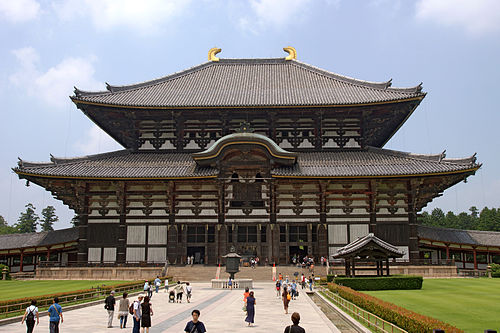
    Welcome to Heian Shrine, known in Japanese as 平安神宮, in the Okazaki district of Kyoto's Sakyo ward. The first thing you notice is the color. Vermilion pillars, green tiled roofs and a wide white gravel courtyard make the place look like a scene from a painted scroll. This is a young shrine with an ancient costume. It was founded in 1895 to celebrate 1,100 years since Emperor Kanmu moved the capital from Nagaokakyo to Heiankyo in 794, the city we now call Kyoto. Its buildings imitate the great state halls of that first Heian capital, at five eighths of the original scale. Over the next few minutes we will look at why Kyoto built it, how its architecture borrows from the Heian court, the garden behind the halls, and the festivals that bring the shrine to life. Please keep the courtyard in mind as you walk, because it is the stage for everything we will talk about.

  2. 02

    Heian Shrine: A City Reinvents Itself

    To understand this shrine, picture Kyoto in the decades after the capital moved to Tokyo. The city had lost much of its business and its population, and some local citizens began to worry about its future. A group of private volunteers decided to answer with a celebration. They brought the Fourth National Industrial Exhibition to Kyoto, formed an association to mark the 11 hundredth anniversary of the capital, and raised donations to build a monument to the city's own history. The plan was to rebuild part of the old imperial palace compound of Heiankyo. The first idea was to place it on the real site, at Senbon Marutamachi, but the land could not be bought. So the project moved to Okazaki, which was then the outskirts of town. A groundbreaking ceremony took place on the third of September, 1893. The shrine was founded on the fifteenth of March, 1895, just before the exhibition opened on the first of April. It enshrines Emperor Kanmu, who moved the capital. Emperor Komei, the last emperor to reign in Kyoto, was added later. In the years that followed, Kyoto's economy and population began to recover, and the shrine became a lasting symbol of the city's rebirth.

  3. 03

    Heian Shrine: Rebuilding the Court of Heiankyo

    Look at the main complex and you are looking at a model of the Chodoin, the heart of the old palace where state ceremonies took place. The architects, Ito Chuta, Kigo Kiyoyoshi and Sasaki Iwajiro, built it at about five eighths of the original size. Even at that scale it feels grand. You enter through the Oten-mon, the shrine's main gate, modeled on the gate of the same name at the old palace. Beyond it stands the Daigokuden, the outer worship hall. Two towers flank the courtyard: Soryuro, the blue dragon tower, and Byakkoro, the white tiger tower to the west. They recall the guardian creatures that traditionally protect Kyoto. The gate, hall, east corridor and Soryuro were all built in 1895 and are designated Important Cultural Properties. Charms linked to the four guardian deities of Kyoto are given out at the gate and the hall. Eight hundred years of building habits separate this design from most of what you see elsewhere in Kyoto, where many buildings date from the Edo period. Here the look is that of the eighth century, still strongly shaped by China. In front of the hall stands the Sakon cherry tree, a branch of the Sakon cherry at the Shishinden hall of the Kyoto Imperial Palace, which blooms in the same season.

  4. 04

    Heian Shrine: The Garden and the Festivals

    Walk behind the halls and the grand scale gives way to a garden. The Shinen, the shrine garden, is a national place of scenic beauty, created by Ogawa Jihei the Seventh, the great Kyoto garden master known as Ueji, who lived from 1860 to 1933. He worked on it for more than 20 years. It is a stroll garden built around a large pond, which he filled with water drawn from the nearby Lake Biwa Canal. At the time that was a bold, rare idea. The garden has four parts: West, Middle, East and South. West and Middle date to 1895, East to 1916, and South, the newest, to 1981. Together they echo four eras: Heian, Kamakura, Azuchi-Momoyama and Edo. Some of the graceful wooden buildings here were moved from the Kyoto Imperial Palace, and there are spots designed for sitting and enjoying the view. The shrine's year has high points too. On the twenty-second of October, the anniversary of the capital's move, the Jidai Matsuri procession winds from the Kyoto Imperial Palace to Heian Shrine. About 2,000 people take part, in costumes arranged by era from the Meiji period back to the Heian period. It is counted among Kyoto's three great festivals. The shrine's most important annual rite takes place on the fifteenth of April, when an imperial envoy attends with offerings.

  5. 05

    Before You Head Off

    Before you leave, turn back toward the great vermilion torii that stands on the approach, built in reinforced concrete and completed in 1928. It is about 18 meters wide, and it frames the whole story: a modern city, a Meiji dream and an imagined eighth-century court. The shrine sits in Okazaki. From Higashiyama station on the Tozai subway line, it is about 10 minutes on foot from exit one. From Sanjo or Jingu-Marutamachi stations on the Keihan line it is about 15 minutes. A city bus stop near the Okazaki Park museum and shrine entrance is about three minutes away. The shrine opens early in the morning, and hours vary by season, so check the day's schedule, especially for the garden. As you go, compare the vermilion buildings with the older, darker temples elsewhere in Kyoto, and notice how this shrine chose to remember the capital as it imagined it. What else in this city was shaped by memory rather than preservation?

About this guide

AI-generated from 6 sources; checked automatically and last updated on October 31, 2026. Verify tickets and opening hours on the official site. Independent guide by Mappu. Not affiliated with or endorsed by the site or its managers.

Run a travel site or blog? Embed this audio guide for free.

Planning a trip to Kyoto?

Get your plan

Mappu sketches your days free in the chat, no account needed. Then take the full plan with you:

  • Weekend trip, €9.99: Your day-by-day plan plus 2 live walks
  • Save your trip’s free guides on your phone in the Mappu app: they play with no signal
See the trip packs

Already going? The 2-hour live walk in Kyoto is €4.99

Plan your trip on a map and get an audio guide for almost any place nearby: just tap it on the Mappu map.

Common questions

Heian Shrine: how long is the free audio guide?

About 6 minutes of listening in 5 sections: “Welcome to Heian Shrine”, “Heian Shrine: A City Reinvents Itself”, “Heian Shrine: Rebuilding the Court of Heiankyo”, “Heian Shrine: The Garden and the Festivals”, and “Before You Head Off”.

Heian Shrine: what can I ask Mappu after the guide?

You can ask follow-up questions such as “Why did Kyoto's citizens decide to build a shrine and host an exhibition in the 1890s?” and keep asking in Mappu, with the guide connected to your map and trip plan.