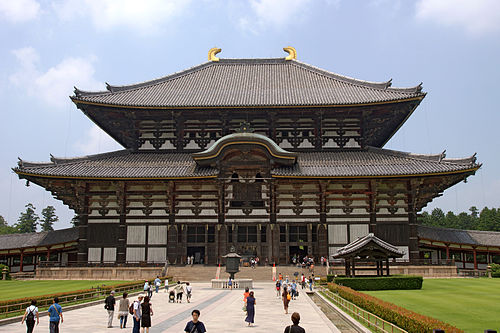
Kennin-ji Audio Guide

Audio guide for Kennin-ji

Kennin-ji
Photo by 663highlandWikimedia CommonsCC BY 2.5

5 min of listening · Section 1 of 5: Welcome to Kennin-ji

Prefer reading? The full guide is below

Here in person? Walk on with Mappu

This audio guide tells one place’s story. Walk Mode keeps going as you walk:

  • It knows where you are and talks about what’s in front of you, not only these chapters.
  • It takes you on to the next sight and follows what interests you.
  • Ask about anything you see, and it answers on the spot.
  • Your phone stays in your pocket.

A 2-hour live walk with Mappu, €4.99.

50 credits from the Starter pack. One-time purchase, no subscription.

Self-guided audio walk. No guide accompanies you. Not affiliated with the sites.

Keep exploring

Discover more places in Mappu.

Kennin-ji • Section 1 of 5

Kennin-ji: is there a free audio guide?

Quick answer. Yes. Mappu’s Kennin-ji audio guide (Kyoto, Japan) is free in your browser: 5 sections and about 5 minutes of listening, in 8 languages. It covers “Kennin-ji and the Founding of 1202”, “Kennin-ji Among the Kyoto Gozan” and “Dragons and Thunder Gods at Kennin-ji”. In the Mappu app, Walk Mode narrates the places around you as you move and answers your follow-up questions.

Kennin-ji map

Mappu's own map of the place, with the paths and entrances OpenStreetMap shows around it.

Kennin-ji mapThe place on the map, with the guide's point marked.

Kennin-ji: what does the audio guide cover?

  1. 01

    Welcome to Kennin-ji

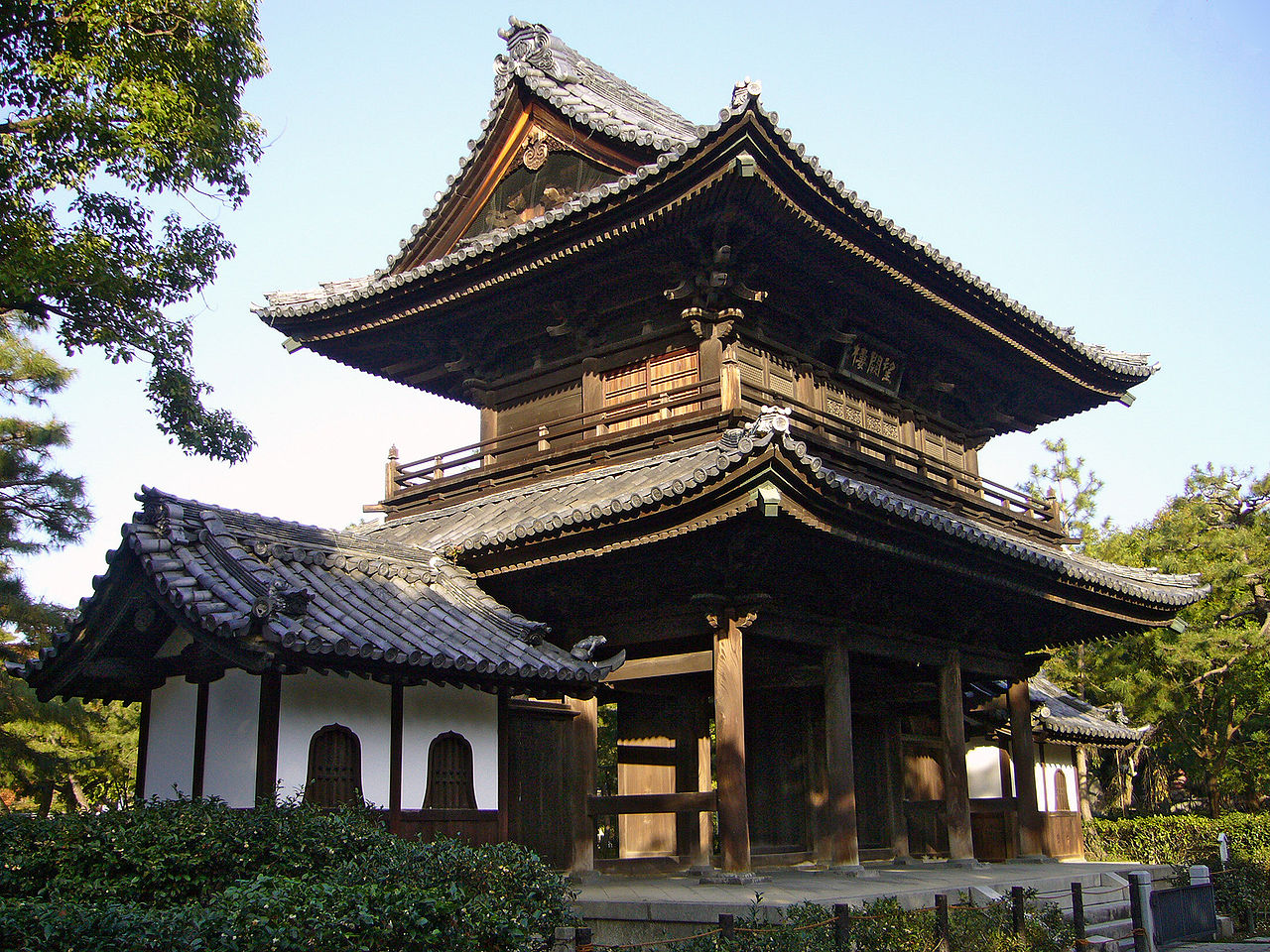
    Welcome to Kennin-ji, written 建仁寺 in Japanese. It sits in the Higashiyama ward of Kyoto, in the Gion district, looking toward the Kamo River on the city's eastern side. Step in from the lively streets nearby and you enter one of the most historic Zen temples in Japan. This is a Rinzai Zen temple, and it is the head temple of its own branch of that tradition. It is known as the oldest Zen temple in Kyoto, and it has carried the Zen teachings forward for around 800 years. In this guide we will look at who founded it, where it stood among Kyoto's great Zen temples, and the art that gives it such presence, from a thundering pair of dragons overhead to a famous pair of wind and thunder gods.

  2. 02

    Kennin-ji and the Founding of 1202

    Kennin-ji was founded in 1202. Its founding priest was Myōan Eisai, who lived from 1141 to 1215, and his name is bound to the temple's story. Because Zen temples in Kyoto began here, Kennin-ji is called the earliest of the city's Zen temples. There is also a patron in the story. The temple's founder in the formal sense, the one who backed its creation, was Minamoto no Yoriie, while Eisai is honored as its founding priest. The main object of worship is an eleven-faced Kannon, a form of the compassionate bodhisattva shown with many faces. The mountain name of a Japanese Buddhist temple is a traditional title, and Kennin-ji's is Tōzan, which simply means East Mountain, a fitting name for a temple on Kyoto's eastern side.

  3. 03

    Kennin-ji Among the Kyoto Gozan

    Kyoto had a ranking of its leading Zen temples, known as the Kyoto Gozan, the five most important Zen temples of the city. Kennin-ji belongs to that elite group, and it held the third position. That is why you will often hear it described as a temple of great standing. Today it is the head temple of the Kennin-ji branch of Rinzai Buddhism, which means it stands at the center of a whole family of temples that share its lineage. Rank and lineage together explain why a place so close to Gion's busy lanes carries such weight in Japanese religious life. As you walk, keep in mind that the quiet you feel here belongs to a tradition that has been preserved for centuries, in a neighborhood that is now one of the liveliest in Kyoto.

  4. 04

    Dragons and Thunder Gods at Kennin-ji

    Look up, because one of the temple's most striking works is overhead. In 2002, to mark the temple's 800th anniversary, a ceiling painting of two dragons by the artist Koizumi Junsaku, who lived from 1924 to 2012, was installed. The work was first painted in the sports hall of a former elementary school, which gives you an idea of its scale. The dragon here symbolizes the rain of Buddhist teachings, falling on all who listen. Shōkoku-ji, another Kyoto temple, also has a dragon on the ceiling of its main hall. Kennin-ji also holds notable paintings by Tamura Sōryū and Hashimoto Kansetsu. Then there is the temple's most famous artistic link: Fujin and Raijin, the wind god and the thunder god, painted on a pair of two-fold screens by Tawaraya Sōtatsu. They are shown at the Kyoto National Museum. Raijin, on the left, is the god of lightning, thunder and storms in Shinto and Japanese mythology. So even if you cannot see the screens here, the temple's name is tied to one of Japan's most beloved pairs of images.

  5. 05

    Before You Head Off

    Kennin-ji gives you a lot to hold in your mind at once: a founding in 1202, a priest named Eisai, a place among Kyoto's five great Zen temples, and a pair of dragons painted for an anniversary only a little more than two decades ago. As you move through, notice how quickly the noise of Gion fades. Notice, too, how art from very different centuries shares the same Zen setting, from the old wind and thunder gods to the modern dragons. Let your eyes wander upward as well as ahead, and see what new details the temple offers you.

About this guide

AI-generated from 6 sources; checked automatically and last updated on October 31, 2026. Verify tickets and opening hours on the official site. Independent guide by Mappu. Not affiliated with or endorsed by the site or its managers.

Run a travel site or blog? Embed this audio guide for free.

Walk on from here

The nearest places with a Mappu audio guide, in walking order: about 2.3 km and 30 minutes on foot in all.

Route map: walking on from Kennin-ji5 numbered stops in walking order. Stop 1: Kennin-ji; Stop 2: Minami-za; Stop 3: Yasaka Shrine; Stop 4: Hōkan Temple; Stop 5: Higashiyama.Stop 1: Kennin-ji1Stop 2: Minami-za2Stop 3: Yasaka Shrine3Stop 4: Hōkan Temple4Stop 5: Higashiyama5
Distances are estimates: the straight line between places plus 30%.

Indicative route. While you walk, watch where you're going, mind the traffic and follow local signs and rules. The map is an aid, not a safety guide. Terms

  1. Kennin-jiThis guide

    about 0.4 km · about 5 min on foot

  2. Minami-za

    about 0.7 km · about 10 min on foot

  3. Yasaka Shrine

    about 0.7 km · about 10 min on foot

  4. Hōkan Temple

    about 0.4 km · about 5 min on foot

  5. Higashiyama
Photo attribution

Walk Mode, in the free Mappu app: 2 hours for 50 credits (€4.99 Starter pack)

Planning a trip to Kyoto?

Get your plan

Mappu sketches your days free in the chat, no account needed. Then take the full plan with you:

  • Weekend trip, €9.99: Your day-by-day plan plus 2 live walks
  • Save your trip’s free guides on your phone in the Mappu app: they play with no signal
See the trip packs

Already going? The 2-hour live walk in Kyoto is €4.99

Plan your trip on a map and get an audio guide for almost any place nearby: just tap it on the Mappu map.

Common questions

Kennin-ji: how long is the free audio guide?

About 5 minutes of listening in 5 sections: “Welcome to Kennin-ji”, “Kennin-ji and the Founding of 1202”, “Kennin-ji Among the Kyoto Gozan”, “Dragons and Thunder Gods at Kennin-ji”, and “Before You Head Off”.

Kennin-ji: what can I ask Mappu after the guide?

You can ask follow-up questions such as “Who was Myōan Eisai, and why is he remembered as the founding priest of Kennin-ji?” and keep asking in Mappu, with the guide connected to your map and trip plan.