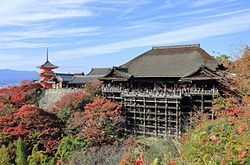
Higashiyama Audio Guide

A Journey Through the Preserved Slopes of the Eastern Mountains

Higashiyama
Photo by Andre Benz on Unsplash

7 min of listening · Section 1 of 5: Welcome to Higashiyama

Prefer reading? The full guide is below

Walk on from here

Kiyomizu-dera to Gion, Kyoto, live with Mappu: the stories of what’s in front of you, stop by stop. 50 credits (€4.99).

Higashiyama • Section 1 of 5

Higashiyama: is there a free audio guide?

Quick answer. Yes. Mappu’s Higashiyama audio guide (Kyoto, Japan) is free in your browser: 5 sections and about 7 minutes of listening, in 8 languages. It covers “The Tower of Time: Yasaka Pagoda”, “Slopes of Fortune and Folktales” and “The Architecture of the 'Eel’s Bed'”. In the Mappu app, Walk Mode narrates the places around you as you move and answers your follow-up questions.

Higashiyama map

Mappu's own map of the place, with the paths and entrances OpenStreetMap shows around it.

Higashiyama mapThe place on the map, with the guide's point marked.

Higashiyama: what does the audio guide cover?

  1. 01

    Welcome to Higashiyama

    Welcome to Higashiyama, the Eastern Mountain District of Kyoto. As you stand here, you are stepping into a living time capsule that has preserved the atmosphere of feudal Japan for over a thousand years. Can you feel the texture of the cobblestones beneath your feet? Those stones have been worn smooth by the sandals of countless pilgrims, merchants, and samurai since the Heian period. This district is more than just a collection of buildings; it is a meticulously protected cultural landscape where the scent of roasted green tea and incense hangs heavy in the air. As you begin your walk, take a moment to notice how the modern world seems to fade away, replaced by the warm, weathered wood of traditional townhouses and the gentle curve of the temple roofs silhouetted against the emerald slopes of Mount Otowa.

  2. 02

    The Tower of Time: Yasaka Pagoda

    Rising above the rooftops is the iconic five-story Yasaka Pagoda, the last remaining structure of the ancient Hokan-ji temple complex. Standing 46 meters tall, it is a masterpiece of Japanese engineering that has survived fires and civil wars for centuries. This site is steeped in legend; it is said that the original temple was founded in the year 589 by the legendary Prince Shotoku. The structure you see today was reconstructed in 1440 by the shogun Ashikaga Yoshinori. Look closely at the wooden joints; this pagoda was built without a single metal nail. Inside, a massive center pillar made from a single tree runs from the base to the top, acting as a giant pendulum that allows the tower to sway safely during earthquakes—a design so sophisticated that modern architects still study it today.

  3. 03

    Slopes of Fortune and Folktales

    You are likely near Sannen-zaka and Ninnen-zaka, two of the most beautiful streets in all of Japan. Their names literally translate to the Three-Year Slope and Two-Year Slope. Local legend warns travelers to tread carefully: it is said that if you slip and fall on Sannen-zaka, you will suffer three years of bad luck, while a tumble on Ninnen-zaka brings two years of misfortune. While the legend was likely created to keep people from rushing on the steep stairs, it adds a touch of mystery to your walk. These slopes were established in the eighth century as the primary approach to the nearby Kiyomizu-dera temple, and they are now filled with traditional shops selling delicate Kiyomizu-yaki pottery and sweet Yatsuhashi treats. If you want the best photos without the crowds, try to arrive before 9 a.m., when the district is still and peaceful.

  4. 04

    The Architecture of the 'Eel’s Bed'

    Notice the traditional wooden townhouses lining the streets, known as Kyo-machiya. These buildings define the spirit of Higashiyama. They are often called eel’s beds because they are incredibly narrow but stretch back deeply into the city block. In the past, property taxes were calculated based on the width of the storefront, so residents built their homes long and thin to save money. Each machiya is a marvel of sustainability, featuring sliding doors for ventilation and small inner gardens called tsuboniwa that bring light and nature into the dark interior. As you explore, please be mindful of the local community. While Higashiyama is a world-famous landmark, people still live and work in these beautiful homes. Remember to stay on public roads and observe the strict photography bans in private alleys, as violators can face a fine of 10,000 yen.

  5. 05

    The Echoes of the Eastern Hills

    As you continue your walk toward the Great Niomon Gate or descend toward the Gion district, let your curiosity be your guide. Higashiyama reveals its secrets slowly—in the detail of a carved roof tile, the sudden glimpse of a Maiko’s colorful kimono as she vanishes into a teahouse, or the way the Yasaka Pagoda glows gold when the sun begins to set. There is an ancient rhythm here, a persistence of beauty that survives in even the smallest alleyway. Don’t be afraid to wander off the main path and find your own quiet corner of old Kyoto. What stories do these walls hold that haven't been shared yet? The more you look, the more this stone-paved world will talk back to you.

About this guide

AI-generated from 12 sources; checked automatically and last updated on June 3, 2026. Verify tickets and opening hours on the official site. Independent guide by Mappu. Not affiliated with or endorsed by the site or its managers.

Run a travel site or blog? Embed this audio guide for free.

Walk on from here

This place is stop 2 of 3 of a self-guided walk: Kiyomizu-dera to Gion, Kyoto. About 1.9 km and 25 minutes on foot, plus about 20 minutes of listening.

Route map: walking on from Higashiyama3 numbered stops in walking order. Stop 1: Kiyomizu-dera; Stop 2: Higashiyama; Stop 3: Gion.Stop 1: Kiyomizu-dera1Stop 2: Higashiyama2Stop 3: Gion3
Distances are estimates along the walking route, from OpenStreetMap.

Indicative route. While you walk, watch where you're going, mind the traffic and follow local signs and rules. The map is an aid, not a safety guide. Terms

  1. Kiyomizu-dera

    about 1.0 km · about 14 min on foot

  2. HigashiyamaThis guide

    about 0.8 km · about 11 min on foot

  3. Gion
Photo attribution

Walk Mode, in the free Mappu app: 2 hours for 50 credits (€4.99 Starter pack)

See the whole walk

Planning a trip to Kyoto?

Get your plan

Mappu sketches your days free in the chat, no account needed. Then take the full plan with you:

  • Weekend trip, €9.99: Your day-by-day plan plus 2 live walks
  • Save your trip’s free guides on your phone in the Mappu app: they play with no signal
See the trip packs

Already going? The 2-hour live walk in Kyoto is €4.99

Useful for your visit

Tickets, tours and practical extras for this trip, from Mappu's partners.

Partner links (Airalo, Amazon, Booking.com, GetYourGuide, Klook, Tiqets, Trip.com, Viator, Welcome Pickups): if you book or buy through them, Mappu may earn a commission, at no extra cost to you.

Plan your trip on a map and get an audio guide for almost any place nearby: just tap it on the Mappu map.

Common questions

Higashiyama: how long is the free audio guide?

About 7 minutes of listening in 5 sections: “Welcome to Higashiyama”, “The Tower of Time: Yasaka Pagoda”, “Slopes of Fortune and Folktales”, “The Architecture of the 'Eel’s Bed'”, and “The Echoes of the Eastern Hills”.

Higashiyama: what can I ask Mappu after the guide?

You can ask follow-up questions such as “Why do locals call the traditional townhouses in this area 'eel's beds'?” and keep asking in Mappu, with the guide connected to your map and trip plan.