Higashi Hongan-ji Audio Guide

Audio guide for Higashi Hongan-ji

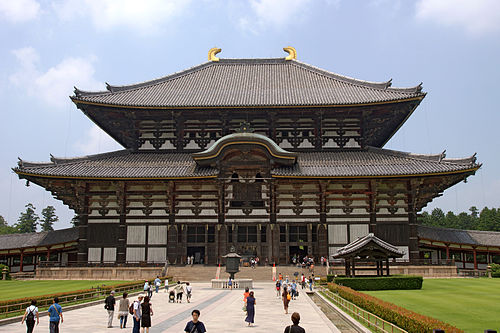
Higashi Hongan-ji
Photo by 663highlandWikimedia CommonsCC BY-SA 4.0

6 min of listening · Section 1 of 5: Welcome to Higashi Hongan-ji

Prefer reading? The full guide is below

Here in person? Walk on with Mappu

This audio guide tells one place’s story. Walk Mode keeps going as you walk:

  • It knows where you are and talks about what’s in front of you, not only these chapters.
  • It takes you on to the next sight and follows what interests you.
  • Ask about anything you see, and it answers on the spot.
  • Your phone stays in your pocket.

A 2-hour live walk with Mappu, €4.99.

50 credits from the Starter pack. One-time purchase, no subscription.

Self-guided audio walk. No guide accompanies you. Not affiliated with the sites.

Keep exploring

Discover more places in Mappu.

Higashi Hongan-ji • Section 1 of 5

Higashi Hongan-ji: is there a free audio guide?

Quick answer. Yes. Mappu’s Higashi Hongan-ji audio guide (Kyoto, Japan) is free in your browser: 5 sections and about 6 minutes of listening, in 8 languages. It covers “Higashi Hongan-ji: How One Temple Became Two”, “Higashi Hongan-ji and the Street That Stops” and “Higashi Hongan-ji: Rebuilt From the Ashes”. In the Mappu app, Walk Mode narrates the places around you as you move and answers your follow-up questions.

Higashi Hongan-ji map

Mappu's own map of the place, with the paths and entrances OpenStreetMap shows around it.

Higashi Hongan-ji mapThe place on the map, with the guide's point marked.

Higashi Hongan-ji: what does the audio guide cover?

  1. 01

    Welcome to Higashi Hongan-ji

    Welcome to Higashi Hongan-ji, a temple whose local name, 東本願寺, simply means Eastern Temple of the Original Vow. You are standing in Shimogyo Ward in Kyoto, on the Karasuma Street side, just north of Shichijo Avenue and a short walk from Kyoto Station. The city's bustle is still right behind you, yet the grounds open up into wide, calm space. This is the head temple of the Otani branch of Jodo Shinshu Buddhism, and its main object of worship is Amida Buddha. Its formal name is Shinshu Honbyo, which can be understood as the true mausoleum of the Shin school. Kyoto people call it Ohigashisan, a friendly nickname that roughly means Honorable Mr. East. Over the next few stops, we will look at how one family dispute split a great temple in two, why a famous street suddenly stops at its gate, and how fire shaped the buildings in front of you. Let's begin.

  2. 02

    Higashi Hongan-ji: How One Temple Became Two

    The story starts with Shinran, the founder of the Jodo Shinshu tradition. In the year 1272, his disciples moved his remains from Otani to a spot north of Yoshimizu and built a mausoleum hall there to enshrine his likeness. That small memorial grew into the Hongan-ji, and it spread widely under its eighth head priest, Rennyo. Then came the turbulent warring-states era, when the temple was caught up in the struggle around Ishiyama Hongan-ji. After the death of the warlord Hideyoshi in 1598, the head priest Kyonyo openly backed Tokugawa Ieyasu. When Ieyasu became shogun in 1602, Kyonyo was rewarded with land in Kyoto, east of the existing Hongan-ji, and by 1603 the new temple was known as Higashi Hongan-ji. That is why there are two great Hongan-ji temples in Kyoto today. The western one is Nishi Hongan-ji, and this is its eastern counterpart. The names began as a matter of convenience: because this temple stood to the east, people called it the Eastern Temple, and the older one gradually became known as the Western Temple in contrast.

  3. 03

    Higashi Hongan-ji and the Street That Stops

    Here is a piece of Kyoto urban drama. A straight avenue called Shomen-dori had been laid out to link the older Hongan-ji with the Great Buddha Hall at Hoko-ji, which housed Kyoto's giant Buddha and was tied to the Toyotomi family. It was a deliberate line of power and prestige. When Kyonyo founded his new temple, he placed it so that it cut across Shomen-dori partway along. The street was broken in two, and the Great Buddha Hall ended up lined up with Kyonyo's temple instead. Whether you read this as a coincidence or as a message, the effect on the map of Kyoto is still there. Kyonyo also brought a precious object to his new home. In 1603, a wooden statue of Shinran, traditionally said to have been carved by the founder himself, was welcomed from Myoan-ji in the old province of Kozuke, in what is now Maebashi in Gunma Prefecture. The Amida Hall was raised that same year, and the founder's hall followed in 1604.

  4. 04

    Higashi Hongan-ji: Rebuilt From the Ashes

    Look up at the enormous Goei-do, the founder's hall, and you are looking at the survivor of a long fight against fire. The Amida Hall and Goei-do burned down four times during the Edo period alone. Each time, the community rebuilt them, and the Tokugawa shogunate often helped with funds. In 1652, work began on an enlarged founder's hall, and it was completed in the spring of 1658. Tradition says its builders set its width at 32 bays, just beyond the 31 and a half bays of the founder's hall at Nishi Hongan-ji, a bit of friendly, or perhaps not so friendly, rivalry between the two temples. Then in 1788 the Great Tenmei Fire swept through Kyoto and destroyed many of the temple's buildings. They were rebuilt by 1797. The buildings you see today were most recently constructed in 1895, after yet another fire burned down the previous temple. Walking beneath those vast timbers, you can feel how much care and effort went into creating them again and again.

  5. 05

    Before You Head Off

    As you wander the grounds, try to keep the layers in mind: a mausoleum from 1272, a land grant from the Tokugawa era, a street cut in two, and halls rebuilt after fire more than once. All of it sits just minutes from the glass and steel of Kyoto Station. If you have time, step into the grand founder's hall and notice how the scale of the space quiets everyone inside. Then pause on your way out and think about the other temple, Nishi Hongan-ji, standing to the west. Two temples, one shared origin, and two very different personalities. Which one will you visit next to compare them?

About this guide

AI-generated from 6 sources; checked automatically and last updated on October 31, 2026. Verify tickets and opening hours on the official site. Independent guide by Mappu. Not affiliated with or endorsed by the site or its managers.

Run a travel site or blog? Embed this audio guide for free.

Walk on from here

The nearest places with a Mappu audio guide, in walking order: about 1.6 km and 20 minutes on foot in all.

Route map: walking on from Higashi Hongan-ji3 numbered stops in walking order. Stop 1: Higashi Hongan-ji; Stop 2: Kyoto Tower; Stop 3: Nishi Honganji.Stop 1: Higashi Hongan-ji1Stop 2: Kyoto Tower2Stop 3: Nishi Honganji3
Distances are estimates: the straight line between places plus 30%.

Indicative route. While you walk, watch where you're going, mind the traffic and follow local signs and rules. The map is an aid, not a safety guide. Terms

  1. Higashi Hongan-jiThis guide

    about 0.5 km · about 6 min on foot

  2. Kyoto Tower

    about 1.1 km · about 15 min on foot

  3. Nishi Honganji
Photo attribution

Walk Mode, in the free Mappu app: 2 hours for 50 credits (€4.99 Starter pack)

Planning a trip to Kyoto?

Get your plan

Mappu sketches your days free in the chat, no account needed. Then take the full plan with you:

  • Weekend trip, €9.99: Your day-by-day plan plus 2 live walks
  • Save your trip’s free guides on your phone in the Mappu app: they play with no signal
See the trip packs

Already going? The 2-hour live walk in Kyoto is €4.99

Plan your trip on a map and get an audio guide for almost any place nearby: just tap it on the Mappu map.

Common questions

Higashi Hongan-ji: how long is the free audio guide?

About 6 minutes of listening in 5 sections: “Welcome to Higashi Hongan-ji”, “Higashi Hongan-ji: How One Temple Became Two”, “Higashi Hongan-ji and the Street That Stops”, “Higashi Hongan-ji: Rebuilt From the Ashes”, and “Before You Head Off”.

Higashi Hongan-ji: what can I ask Mappu after the guide?

You can ask follow-up questions such as “Why do Kyoto people call this temple Ohigashisan, and what is the Western counterpart called?” and keep asking in Mappu, with the guide connected to your map and trip plan.