Toyokuni Shrine Audio Guide

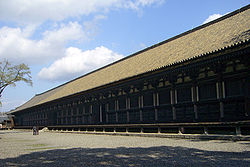
The Kyoto shrine of Toyotomi Hideyoshi, with its Momoyama Karamon gate

Hōkoku-jinja
Photo by 663highlandWikimedia CommonsCC BY 2.5

6 min of listening · Section 1 of 5: Welcome to Hōkoku-jinja

Prefer reading? The full guide is below

Here in person? Walk on with Mappu

This audio guide tells one place’s story. Walk Mode keeps going as you walk:

  • It knows where you are and talks about what’s in front of you, not only these chapters.
  • It takes you on to the next sight and follows what interests you.
  • Ask about anything you see, and it answers on the spot.
  • Your phone stays in your pocket.

A 2-hour live walk with Mappu, €4.99.

50 credits from the Starter pack. One-time purchase, no subscription.

Self-guided audio walk. No guide accompanies you. Not affiliated with the sites.

Keep exploring

Discover more places in Mappu.

Hōkoku-jinja • Section 1 of 5

Hōkoku-jinja: is there a free audio guide?

Quick answer. Yes. Mappu’s Toyokuni Shrine audio guide (Kyoto, Japan) is free in your browser: 5 sections and about 6 minutes of listening, in 8 languages. It covers “Hōkoku-jinja: A Warlord Becomes a God”, “Hōkoku-jinja: Abandonment and a Hidden Tower” and “Hōkoku-jinja: Gate, Lanterns and Treasures”. In the Mappu app, Walk Mode narrates the places around you as you move and answers your follow-up questions.

Toyokuni Shrine map

Mappu's own map of the place, with the paths and entrances OpenStreetMap shows around it.

Toyokuni Shrine mapThe place on the map, with the guide's point marked.

Hōkoku-jinja: what does the audio guide cover?

  1. 01

    Welcome to Hōkoku-jinja

    Welcome to Hōkoku-jinja, written 豊国神社 in Japanese, in the Higashiyama ward of Kyoto. This is the shrine dedicated to Toyotomi Hideyoshi, the warlord who unified Japan in the last decade of the sixteenth century. Kyotoites know it by a warmer, shorter name, Hōkoku-san, which uses an alternative reading of the characters for Toyokuni. You are standing in a corner of Kyoto that was once Hideyoshi's stage. The shrine sits just north of the Kyoto National Museum, a short walk up Yamato-oji Avenue. Within a radius of roughly one kilometer around Higashiyama Shichijo, temples, shrines and historic sites tied to the Toyotomi family are scattered like pieces of one big puzzle. Over the next few minutes we will follow a story with dramatic swings: a ruler raised to the rank of a god, a shrine abandoned when his family fell, and a revival centuries later. Along the way you will meet a national treasure gate, eight stone lanterns and a modest tower that once carried a secret.

  2. 02

    Hōkoku-jinja: A Warlord Becomes a God

    Hideyoshi died in 1598, at Fushimi Castle. The following year, in 1599, the imperial court granted him the title Toyokuni Daimyōjin, along with the top court rank of Shoichii, and a shrine was founded to enshrine him. Toyokuni is a poetic shortened form of an old name for Japan, so the title carried a grand meaning: the god of a rich and abundant land. The first shrine was not where you are standing now. It was built on the slopes of Amidagamine, in the hills of Higashiyama, and its main sanctuary stood on a level stretch of hillside called Taikodaira. That is close to where the entrance to Hideyoshi's mausoleum can be found today. The shrine was lavishly endowed, with a domain worth 10,000 koku of rice, and grounds said to cover 300,000 tsubo. Its splendor lives on in a painted record, the Toyokuni Festival Screens, a pair of six-panel folding screens by the artist Kano Naizen. They show the great festival held for Toyokuni Daimyōjin, with crowds of ordinary Kyoto people pouring in. Hideyoshi stayed popular with them even after death.

  3. 03

    Hōkoku-jinja: Abandonment and a Hidden Tower

    That popularity was exactly what worried Tokugawa Ieyasu. When fighting broke out with Hideyoshi's heir, the Toyotomi family fell in the Summer Siege of Osaka in 1615. Ieyasu's government then revoked the divine title, took the shrine's lands, and left the buildings to decay. But devotion did not vanish. Behind the shrine stands a stone five-ring tower known as Umazuka, the horse mound, and while the shrine was banned it was worshipped in its place. Look at what is carved on it: no name, just Sanskrit characters and the date of the eighteenth day of the eighth month of Genna 1. That is the anniversary of Hideyoshi's death, written in a way that kept his name out of sight. The horse in the name comes simply from the nearby district called Umamachi. The revival came with the new Meiji era. In its first year, 1868, the Meiji Emperor ordered the rites restored, and in 1873 the shrine was ranked as a Bekkaku Kanpeisha, a special state-supported shrine. In 1880 it was rebuilt on the site of the old Great Buddha Hall of Hōkō-ji, the spot where you stand now.

  4. 04

    Hōkoku-jinja: Gate, Lanterns and Treasures

    The star of the precinct is the Karamon, the Chinese-style gate rising in front of the main hall. It is a National Treasure from the Momoyama period, a four-legged gate that was moved here from Konchi-in at Nanzen-ji. Tradition holds that it is a survivor of Fushimi Castle, the very castle where Hideyoshi died. Look up at the carved transoms and the doors, which are richly decorated in the flamboyant taste of Hideyoshi's age. The original tablet reading Toyokuni Daimyōjin, written by Emperor Go-Yozei, is mounted above the gate, while the one at the entrance torii is a copy. Beside the gate stand eight Keichō lanterns, gifts from daimyo who had been loyal to the Toyotomi house. They are quiet reminders of old allegiances. The shrine also honors Hideyoshi's wife, Kita no Mandokoro, known as Ne-ne, at the Teishō Shrine, where people pray for success, good fortune and good matches. The treasure hall, opened in 1925, holds the Toyokuni Festival Screens, an Important Cultural Property, and the renowned sword Honebami Tōshirō.

  5. 05

    Before You Head Off

    Before you leave, take one more slow look at the Karamon and think about how far that gate has traveled: from a castle, so tradition says, to a temple subcell, and then to the front of this shrine. Few buildings in Kyoto carry so many chapters in their timbers. There is a larger story in the neighborhood too. The shrine was once said to be so splendid that its buildings served as a model for the famous Nikko Toshogu, the shrine of Hideyoshi's rival Ieyasu. History has a sense of irony, and this place is full of it. If your curiosity is still awake, notice how many Toyotomi echoes surround you in this part of Higashiyama, and let your feet follow them. Hōkoku-san has plenty more to say to anyone who keeps looking.

About this guide

AI-generated from 6 sources; reviewed for accuracy and last updated on October 31, 2026. Verify tickets and opening hours on the official site. Independent guide by Mappu. Not affiliated with or endorsed by the site or its managers.

Run a travel site or blog? Embed this audio guide for free.

Walk on from here

The nearest places with a Mappu audio guide, in walking order: about 1.4 km and 20 minutes on foot in all.

Route map: walking on from Hōkoku-jinja5 numbered stops in walking order. Stop 1: Hōkoku-jinja; Stop 2: Hōkō-ji; Stop 3: Kyoto National Museum; Stop 4: Sanjūsangen-dō; Stop 5: Chishaku-in.Stop 1: Hōkoku-jinja1Stop 2: Hōkō-ji2Stop 3: Kyoto National Museum3Stop 4: Sanjūsangen-dō4Stop 5: Chishaku-in5
Distances are estimates: the straight line between places plus 30%.

Indicative route. While you walk, watch where you're going, mind the traffic and follow local signs and rules. The map is an aid, not a safety guide. Terms

  1. Hōkoku-jinjaThis guide

    about 0.2 km · about 2 min on foot

  2. Hōkō-ji

    about 0.3 km · about 4 min on foot

  3. Kyoto National Museum

    about 0.3 km · about 5 min on foot

  4. Sanjūsangen-dō

    about 0.6 km · about 8 min on foot

  5. Chishaku-in
Photo attribution

Walk Mode, in the free Mappu app: 2 hours for 50 credits (€4.99 Starter pack)

Planning a trip to Kyoto?

Get your plan

Mappu sketches your days free in the chat, no account needed. Then take the full plan with you:

  • Weekend trip, €9.99: Your day-by-day plan plus 2 live walks
  • Save your trip’s free guides on your phone in the Mappu app: they play with no signal
See the trip packs

Already going? The 2-hour live walk in Kyoto is €4.99

Plan your trip on a map and get an audio guide for almost any place nearby: just tap it on the Mappu map.

Common questions

Toyokuni Shrine: how long is the free audio guide?

About 6 minutes of listening in 5 sections: “Welcome to Hōkoku-jinja”, “Hōkoku-jinja: A Warlord Becomes a God”, “Hōkoku-jinja: Abandonment and a Hidden Tower”, “Hōkoku-jinja: Gate, Lanterns and Treasures”, and “Before You Head Off”.

Toyokuni Shrine: what can I ask Mappu after the guide?

You can ask follow-up questions such as “What does the name Toyokuni Daimyōjin mean, and why did it matter that the imperial court granted it?” and keep asking in Mappu, with the guide connected to your map and trip plan.