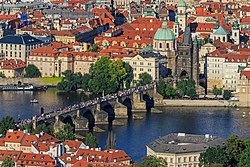
Pont Saint-Bénézet Audio Guide

The famous bridge of Avignon that stops halfway across the Rhône

Pont Saint-Bénézet
Photo by Holger Uwe Schmitt / Wikimedia Commons / CC BY-SA 4.0 · Wikimedia Commons · CC BY-SA 4.0

6 min of listening · Section 1 of 5: Welcome to Pont Saint-Bénezet

Prefer reading? The full guide is below

Keep exploring

Discover more places in Mappu, or start Walk Mode when you’re there.

Live Walk Mode: 2 hours for 50 credits (€4.99 Starter pack)
Pont Saint-Bénézet • Section 1 of 5

Pont Saint-Bénézet: is there a free audio guide?

Quick answer. Yes. Mappu’s Pont Saint-Bénézet audio guide (Avignon, France) is free in your browser: 5 sections and about 6 minutes of listening, in 6 languages. It covers “The Shepherd and the Stone”, “A Bridge on a Border” and “The Chapels, the Relics and the River's Revenge”. In the Mappu app, Walk Mode narrates the places around you as you move and answers your follow-up questions.

Pont Saint-Bénézet: what does the audio guide cover?

  1. 01

    Welcome to Pont Saint-Bénezet

    Welcome to one of the most famous bridges in the world, and also one of the most unfinished-looking. You are in Avignon, in the south of France, beside the Rhône, at the Pont Saint-Bénezet. Almost everyone knows it as the Pont d'Avignon, thanks to a children's song that has travelled far beyond Provence. This was a medieval bridge across the Rhône. Today it reaches out from the riverbank and then simply stops, as if the river had changed its mind. In the next few minutes we will follow the story of a young shepherd who, according to legend, set the whole thing in motion. We will look at how the bridge came to stand on the border of two realms. We will also see how the river eventually took most of it back. It has been listed as a UNESCO World Heritage Site since 1995. Seen from a distance, it sits within view of the Palais des Papes, which gives you a sense of how closely this bridge is tied to the story of Avignon itself. So let's begin where the legend begins, with a boy and a voice.

  2. 02

    The Shepherd and the Stone

    Legend gives us the founding story, and it is a good one. A young shepherd from the Vivarais region, named Bénezet, perhaps 14 or 15 years old, felt himself commanded by Jesus in a vision to build a bridge across the Rhône. He was told to build it at a spot where the current was so violent that, as the tradition goes, even Roman engineers had been discouraged from trying. The bishop of Avignon was skeptical at first, and who could blame him? A shepherd boy with no training was proposing to bridge one of Europe's most powerful rivers. The tale says Bénezet proved his mission before a stunned crowd. He lifted an enormous stone and threw it into the water, helped, as the story tells it, by angels. After that, the bishop approved the project, and work began in 1177. The story does not end with the miracle. Wealthy patrons were convinced the work was ordained by God, and they formed a Bridge-Building Brotherhood to fund it. Bénezet is remembered as the patron saint of bridge builders, and his feast day falls on the fourteenth of April. Local tourism writers add a gentle wink to the legend, noting that the real history may have been a little different. That is often the way with saints: the story stays warm, while the facts are more tangled.

  3. 03

    A Bridge on a Border

    Now imagine what this crossing meant in the Middle Ages. Work began in 1177 and the bridge was completed in 1185. It served pilgrims and merchants who travelled the roads to Spain and Italy, and for them it was a very great convenience. The Rhône was no minor stream to cross by ferry. There is another detail that makes the place feel different. At that time the Rhône served as a border with the Kingdom of France, so building the bridge also created a border post. Standing here, you are looking at a piece of infrastructure that doubled as a frontier checkpoint. And it was big. The bridge once spanned the whole river, with 22 arches and a length of 920 meters. That is why people still call it a true feat of engineering. Take a moment to compare that figure with the short stretch you can walk today, and you will understand how much the Rhône has taken. The bridge stood for centuries as a symbol of what Avignon could build, and later, of what the river could undo.

  4. 04

    The Chapels, the Relics and the River's Revenge

    Look for the chapels on the bridge. The lower chapel is the only vestige from the time of Bénezet himself. It was built on the third pillar to shelter his tomb, so that pilgrims passing through Avignon could stop and pray. Above it stands the Chapel of Saint Nicolas, and the lower chapel is Romanesque in style. Historians say its construction took several decades and was never really completed. The saint's story kept travelling after his burial. In 1670 his relics were moved to the convent of the Célestins. They were later dispersed under the Restoration, and today they are preserved in two Avignon churches: the Collégiale Saint-Didier and the Cathédrale Notre-Dame des Doms. Meanwhile the Rhône kept up its pressure. Wars and floods repeatedly damaged the bridge, and it was rebuilt several times. The riverbed shifted over the decades, and arches collapsed one after the other. In 1669 another flood brought most of the arches down, and the bridge was abandoned because it was too expensive to maintain. For a long time afterward, people crossed the Rhône at Avignon by boat. A wooden bridge was built between 1806 and 1818 a few hundred meters to the south, and the modern Pont Daladier followed in 1972.

  5. 05

    Before You Head Off

    There is one more layer to this place, and it is the one that most visitors arrive humming. The melody known in France today appeared in 1853 in Adolphe Adam's operetta L'auberge pleine, and the nursery rhyme about the Pont d'Avignon then toured the world. Children far from Provence learned to sing about dancing on a bridge that, by that time, ended in the middle of the river. The site has also been opened up to a wider public. Since 2015 it has held the Tourisme et handicap label for motor and mental disabilities, and it has been described as the first fully independently accessible site of the Middle Ages. Before you move on, look back at where the arches stop and then across the water toward the other bank. Try to picture 22 arches carrying travellers all the way over, and ask yourself what a shepherd, a bishop and a river each wanted from this spot. The answer is still written in the stone.

About this guide

AI-generated from 6 sources; checked automatically and last updated on October 23, 2026. Verify tickets and opening hours on the official site.

Run a travel site or blog? Embed this audio guide for free.

Useful for your visit

Tickets, tours and practical extras for this trip, from Mappu's partners.

Partner links (Airalo, Amazon, Booking.com, GetYourGuide, Klook, Tiqets, Trip.com, Viator, Welcome Pickups): if you book or buy through them, Mappu may earn a commission, at no extra cost to you.

Plan your trip on a map and get an audio guide for almost any place nearby: just tap it on the Mappu map.

Common questions

Pont Saint-Bénézet: how long is the free audio guide?

About 6 minutes of listening in 5 sections: “Welcome to Pont Saint-Bénezet”, “The Shepherd and the Stone”, “A Bridge on a Border”, “The Chapels, the Relics and the River's Revenge”, and “Before You Head Off”.

Pont Saint-Bénézet: what can I ask Mappu after the guide?

You can ask follow-up questions such as “What does the legend of Bénezet and the thrown stone tell us about how medieval people understood the building of the bridge?” and keep asking in Mappu, with the guide connected to your map and trip plan.