228 Peace Memorial Park Audio Guide

A green heart of Taipei that holds a painful memory

228 Peace Memorial Park
Photo by AllentchangWikimedia CommonsCC BY-SA 3.0

6 min of listening · Section 1 of 5: Welcome to 228 Peace Memorial Park

Prefer reading? The full guide is below

Here in person? Walk on with Mappu

This audio guide tells one place’s story. Walk Mode keeps going as you walk:

  • It knows where you are and talks about what’s in front of you, not only these chapters.
  • It takes you on to the next sight and follows what interests you.
  • Ask about anything you see, and it answers on the spot.
  • Your phone stays in your pocket.

A 2-hour live walk with Mappu, €4.99.

50 credits from the Starter pack. One-time purchase, no subscription.

Self-guided audio walk. No guide accompanies you. Not affiliated with the sites.

Keep exploring

Discover more places in Mappu.

228 Peace Memorial Park • Section 1 of 5

228 Peace Memorial Park: is there a free audio guide?

Quick answer. Yes. Mappu’s 228 Peace Memorial Park audio guide (Taipei, Taiwan) is free in your browser: 5 sections and about 6 minutes of listening, in 8 languages. It covers “A Park With Many Names”, “The Story of February 1947” and “Monuments, Museums and Old Locomotives”. In the Mappu app, Walk Mode narrates the places around you as you move and answers your follow-up questions.

228 Peace Memorial Park map

Mappu's own map of the place, with the paths and entrances OpenStreetMap shows around it.

228 Peace Memorial Park mapThe place on the map, with the guide's point marked.

228 Peace Memorial Park: what does the audio guide cover?

  1. 01

    Welcome to 228 Peace Memorial Park

    Welcome to 228 Peace Memorial Park, a green pocket in the middle of Taipei. You will find it at 3 Ketagalan Boulevard in Zhongzheng District, close to the Presidential Office Building and the Chiang Kai-shek Memorial Hall. It covers 7.618 hectares, and its edges are drawn by four streets: Ketagalan Boulevard to the south, Xiangyang Road to the north, Gongyuan Road to the east and Huaining Street to the west. On a sunny day it looks like any city park. Flower beds change with the seasons, there are shady arbors and bushes, and there is a children's playground. Families, couples and strollers all come here to escape the concrete around them. Yet the park also carries a somber feeling, because its name points to a tragedy. It is a memorial to the victims of the February 28 Incident of 1947. Over the next few minutes we will walk through the park's layered past: its earlier names, the day the story of 228 unfolded here, the monuments and old locomotives scattered among the paths, and the literary life this park has had. If you are arriving by metro, take the Tamsui-Xinyi Line to National Taiwan University Hospital Station and leave through Exit 1.

  2. 02

    A Park With Many Names

    This park has changed its name more than once, and each name tells you something. It began as Taipei Park, and later became known as New Park. Its modern name, 228 Peace Park, was given in 1996. How old is the park? Two accounts survive. One says it was established in the Qing Dynasty and is the oldest park in Taipei. The other says it was established in 1908 as the first European-style park in central Taipei. Either way, you are standing in a green space with deep roots in the city's history. The current name is the most meaningful one. Britannica notes that the park is named for the date, February 28, when the massacre began. Renaming the park in 1996 was meant to ease a historic pain. A place once known simply as a city park became a place of remembrance, and the word peace in its title is an invitation to reflect.

  3. 03

    The Story of February 1947

    228 Peace Memorial Park: It was built in 1888 to honor Âng Thîng-hûn, who in 1880 donated land for the Taipei Prefecture Examination Hall.

    To understand the park, picture Taiwan after World War II. The Kuomintang government took over the island, which had previously been part of Japan. The new administration worked to remove Japanese influence and promote pan-Chinese cultural values, and it took control of former state-run industries such as mining, sugar, tea and tobacco. Economic monopoly and corruption stirred growing resentment, and civil resistance followed. The next day, people gathered in what was then Taipei Park and broadcast the movement from the radio station. The government answered with military force against the protesters, and it arrested alleged participants afterward. The date when the massacre began, February 28, gives the park its name. That is why the park feels different from other green spaces in a busy capital. Nearly 80 years later this is still a deeply felt chapter, and a memorial monument in the park gives a detailed description of the 228 event so visitors can learn from this painful lesson. Take a quiet moment here before you continue.

  4. 04

    Monuments, Museums and Old Locomotives

    228 Peace Memorial Park: A colonial-era archway, a nineteenth-century locomotive, a bell tower with a message of peace, a museum devoted to memory, and children playing close by.

    Now let's look at what the park holds. In the east stands the 228 Memorial Museum, a place to discover, remember and mourn the incident. In November 2019 the Bureau of Cultural Heritage declared the museum a cultural asset. The park is also home to the National Taiwan Museum, so history lovers can easily spend an afternoon here. South of the open-air theater you will find the Jigonghaoyi Archway, whose name means Anxious for Justice. It was built in 1888 to honor Âng Thîng-hûn, who in 1880 donated land for the Taipei Prefecture Examination Hall. The Japanese colonial government later moved it from present-day Hengyang Road to its place in the park. Look also for the Broadcast Kiosk and Huang's Filial Piety Memorial Archway. Rail fans have a treat too. West of the main entrance on Guanqian Road stands an old locomotive made in 1871. On its left stands Tenyun, Taiwan's first steam locomotive, made in 1887. To the south, flower beds lead toward the Peace Bell Tower, which symbolizes liberty, peace and never-ending life.

  5. 05

    Before You Head Off

    Before you leave, remember that this park can be read in several ways. It is a city green space and a memorial. It is also a place with a literary life: Pai Hsien-yung chose it as the main setting for his novel Crystal Boys, which draws on the park's reputation as a place for gay cruising activity. One small patch of Taipei holds many different stories. As you wander, notice how the layers sit side by side. A colonial-era archway, a nineteenth-century locomotive, a bell tower with a message of peace, a museum devoted to memory, and children playing close by. Which of these speaks to you most? If you have time, walk the paths in a slow loop and let the park reveal itself. Read the monument's inscription, find the archway and the locomotives, and listen to the city around you. There is always another corner of the story waiting just a few steps away.

About this guide

AI-generated from 6 sources; checked automatically and last updated on October 31, 2026. Verify tickets and opening hours on the official site. Independent guide by Mappu. Not affiliated with or endorsed by the site or its managers.

Run a travel site or blog? Embed this audio guide for free.

Walk on from here

This place is stop 1 of 5 of a self-guided walk: 228 Peace Park to Chiang Kai-shek Memorial Hall, Taipei. About 3.3 km and 45 minutes on foot, plus about 31 minutes of listening.

Route map: walking on from 228 Peace Memorial Park5 numbered stops in walking order. Stop 1: 228 Peace Memorial Park; Stop 2: National Taiwan Museum; Stop 3: Taipei Guest House; Stop 4: Presidential Office Building; Stop 5: Chiang Kai-shek Memorial Hall.Stop 1: 228 Peace Memorial Park1Stop 2: National Taiwan Museum2Stop 3: Taipei Guest House3Stop 4: Presidential Office Building4Stop 5: Chiang Kai-shek Memorial Hall5
Distances are estimates along the walking route, from OpenStreetMap.

Indicative route. While you walk, watch where you're going, mind the traffic and follow local signs and rules. The map is an aid, not a safety guide. Terms

  1. 228 Peace Memorial ParkThis guide

    about 0.2 km · about 3 min on foot

  2. National Taiwan Museum

    about 0.7 km · about 9 min on foot

  3. Taipei Guest House

    about 0.8 km · about 11 min on foot

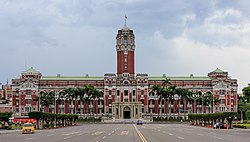
  4. Presidential Office Building

    about 1.6 km · about 21 min on foot

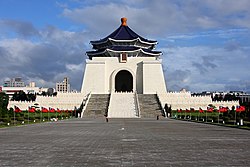
  5. Chiang Kai-shek Memorial Hall
Photo attribution

Walk Mode, in the free Mappu app: 2 hours for 50 credits (€4.99 Starter pack)

See the whole walk

Planning a trip to Taipei?

Get your plan

Mappu sketches your days free in the chat, no account needed. Then take the full plan with you:

  • Weekend trip, €9.99: Your day-by-day plan plus 2 live walks
  • Save your trip’s free guides on your phone in the Mappu app: they play with no signal
See the trip packs

Already going? The 2-hour live walk in Taipei is €4.99

Plan your trip on a map and get an audio guide for almost any place nearby: just tap it on the Mappu map.

Common questions

228 Peace Memorial Park: how long is the free audio guide?

About 6 minutes of listening in 5 sections: “Welcome to 228 Peace Memorial Park”, “A Park With Many Names”, “The Story of February 1947”, “Monuments, Museums and Old Locomotives”, and “Before You Head Off”.

228 Peace Memorial Park: what can I ask Mappu after the guide?

You can ask follow-up questions such as “What do the different names of the park, from Taipei Park to New Park to 228 Peace Park, say about how the city has remembered this place?” and keep asking in Mappu, with the guide connected to your map and trip plan.