National Taiwan Museum Audio Guide

Audio guide for National Taiwan Museum

National Taiwan Museum
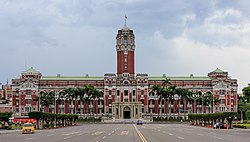
Photo by Taiwan JuniorWikimedia CommonsCC BY 3.0

6 min of listening · Section 1 of 5: Welcome to National Taiwan Museum

Prefer reading? The full guide is below

Here in person? Walk on with Mappu

This audio guide tells one place’s story. Walk Mode keeps going as you walk:

  • It knows where you are and talks about what’s in front of you, not only these chapters.
  • It takes you on to the next sight and follows what interests you.
  • Ask about anything you see, and it answers on the spot.
  • Your phone stays in your pocket.

A 2-hour live walk with Mappu, €4.99.

50 credits from the Starter pack. One-time purchase, no subscription.

Self-guided audio walk. No guide accompanies you. Not affiliated with the sites.

Keep exploring

Discover more places in Mappu.

National Taiwan Museum • Section 1 of 5

National Taiwan Museum: is there a free audio guide?

Quick answer. Yes. Mappu’s National Taiwan Museum audio guide (Taipei, Taiwan) is free in your browser: 5 sections and about 6 minutes of listening, in 8 languages. It covers “National Taiwan Museum: A Museum Born of a Railway”, “National Taiwan Museum: A Classical Building on a Meaningful Spot” and “National Taiwan Museum: More Than One Building”. In the Mappu app, Walk Mode narrates the places around you as you move and answers your follow-up questions.

National Taiwan Museum map

Mappu's own map of the place, with the paths and entrances OpenStreetMap shows around it.

National Taiwan Museum mapThe place on the map, with the guide's point marked.

National Taiwan Museum: what does the audio guide cover?

  1. 01

    Welcome to National Taiwan Museum

    Welcome to the National Taiwan Museum, known in Chinese as 國立臺灣博物館. You are standing on Xiangyang Road in the heart of Taipei's Zhongzheng District, at the northern edge of Two Two Eight Peace Memorial Park, with Taipei Main Station close by. This is the oldest museum in Taiwan, founded in 1908, and the building you see in front of you is still doing the job it was built for more than a century ago. The museum grew out of Taiwan's period of Japanese rule, and it has gathered more than 110,000 items over the years. They include Taiwan's animal and plant specimens, geological samples, and cultural and anthropological artifacts. Its collections are organized into five departments: anthropology, earth sciences, zoology, botany and education. Over the next few minutes we will look at how this museum began, at the stately classical building and the ground it stands on, and at the family of historic buildings around it that make up a whole museum district. Let's start with a very practical question: why did a railway lead to a museum?

  2. 02

    National Taiwan Museum: A Museum Born of a Railway

    The story starts in 1908. That was the year Taiwan's north-south trunk railway opened along its full length, and the Japanese colonial government marked the occasion by establishing the Taiwan Governor-General's Office Museum. It was the beginning of what is today the National Taiwan Museum, and it makes this the oldest museum on the island. The idea of a public display of the island's resources goes back a little further. In 1899 the colonial government issued regulations for a products exhibition hall in Taipei, a place to show off industry, art, and farming and gardening goods. In October 1908 the institution was renamed as a museum attached to the government's industrial promotion bureau. It first occupied the old Lottery Bureau building and displayed specimens of the island's learning, crafts and industries for the public. The name on the door has changed many times since, from the Governor-General's Office Museum to the National Taiwan Museum of today. Through all of it, the museum has looked after Taiwan's natural and cultural story. In 1935 the building also took a role in a grand event, serving as the First Cultural Pavilion at the Taiwan Exposition held to commemorate the first 40 years of colonial rule.

  3. 03

    National Taiwan Museum: A Classical Building on a Meaningful Spot

    Now look up at the building itself. The main hall opened in 1915 as a memorial to Kodama Gentaro, the fourth Japanese governor-general of Taiwan, and to Goto Shinpei, who served as chief civil administrator. A fundraising drive collected 256,101 yen for the project, and construction began on the first of April in 1913. It was designed by the architect Nomura Ichiro together with the technician Araki Eiichi. Its classical Western style, with Doric-inspired forms, carries Baroque carved decoration on the gable. The site has its own story. The museum rises where the Taipei Mazu temple, the Daitenhou, once stood. A typhoon badly damaged that temple in 1912 and it was pulled down, which cleared the ground for the memorial hall. The location is also a clever piece of city planning. The museum sits where the east-west axis and a north-south secondary axis of the old Qing dynasty walled city of Taipei cross. Its long line of sight runs along today's Guanqian Road. In 1998 the Ministry of the Interior designated the building a national historic site. It is the only official building from the Japanese period in Taiwan that has kept its historicist form and still serves as an exhibition hall, as it did when it opened.

  4. 04

    National Taiwan Museum: More Than One Building

    One of the nicest surprises is that the museum is really a small district. In 2005 a government culture council launched a plan to link the museum with nearby historic buildings in what became known as the Capital Museums System. Just across the street, at number 25 Xiangyang Road, stands the Paleontology Hall, also called the Land Bank Exhibition Hall. It was completed in 1933 as the Taipei branch of the Japan Kangyo Bank. Today it is an natural history museum, and its dinosaur specimens, among them Tyrannosaurus, Velociraptor, Triceratops and pterosaurs, have long delighted children. Its galleries range from Cambrian trilobites to Devonian fishes. Farther along is the South Gate Park. It began in 1899 as the Taipei Nanmen factory of the colonial Monopoly Bureau, a major production and testing base for camphor and opium. It was the only publicly run camphor processing plant in Taiwan under Japanese rule. It was designated a national historic site in 1998, restored by the museum, and opened to the public in 2013, with several restored monuments and surviving remains displayed on site.

  5. 05

    Before You Head Off

    Before you move on, there is one more chapter of this building's life worth keeping in mind. On the last day of March in 2002 an earthquake caused part of the roof to collapse. A repair and reinforcement project followed, and the museum reopened on the eighteenth of May in 2005. The hall you see is a survivor, and it still welcomes visitors every day. Inside, the museum keeps telling Taiwan's story in fresh ways. An exhibition called Exploring Taiwan opened in February 2021 with more than 300 cultural and historic items in two parts, People of Taiwan and Nature of Taiwan. A more recent research project began with more than thirty Atayal artifacts from Nanao in the museum's collection. Researchers followed names written in century-old registers to reconnect objects with families and tribal memory. As you step back out onto Xiangyang Road, look again at how the museum faces the park and how its neighbors line up across the street. Which of these old buildings would you walk into next?

About this guide

AI-generated from 6 sources; checked automatically and last updated on October 31, 2026. Verify tickets and opening hours on the official site. Independent guide by Mappu. Not affiliated with or endorsed by the site or its managers.

Run a travel site or blog? Embed this audio guide for free.

Walk on from here

This place is stop 2 of 5 of a self-guided walk: 228 Peace Park to Chiang Kai-shek Memorial Hall, Taipei. About 3.3 km and 45 minutes on foot, plus about 31 minutes of listening.

Route map: walking on from National Taiwan Museum5 numbered stops in walking order. Stop 1: 228 Peace Memorial Park; Stop 2: National Taiwan Museum; Stop 3: Taipei Guest House; Stop 4: Presidential Office Building; Stop 5: Chiang Kai-shek Memorial Hall.Stop 1: 228 Peace Memorial Park1Stop 2: National Taiwan Museum2Stop 3: Taipei Guest House3Stop 4: Presidential Office Building4Stop 5: Chiang Kai-shek Memorial Hall5
Distances are estimates along the walking route, from OpenStreetMap.

Indicative route. While you walk, watch where you're going, mind the traffic and follow local signs and rules. The map is an aid, not a safety guide. Terms

  1. 228 Peace Memorial Park

    about 0.2 km · about 3 min on foot

  2. National Taiwan MuseumThis guide

    about 0.7 km · about 9 min on foot

  3. Taipei Guest House

    about 0.8 km · about 11 min on foot

  4. Presidential Office Building

    about 1.6 km · about 21 min on foot

  5. Chiang Kai-shek Memorial Hall
Photo attribution

Walk Mode, in the free Mappu app: 2 hours for 50 credits (€4.99 Starter pack)

See the whole walk

Planning a trip to Taipei?

Get your plan

Mappu sketches your days free in the chat, no account needed. Then take the full plan with you:

  • Weekend trip, €9.99: Your day-by-day plan plus 2 live walks
  • Save your trip’s free guides on your phone in the Mappu app: they play with no signal
See the trip packs

Already going? The 2-hour live walk in Taipei is €4.99

Plan your trip on a map and get an audio guide for almost any place nearby: just tap it on the Mappu map.

Common questions

National Taiwan Museum: how long is the free audio guide?

About 6 minutes of listening in 5 sections: “Welcome to National Taiwan Museum”, “National Taiwan Museum: A Museum Born of a Railway”, “National Taiwan Museum: A Classical Building on a Meaningful Spot”, “National Taiwan Museum: More Than One Building”, and “Before You Head Off”.

National Taiwan Museum: what can I ask Mappu after the guide?

You can ask follow-up questions such as “How did the museum's name and purpose change from its founding in 1908 to the present day?” and keep asking in Mappu, with the guide connected to your map and trip plan.