Daitoku-ji Audio Guide

Audio guide for Daitoku-ji

Daitoku-ji
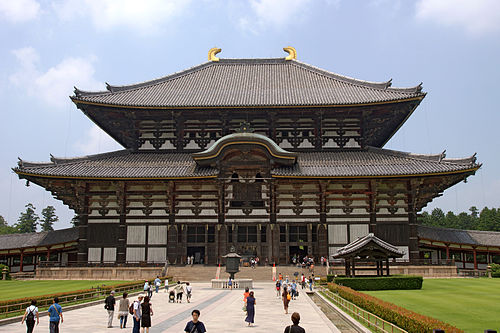
Photo by 663highlandWikimedia CommonsCC BY-SA 4.0

6 min of listening · Section 1 of 5: Welcome to Daitoku-ji

Prefer reading? The full guide is below

Here in person? Walk on with Mappu

This audio guide tells one place’s story. Walk Mode keeps going as you walk:

  • It knows where you are and talks about what’s in front of you, not only these chapters.
  • It takes you on to the next sight and follows what interests you.
  • Ask about anything you see, and it answers on the spot.
  • Your phone stays in your pocket.

A 2-hour live walk with Mappu, €4.99.

50 credits from the Starter pack. One-time purchase, no subscription.

Self-guided audio walk. No guide accompanies you. Not affiliated with the sites.

Keep exploring

Discover more places in Mappu.

Daitoku-ji • Section 1 of 5

Daitoku-ji: is there a free audio guide?

Quick answer. Yes. Mappu’s Daitoku-ji audio guide (Kyoto, Japan) is free in your browser: 5 sections and about 6 minutes of listening, in 8 languages. It covers “From Hermitage to Great Temple at Daitoku-ji”, “Tea and Zen at Daitoku-ji” and “Buildings and Gardens of Daitoku-ji”. In the Mappu app, Walk Mode narrates the places around you as you move and answers your follow-up questions.

Daitoku-ji map

Mappu's own map of the place, with the paths and entrances OpenStreetMap shows around it.

Daitoku-ji mapThe place on the map, with the guide's point marked.

Daitoku-ji: what does the audio guide cover?

  1. 01

    Welcome to Daitoku-ji

    Welcome to Daitoku-ji, written 大徳寺 in Japanese and often translated as the temple of Great Virtue. You are in the Murasakino neighborhood of Kita-ku, in northern Kyoto, at one of the largest Zen temple complexes in the city. It is a Rinzai school Zen Buddhist temple, and its mountain name is Ryūhōzan, which means Dragon Treasure Mountain. Think of Daitoku-ji less as a single building and more as a walled temple town. The grounds cover more than 23 hectares, which is about 57 acres, and they hold nearly two dozen subtemples. That is why it is considered one of the best places in Japan to see a wide variety of Zen gardens and to take in Zen architecture and culture. Over the next few stops we will follow three threads: how a small hermitage grew into a great temple, how it became so closely tied to the Japanese tea ceremony, and which buildings and subtemples are worth your attention. If you are heading here by public transport, a city bus from Kyoto Station takes about 40 minutes to the Daitokuji-mae stop, and the temple is a five-minute walk from there, along Kitaoji Street.

  2. 02

    From Hermitage to Great Temple at Daitoku-ji

    Daitoku-ji began small. Its founder was the Zen master Shūhō Myōchō, later honored as Daitō Kokushi. A small temple called Daitoku-an was built in Murasakino, north of Kyoto, in 1315 or 1319 according to different tellings, with the support of a patron named Akamatsu Norimura. Tradition says that Shūhō, who came from Harima and trained under the master Nanpo Jōmyō, spent years living among beggars beneath a bridge in Kyoto, even after receiving formal recognition as Nanpo's heir. That is a story told by tradition rather than documented fact, but it fits the austere character this temple came to stand for. Then came disaster. In 1474 Kyoto lay devastated by the Ōnin War, and Emperor Go-Tsuchimikado named the Zen monk Ikkyū Sōjun as head priest. With help from merchants of the city of Sakai, Ikkyū played a major part in bringing the temple back to life. Notice who stepped in to help: not the court, but a rising merchant class with money and taste. That independence shaped the temple. Daitoku-ji became a cultural center in part because it was no longer a political one. Later, the shogunate wanted the power to appoint abbots, a right that had belonged to the emperor, and this temple refused to give it up quietly. The monk Takuan was exiled in that clash.

  3. 03

    Tea and Zen at Daitoku-ji

    If you love tea, you are standing in one of its spiritual homes. When Ikkyū was head priest, he was visited by leading figures of Higashiyama culture, including Murata Jukō, the founder of the wabi-cha style of the Japanese tea ceremony. Wabi-cha is the tea of quiet simplicity, and its meeting with Zen at Daitoku-ji set up a relationship that lasted for centuries. The list of tea masters connected with the temple reads like a who's who of the tea world: Takeno Jōō, Sen no Rikyū, and Kobori Enshū. Rikyū in particular is one of the most famous names in the history of tea, and visitors still come to Kyoto in search of the places where he lived and worked. So as you walk the lanes between the subtemples, remember that this was never just a place of prayer and meditation. It was a meeting ground where monks, merchants and tea masters shaped ideas about beauty, restraint and hospitality that still influence Japanese culture today.

  4. 04

    Buildings and Gardens of Daitoku-ji

    The architecture at Daitoku-ji rewards a slow look. The abbot's quarters, called the Hōjō, is a National Treasure, rebuilt in 1635. It is in a Japanese style, quite different from the Zen architecture of the lecture hall and the Buddha hall. The main hall was rebuilt in 1665 with a donation from Nawa Jōyū, a wealthy Kyoto merchant. It enshrines Shaka Nyorai, the historical Buddha, which is said to be a one-tenth-size prototype of the great Buddha of Hōkō-ji, known as the Kyoto Daibutsu. Its wall paintings are by Kaihō Yūshō. Among the subtemples, the most celebrated is Daisen-in, head of the North School of Daitoku-ji and open to the public around the year. It was founded in 1509 and holds the oldest surviving example of a tokonoma, the alcove that you can still find in tatami rooms today. It also has highly valued sliding doors, called fusuma. So here is something to try: when you step into any Japanese-style room, look for that quiet alcove. Its ancestor may be right here.

  5. 05

    Before You Head Off

    Daitoku-ji is a place that keeps unfolding. It has more than seven centuries of history, with monks who rebuilt it after war, merchants who paid for its halls, and tea masters who found a home within its walls. Yet much of its story happens in the spaces between the buildings, along the walled lanes of the subtemples. As you wander, look at how each subtemple shows its own face through gardens, doorways and alcoves. See if you can sense the difference between a hall built for formal Zen ritual and a room built for living and receiving guests. And ask yourself what a bowl of tea would taste like in the same place where the ideas of wabi-cha were once discussed. There is much more to find here, and every lane you turn down may open onto a different corner of Zen Kyoto.

About this guide

AI-generated from 6 sources; checked automatically and last updated on October 31, 2026. Verify tickets and opening hours on the official site. Independent guide by Mappu. Not affiliated with or endorsed by the site or its managers.

Run a travel site or blog? Embed this audio guide for free.

Walk on from here

The nearest places with a Mappu audio guide, in walking order: about 2.4 km and 30 minutes on foot in all.

Route map: walking on from Daitoku-ji3 numbered stops in walking order. Stop 1: Daitoku-ji; Stop 2: Imamiya Shrine; Stop 3: Kinkaku-ji.Stop 1: Daitoku-ji1Stop 2: Imamiya Shrine2Stop 3: Kinkaku-ji3
Distances are estimates: the straight line between places plus 30%.

Indicative route. While you walk, watch where you're going, mind the traffic and follow local signs and rules. The map is an aid, not a safety guide. Terms

  1. Daitoku-jiThis guide

    about 0.6 km · about 7 min on foot

  2. Imamiya Shrine

    about 1.8 km · about 25 min on foot

  3. Kinkaku-ji
Photo attribution

Walk Mode, in the free Mappu app: 2 hours for 50 credits (€4.99 Starter pack)

Planning a trip to Kyoto?

Get your plan

Mappu sketches your days free in the chat, no account needed. Then take the full plan with you:

  • Weekend trip, €9.99: Your day-by-day plan plus 2 live walks
  • Save your trip’s free guides on your phone in the Mappu app: they play with no signal
See the trip packs

Already going? The 2-hour live walk in Kyoto is €4.99

Plan your trip on a map and get an audio guide for almost any place nearby: just tap it on the Mappu map.

Common questions

Daitoku-ji: how long is the free audio guide?

About 6 minutes of listening in 5 sections: “Welcome to Daitoku-ji”, “From Hermitage to Great Temple at Daitoku-ji”, “Tea and Zen at Daitoku-ji”, “Buildings and Gardens of Daitoku-ji”, and “Before You Head Off”.

Daitoku-ji: what can I ask Mappu after the guide?

You can ask follow-up questions such as “What makes Daitoku-ji a complex of nearly two dozen subtemples rather than a single temple?” and keep asking in Mappu, with the guide connected to your map and trip plan.