Sumiyoshi Shrine Audio Guide

Fukuoka's ancient shrine to the gods who protect sailors

Sumiyoshi Shrine
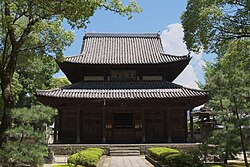
Photo by そらみみWikimedia CommonsCC BY-SA 4.0

6 min of listening · Section 1 of 5: Welcome to Sumiyoshi Shrine

Prefer reading? The full guide is below

Here in person? Walk on with Mappu

This audio guide tells one place’s story. Walk Mode keeps going as you walk:

  • It knows where you are and talks about what’s in front of you, not only these chapters.
  • It takes you on to the next sight and follows what interests you.
  • Ask about anything you see, and it answers on the spot.
  • Your phone stays in your pocket.

A 2-hour live walk with Mappu, €4.99.

50 credits from the Starter pack. One-time purchase, no subscription.

Self-guided audio walk. No guide accompanies you. Not affiliated with the sites.

Keep exploring

Discover more places in Mappu.

Sumiyoshi Shrine • Section 1 of 5

Sumiyoshi Shrine: is there a free audio guide?

Quick answer. Yes. Mappu’s Sumiyoshi Shrine audio guide (Fukuoka, Japan) is free in your browser: 5 sections and about 6 minutes of listening, in 8 languages. It covers “The Sea Gods of Sumiyoshi Shrine”, “The Main Hall of Sumiyoshi Shrine” and “Poets, Priests and War at Sumiyoshi Shrine”. In the Mappu app, Walk Mode narrates the places around you as you move and answers your follow-up questions.

Sumiyoshi Shrine map

Mappu's own map of the place, with the paths and entrances OpenStreetMap shows around it.

Sumiyoshi Shrine mapThe place on the map, with the guide's point marked.

Sumiyoshi Shrine: what does the audio guide cover?

  1. 01

    Welcome to Sumiyoshi Shrine

    Welcome to Sumiyoshi Shrine, known in Japanese as 住吉神社. It stands in the Sumiyoshi neighborhood of Hakata Ward in Fukuoka, in Fukuoka Prefecture. This is a Shinto shrine with a very big claim to fame. It is the ichinomiya of the old Chikuzen Province, which means it was ranked as the foremost shrine of that province. The shrine is devoted to the gods who protect sailors and ships. Long ago the land here was a cape at the mouth of the Naka River, looking out over Hakata Bay. Keep that picture in mind as you walk: a headland, a river, and the open water beyond, which is exactly the sort of place where people once asked the sea for a safe passage. Over the next few minutes we will look at the gods enshrined here and why this place is considered a starting point for Sumiyoshi shrines across the country. We will also cover the building style of the main hall, the wars and the priestly family that shaped the shrine's fortunes, and a few details from the grounds. The main festival is held every year on October 13.

  2. 02

    The Sea Gods of Sumiyoshi Shrine

    The gods enshrined here are the three Sumiyoshi deities: Sokotsutsu-no-o, Nakatsutsu-no-o and Uwatsutsu-no-o. The shrine is also listed in the Engishiki, the great tenth-century register of shrines, which tells you it was already of national standing in ancient times. These gods are worshipped for safe voyages and the protection of ships. Their origin story comes from Japan's oldest chronicles, the Kojiki and the Nihon Shoki. After the god Izanagi returned from the land of the dead, he purified himself by the water at a place in Tsukushi. The three Sumiyoshi gods were born in that cleansing, together with the three sea gods known as the Watatsumi. Later, in the tale of Empress Jingu's expedition to Korea, the Sumiyoshi god spoke through the empress and helped the campaign succeed. This is where the shrine's big claim comes in. Over 2,300 Sumiyoshi shrines exist across Japan, and the grand shrine in Osaka is usually treated as the head shrine. But an old Osaka text, the Sumiyoshi Taisha Jindaiki, names a great deity of Tsukushi as the source of the Sumiyoshi worship, and that points to this very region. So some people regard this shrine as the origin of them all. It is also counted among the Three Great Sumiyoshi shrines, alongside the ones in Osaka and in Shimonoseki.

  3. 03

    The Main Hall of Sumiyoshi Shrine

    The main hall of Sumiyoshi Shrine was rebuilt in 1623, in the Genna era, and it is a Nationally Important Cultural Property. Its builder was Kuroda Nagamasa, the first lord of the Fukuoka domain, who restored the shrine in that year. If you look at the roof, you will notice how straight and clean its lines are. That simplicity is the point. The hall is built in the style called Sumiyoshi-zukuri, and like the Shinmei and Taisha styles, it does not use the bracket sets that sit atop the pillars in temple architecture to support the eaves. Those brackets came with Buddhist building traditions from the continent, so their absence is taken as a sign that the form preserves Japan's ancient architecture from before that influence arrived. Here is a nice trick of the eye. The hall measures four bays across and two deep, yet it looks like three bays from the front. The gabled entrance sits in the middle of the front wall, and there is no pillar in the exact center. Pillars stand instead on either side of the doors, so your eye reads the front as three bays. Take a moment to compare that façade with the way you might expect a temple hall to look.

  4. 04

    Poets, Priests and War at Sumiyoshi Shrine

    Sumiyoshi Shrine has a history that is both poetic and turbulent. It has long been revered as a god of waka poetry as well as of the sea. In 1480 the renga master Sogi visited, and in his travel record, the Tsukushi Doki, he wrote about how war had left the shrine devastated. The Sengoku period was harsh to its archives. The shrine's records and old documents were carried off to Yamaguchi by Ouchi Yoshitaka, and they were destroyed in the Taineiji incident of 1551. That loss is one reason why so much of the early story is told through chronicles and traditions rather than through the shrine's own papers. The priestly family has a dramatic tale too. The Saeki family, who served as head priests, were driven out to Izu by the Taira regime. There they became prayer priests to Minamoto no Yoritomo, and they went on to serve as shrine officials who were also retainers of the shogunate. Some accounts add that a major Buddhist temple once stood within these grounds, which is why Buddhist architectural elements were added to the shrine over the centuries.

  5. 05

    Before You Head Off

    As you wander the grounds of Sumiyoshi Shrine, try to picture the old shoreline: a cape at the river mouth, with Hakata Bay opening beyond it. Then look again at the main hall and its plain, straight roofline, and ask yourself what ancient builders were choosing to keep. There is more to notice. The shrine also holds six bronze dagger-axes and five bronze spearheads, which are designated as prefectural cultural properties. And the grounds have a Noh stage story that begins in the 1930s, when Noh circles proposed a new stage here after the one at Kego Shrine in central Fukuoka had grown too old for performances. If you are here around October 13, keep in mind that this is the date of the shrine's main festival. Whenever you visit, the shrine's two big questions are still open to you: whether it truly is the first of all the Sumiyoshi shrines, and how much of its ancient spirit you can feel in the quiet around its oldest buildings.

About this guide

AI-generated from 6 sources; reviewed for accuracy and last updated on October 31, 2026. Verify tickets and opening hours on the official site. Independent guide by Mappu. Not affiliated with or endorsed by the site or its managers.

Run a travel site or blog? Embed this audio guide for free.

Walk on from here

This place is stop 2 of 4 of a self-guided walk: Nakasu to Shofuku-ji, Fukuoka. About 3.1 km and 40 minutes on foot, plus about 23 minutes of listening.

Route map: walking on from Sumiyoshi Shrine4 numbered stops in walking order. Stop 1: Nakasu; Stop 2: Sumiyoshi Shrine; Stop 3: Kushida Shrine; Stop 4: Shōfuku-ji Temple.Stop 1: Nakasu1Stop 2: Sumiyoshi Shrine2Stop 3: Kushida Shrine3Stop 4: Shōfuku-ji Temple4
Distances are estimates along the walking route, from OpenStreetMap.

Indicative route. While you walk, watch where you're going, mind the traffic and follow local signs and rules. The map is an aid, not a safety guide. Terms

  1. Nakasu

    about 1.1 km · about 15 min on foot

  2. Sumiyoshi ShrineThis guide

    about 1.2 km · about 17 min on foot

  3. Kushida Shrine

    about 0.7 km · about 10 min on foot

  4. Shōfuku-ji Temple
Photo attribution

Walk Mode, in the free Mappu app: 2 hours for 50 credits (€4.99 Starter pack)

See the whole walk

Planning a trip to Fukuoka?

Get your plan

Mappu sketches your days free in the chat, no account needed. Then take the full plan with you:

  • Weekend trip, €9.99: Your day-by-day plan plus 2 live walks
  • Save your trip’s free guides on your phone in the Mappu app: they play with no signal
See the trip packs

Already going? The 2-hour live walk in Fukuoka is €4.99

Plan your trip on a map and get an audio guide for almost any place nearby: just tap it on the Mappu map.

Common questions

Sumiyoshi Shrine: how long is the free audio guide?

About 6 minutes of listening in 5 sections: “Welcome to Sumiyoshi Shrine”, “The Sea Gods of Sumiyoshi Shrine”, “The Main Hall of Sumiyoshi Shrine”, “Poets, Priests and War at Sumiyoshi Shrine”, and “Before You Head Off”.

Sumiyoshi Shrine: what can I ask Mappu after the guide?

You can ask follow-up questions such as “Why do some people consider Sumiyoshi Shrine in Fukuoka to be the origin of Sumiyoshi shrines across Japan?” and keep asking in Mappu, with the guide connected to your map and trip plan.