Shōfuku-ji Audio Guide

Japan's oldest Zen temple, founded by Eisai in Hakata

Shōfuku-ji Temple
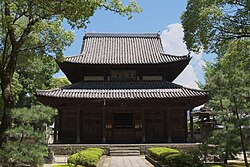
Photo by PontafonWikimedia CommonsCC BY-SA 3.0

6 min of listening · Section 1 of 5: Welcome to Shōfuku-ji Temple

Prefer reading? The full guide is below

Here in person? Walk on with Mappu

This audio guide tells one place’s story. Walk Mode keeps going as you walk:

  • It knows where you are and talks about what’s in front of you, not only these chapters.
  • It takes you on to the next sight and follows what interests you.
  • Ask about anything you see, and it answers on the spot.
  • Your phone stays in your pocket.

A 2-hour live walk with Mappu, €4.99.

50 credits from the Starter pack. One-time purchase, no subscription.

Self-guided audio walk. No guide accompanies you. Not affiliated with the sites.

Keep exploring

Discover more places in Mappu.

Shōfuku-ji Temple • Section 1 of 5

Shōfuku-ji Temple: is there a free audio guide?

Quick answer. Yes. Mappu’s Shōfuku-ji audio guide (Fukuoka, Japan) is free in your browser: 5 sections and about 6 minutes of listening, in 8 languages. It covers “Eisai and the First Zen Hall at Shōfuku-ji Temple”, “A Straight Line Through Shōfuku-ji Temple” and “Fire, a Wandering Bell, and Children in Need at Shōfuku-ji Temple”. In the Mappu app, Walk Mode narrates the places around you as you move and answers your follow-up questions.

Shōfuku-ji map

Mappu's own map of the place, with the paths and entrances OpenStreetMap shows around it.

Shōfuku-ji mapThe place on the map, with the guide's point marked.

Shōfuku-ji Temple: what does the audio guide cover?

  1. 01

    Welcome to Shōfuku-ji Temple

    Welcome to Shōfuku-ji Temple, written 聖福寺 in Japanese. It sits in the Gokushōmachi neighborhood of Hakata, in Fukuoka, and it carries a big title: the oldest Zen temple in Japan. It belongs to the Rinzai school, in the Myōshin-ji branch of Japanese Zen, and its mountain name, the formal title every Zen temple carries, is Ankokuzan. The temple was founded by the monk Eisai, with the support of the Kamakura warrior leader Minamoto no Yoritomo. Eisai was one of the people who brought Rinzai Zen across the sea from China, and this is where he planted it on Japanese soil. Today the grounds are a national historic site, and the buildings you will walk past mostly date from the Edo period. As we go, I will tell you how a monk's long journey became a temple, how fire and war nearly erased it, and why a single bronze bell has such a remarkable travel story.

  2. 02

    Eisai and the First Zen Hall at Shōfuku-ji Temple

    Let's go back to the beginning. Eisai made two journeys to Song China and came home determined to establish Zen in Japan. The temple he built here was completed in 1204. Tradition holds that the retired emperor Gotoba sent him two pieces of imperial calligraphy: one reading Fusō Saisho Zenkutsu, which means the first Zen hall in Japan, and another reading Hōjō, the abbot's quarters. That first phrase still hangs on the temple's main gate as an imperial plaque. Eisai did not stop in Hakata. He is also credited with founding Jufuku-ji in Kamakura and Kennin-ji in Kyoto, so this port city was the first step on a much longer road. There is a lovely local belief that the people of Hakata pooled their own money to help build the temple, which fits a merchant harbor that had long looked outward to the continent. In the Muromachi period the temple was ranked third in the Kyoto Five Mountains system, the official hierarchy of great Zen monasteries. The precinct was said to be four blocks square, and it held 38 subtemples and branch temples. Imagine a walled Zen town in the middle of Hakata, with Shōfuku-ji Temple at its heart.

  3. 03

    A Straight Line Through Shōfuku-ji Temple

    Now look at how the grounds are laid out. The great halls stand in a single straight line: the main gate, then the Buddha hall, then the main hall. This is the classic arrangement of a Zen monastery, and Shōfuku-ji Temple preserves it unusually well. That clarity is a big reason the grounds were designated a national historic site in 1969. The buildings along that axis were mostly rebuilt in the Edo period, and smaller structures reward a closer look. The Chokushimon, the Imperial Envoy Gate, was renovated in 1827. The bell tower was built in 1589 and renovated in 1759. The Kyōzō, the sutra repository, dates to 1682 and houses a complete set of Buddhist scriptures. It is a tangible folk cultural property of Fukuoka Prefecture. The karamon gate carries the bellflower crest of the Minamoto clan, a quiet reminder of Yoritomo's patronage. In the subtemple Goshō-in stands the Founder's Hall, which enshrines a seated figure of Eisai. Its plaque was written by Sengai, the 123rd abbot, remembered for his playful Zen ink paintings. So the temple's story runs from its founder all the way to one of its most beloved later abbots.

  4. 04

    Fire, a Wandering Bell, and Children in Need at Shōfuku-ji Temple

    Surviving for more than eight centuries was not easy. In 1563 war flames destroyed the halls, and a revival that began in 1570 was undone when fire again consumed everything in 1574. In 1587, Toyotomi Hideyoshi's reorganization of Hakata shrank the precinct to four blocks square. Then the local lord Kobayakawa Takakage donated an income of 300 koku of rice, and under his protection the abbot Genyu rebuilt the Buddha hall, the main gate and other buildings. The bell has its own adventure. It is a Korean bell from the Goryeo period, and an inscription records Takakage's gift. In 1502 it belonged to Byōdō-ji in what is now Itoshima. In 1533, during fighting between the Ōuchi and Ōtomo clans, the Ōuchi seized it, and it ended up at Honkoku-ji in Yamaguchi. In 1537 Ōuchi Yoshitaka gave it back to Byōdō-ji. Later, Takakage's donation brought it here, and it has belonged to Shōfuku-ji Temple ever since. It was designated an important cultural property in 1906. There is also a gentler chapter. From August 1946 to February 1947, a home called Shōfuku-ryō cared for 164 orphans repatriated after the war. It was opened by the Fukuoka repatriation relief bureau and run by the Fukuoka Friends Association, on the temple grounds.

  5. 05

    Before You Head Off from Shōfuku-ji Temple

    As you wander, remember that Shōfuku-ji Temple is not only a monument but also a living neighborhood temple. It stands along Gokushō Street, the road that Hakata's Gion Yamakasa festival races through. The temple cemetery holds the graves of Kōki Hirota, the thirty-second Prime Minister of Japan, and the politician Taketora Ogata. If you have time, pay attention to the line that runs from the main gate toward the main hall, and ask yourself what a monk fresh from China might have wanted to feel when he laid it out. Notice the old tile walls, the bell tower and the shape of the plaque on the gate. Hakata has many more temples tucked into its streets, and several of them are close enough to explore on foot. Each has its own founder, its own fires and its own stories. Shōfuku-ji Temple is a fine place to begin pulling on that thread.

About this guide

AI-generated from 6 sources; reviewed for accuracy and last updated on October 31, 2026. Verify tickets and opening hours on the official site. Independent guide by Mappu. Not affiliated with or endorsed by the site or its managers.

Run a travel site or blog? Embed this audio guide for free.

Walk on from here

This place is stop 4 of 4 of a self-guided walk: Nakasu to Shofuku-ji, Fukuoka. About 3.1 km and 40 minutes on foot, plus about 23 minutes of listening.

Route map: walking on from Shōfuku-ji Temple4 numbered stops in walking order. Stop 1: Nakasu; Stop 2: Sumiyoshi Shrine; Stop 3: Kushida Shrine; Stop 4: Shōfuku-ji Temple.Stop 1: Nakasu1Stop 2: Sumiyoshi Shrine2Stop 3: Kushida Shrine3Stop 4: Shōfuku-ji Temple4
Distances are estimates along the walking route, from OpenStreetMap.

Indicative route. While you walk, watch where you're going, mind the traffic and follow local signs and rules. The map is an aid, not a safety guide. Terms

  1. Nakasu

    about 1.1 km · about 15 min on foot

  2. Sumiyoshi Shrine

    about 1.2 km · about 17 min on foot

  3. Kushida Shrine

    about 0.7 km · about 10 min on foot

  4. Shōfuku-ji TempleThis guide

Photo attribution

Walk Mode, in the free Mappu app: 2 hours for 50 credits (€4.99 Starter pack)

See the whole walk

Planning a trip to Fukuoka?

Get your plan

Mappu sketches your days free in the chat, no account needed. Then take the full plan with you:

  • Weekend trip, €9.99: Your day-by-day plan plus 2 live walks
  • Save your trip’s free guides on your phone in the Mappu app: they play with no signal
See the trip packs

Already going? The 2-hour live walk in Fukuoka is €4.99

Plan your trip on a map and get an audio guide for almost any place nearby: just tap it on the Mappu map.

Common questions

Shōfuku-ji: how long is the free audio guide?

About 6 minutes of listening in 5 sections: “Welcome to Shōfuku-ji Temple”, “Eisai and the First Zen Hall at Shōfuku-ji Temple”, “A Straight Line Through Shōfuku-ji Temple”, “Fire, a Wandering Bell, and Children in Need at Shōfuku-ji Temple”, and “Before You Head Off from Shōfuku-ji Temple”.

Shōfuku-ji: what can I ask Mappu after the guide?

You can ask follow-up questions such as “What did Eisai do after returning from China, and how did he spread Zen beyond Hakata?” and keep asking in Mappu, with the guide connected to your map and trip plan.