Kushida Shrine Audio Guide

Audio guide for Kushida Shrine

Kushida Shrine
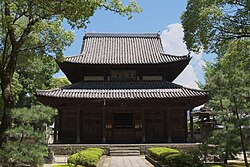
Photo by PontafonWikimedia CommonsCC BY-SA 3.0

6 min of listening · Section 1 of 5: Welcome to Kushida Shrine

Prefer reading? The full guide is below

Here in person? Walk on with Mappu

This audio guide tells one place’s story. Walk Mode keeps going as you walk:

  • It knows where you are and talks about what’s in front of you, not only these chapters.
  • It takes you on to the next sight and follows what interests you.
  • Ask about anything you see, and it answers on the spot.
  • Your phone stays in your pocket.

A 2-hour live walk with Mappu, €4.99.

50 credits from the Starter pack. One-time purchase, no subscription.

Self-guided audio walk. No guide accompanies you. Not affiliated with the sites.

Keep exploring

Discover more places in Mappu.

Kushida Shrine • Section 1 of 5

Kushida Shrine: is there a free audio guide?

Quick answer. Yes. Mappu’s Kushida Shrine audio guide (Fukuoka, Japan) is free in your browser: 5 sections and about 6 minutes of listening, in 8 languages. It covers “Three Deities and a Founding Tradition at Kushida Shrine”, “The Hakata Gion Yamakasa Festival at Kushida Shrine” and “A Shrine for the Whole Year at Kushida Shrine”. In the Mappu app, Walk Mode narrates the places around you as you move and answers your follow-up questions.

Kushida Shrine map

Mappu's own map of the place, with the paths and entrances OpenStreetMap shows around it.

Kushida Shrine mapThe place on the map, with the guide's point marked.

Kushida Shrine: what does the audio guide cover?

  1. 01

    Welcome to Kushida Shrine

    Welcome to Kushida Shrine, written 櫛田神社 in Japanese, in the old merchant quarter of Hakata, in Hakata Ward, Fukuoka. Its address is in Kamikawabata Town. Locals have a much warmer name for it: Okushida-san, a title that sounds more like a beloved neighbor than a monument. This is the guardian shrine of Hakata. Its full name, Hakata Sochinju Kushida Shrine, means the chief protective shrine of the whole old town. In Japan, a shrine like this is the spiritual anchor of a community, the place where a neighborhood's seasons, festivals and hopes come together. Here that role is played out loudly and spectacularly, as you will hear in a moment. Over the next few minutes we will look at who is enshrined here, how the shrine's origins are told, the great July festival that makes it famous, and the small details worth looking for as you walk around. Take your time, and let the old town's atmosphere settle around you.

  2. 02

    Three Deities and a Founding Tradition at Kushida Shrine

    Kushida Shrine honors three deities. In the central main hall is Ohatanushi no Okami, also called Kushida Okami. The left hall holds Amaterasu, the sun goddess, and the right hall holds Susanoo, known here as Gion Okami. The name Ohatanushi has a story behind it. A figure called Ookowakugo no Mikoto was sent to put down a rebellion led by a man named Ahiko in the land of Koshi, which is today's Hokuriku region on the Sea of Japan coast. When he reported success, the imperial court recognized his service by granting him the name Ohatanushi. It is a long way from Hokuriku to Hakata, but of the five shrines in Japan that make Ohatanushi their main deity, three are in Hokuriku, and the other two are right here in Fukuoka City. Tradition says the shrine was founded in the year 757. There is also a tale that Taira no Kiyomori, who made Hakata a base for trade with Song China in the late Heian period, invited the deity from a Kushida shrine on his family's estate in Hizen Province. The city's own cultural property record notes that this story has no documentary support, so treat it as a tale that has traveled with the shrine. Some scholars have also suggested that the shrine first honored Princess Kushinada, though only two of Japan's seven Kushida shrines have her as their main deity.

  3. 03

    The Hakata Gion Yamakasa Festival at Kushida Shrine

    If Kushida Shrine has a heartbeat, it is the Hakata Gion Yamakasa. Every year, from the first to the fifteenth of July, Hakata erupts in this festival, which is offered to the shrine. It honors Gion Gozu Tenno, the form in which Susanoo is venerated here, enshrined alongside the main deity. It began in the Heian period, and it is said to have more than 700 years of history behind it. Picture men in traditional costume running at full speed through the streets while carrying enormous floats on their shoulders. The sight is powerful and loud, and it has earned the festival a place on UNESCO's list of intangible cultural heritage. In Japan it is also a nationally designated Important Intangible Folk Cultural Property. Here is a lovely detail for any time of year. The elaborately decorated floats are displayed at the shrine all year round, except in June. They are rebuilt each year on the first of July, so you are seeing a tradition that is made fresh again and again rather than preserved behind glass.

  4. 04

    A Shrine for the Whole Year at Kushida Shrine

    Kushida Shrine is not a one-festival place. In October the Hakata Okunchi is held here, and in May the Hakata Matsubayashi, better known as Hakata Dontaku, is tied to the shrine too. Strictly speaking it is not a shrine ritual, but by custom the Matsubayashi procession sets out from Kushida Shrine. The shrine's calendar therefore frames the rhythm of the old town through the year. Visitors and locals come here for more personal reasons too. The shrine is known as the home of a deity of longevity and of prosperity in business, which suits a district that grew up around trade. Near the main hall, look for the Fountain of Youth, decorated with three dancing cranes. Legend says that anyone who takes three sips of its water is granted longevity and eternal youth. Whether or not you believe it, it is a charming ritual to try, and a good reminder that shrines in Japan are places of hope as much as history.

  5. 05

    Before You Head Off from Kushida Shrine

    As you wander the grounds, notice how this place holds so many layers at once: a founding tradition from the year 757, a deity with roots in faraway Hokuriku, a sun goddess and a storm god sharing one precinct, and a festival that turns the old town into a racecourse each July. Try looking at the three halls and asking yourself which of these stories feels closest to the shrine you are standing in. Then look at the festival floats and imagine them in motion, carried at full speed on the shoulders of Hakata's men. There is plenty more to discover in Hakata beyond these gates, the old merchant district that Kushida Shrine has watched over for so long. Let your curiosity pull you onward, and keep an eye out for how the shrine appears in the life of the streets around it.

About this guide

AI-generated from 6 sources; checked automatically and last updated on October 31, 2026. Verify tickets and opening hours on the official site. Independent guide by Mappu. Not affiliated with or endorsed by the site or its managers.

Run a travel site or blog? Embed this audio guide for free.

Walk on from here

This place is stop 3 of 4 of a self-guided walk: Nakasu to Shofuku-ji, Fukuoka. About 3.1 km and 40 minutes on foot, plus about 23 minutes of listening.

Route map: walking on from Kushida Shrine4 numbered stops in walking order. Stop 1: Nakasu; Stop 2: Sumiyoshi Shrine; Stop 3: Kushida Shrine; Stop 4: Shōfuku-ji Temple.Stop 1: Nakasu1Stop 2: Sumiyoshi Shrine2Stop 3: Kushida Shrine3Stop 4: Shōfuku-ji Temple4
Distances are estimates along the walking route, from OpenStreetMap.

Indicative route. While you walk, watch where you're going, mind the traffic and follow local signs and rules. The map is an aid, not a safety guide. Terms

  1. Nakasu

    about 1.1 km · about 15 min on foot

  2. Sumiyoshi Shrine

    about 1.2 km · about 17 min on foot

  3. Kushida ShrineThis guide

    about 0.7 km · about 10 min on foot

  4. Shōfuku-ji Temple
Photo attribution

Walk Mode, in the free Mappu app: 2 hours for 50 credits (€4.99 Starter pack)

See the whole walk

Planning a trip to Fukuoka?

Get your plan

Mappu sketches your days free in the chat, no account needed. Then take the full plan with you:

  • Weekend trip, €9.99: Your day-by-day plan plus 2 live walks
  • Save your trip’s free guides on your phone in the Mappu app: they play with no signal
See the trip packs

Already going? The 2-hour live walk in Fukuoka is €4.99

Plan your trip on a map and get an audio guide for almost any place nearby: just tap it on the Mappu map.

Common questions

Kushida Shrine: how long is the free audio guide?

About 6 minutes of listening in 5 sections: “Welcome to Kushida Shrine”, “Three Deities and a Founding Tradition at Kushida Shrine”, “The Hakata Gion Yamakasa Festival at Kushida Shrine”, “A Shrine for the Whole Year at Kushida Shrine”, and “Before You Head Off from Kushida Shrine”.

Kushida Shrine: what can I ask Mappu after the guide?

You can ask follow-up questions such as “How did the deity Ohatanushi get that name, and why are there shrines to him in both Hokuriku and Fukuoka?” and keep asking in Mappu, with the guide connected to your map and trip plan.