Duiyue Gate Audio Guide

A Qing-era city gate still in use in Tainan's West Central District

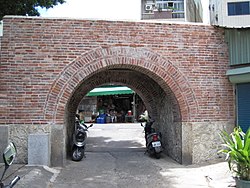
Duiyue Gate
Photo by PbdragonwangWikimedia CommonsCC BY-SA 3.0

5 min of listening · Section 1 of 5: Welcome to Redemption gate

Prefer reading? The full guide is below

Here in person? Walk on with Mappu

This audio guide tells one place’s story. Walk Mode keeps going as you walk:

  • It knows where you are and talks about what’s in front of you, not only these chapters.
  • It takes you on to the next sight and follows what interests you.
  • Ask about anything you see, and it answers on the spot.
  • Your phone stays in your pocket.

A 2-hour live walk with Mappu, €4.99.

50 credits from the Starter pack. One-time purchase, no subscription.

Self-guided audio walk. No guide accompanies you. Not affiliated with the sites.

Keep exploring

Discover more places in Mappu.

Duiyue Gate • Section 1 of 5

Duiyue Gate: is there a free audio guide?

Quick answer. Yes. Mappu’s Duiyue Gate audio guide (Tainan, Taiwan) is free in your browser: 5 sections and about 5 minutes of listening, in 8 languages. It covers “Redemption gate and the Walls of Tainan”, “The Coral Stone Gate and the Waterways” and “A Name Written in the Eight Trigrams”. In the Mappu app, Walk Mode narrates the places around you as you move and answers your follow-up questions.

Duiyue Gate map

Mappu's own map of the place, with the paths and entrances OpenStreetMap shows around it.

Duiyue Gate mapThe place on the map, with the guide's point marked.

Duiyue Gate: what does the audio guide cover?

  1. 01

    Welcome to Redemption gate

    Welcome to Redemption gate, a historic city gate in the West Central District of Tainan. Its local name is 兌悅門. You will find it on Xinyi Street, and it is a rare thing in this city: a gate that is still in use. Cars, scooters and people on foot pass through it as they go about their day. The records on this particular gate are modest. So alongside the gate itself, I will tell you the story of the world around it: the walls of Qing-era Tainan, the busy port district just beyond them, and why a gate like this mattered. Where I speak about the area rather than the gate, I will make that clear. Take a moment to look at the stonework before we begin. Locals call this the Coral Stone Gate, and the name tells you something about what you are standing in front of.

  2. 02

    Redemption gate and the Walls of Tainan

    To understand this gate, picture Tainan under Qing rule. The Qing rulers had been building walls around the city since the 1720s. Defense against foreign invaders was one reason. Another was that rebellion against the Qing government was commonplace, so walls were meant to protect the city from threats inside the island as well as outside it. But Tainan kept growing, and the important port area known as the Five Channels district sat outside those walls. Redemption gate was completed in 1836 to answer that situation. It was not part of the main city walls. It belonged to the outlying walls that reached out to take in the western, waterside side of town. That makes it a different kind of gate from the grand ones. Tainan once had a Great West Gate, but it is long gone. The Small West Gate survives, though it was moved to the campus of National Cheng Kung University in the east of the city. This gate is the one that still stands where it was built.

  3. 03

    The Coral Stone Gate and the Waterways

    Now look closely at the stone, because it gives the gate its popular name: the Coral Stone Gate, or in Chinese, 咾咕石城門. It is also known as the Rocky Gate. The coral stone is a clue to the world this gate belonged to. This part of Tainan was once connected to waterways, and ships carried stones along them. The stone you see is tied to that maritime past. The gate stood at the edge of the Five Channels district, a trading and port zone, so the sea and its traffic were never far away. Standing here, you can imagine the activity around it: boats, cargo and merchants moving between the harbor side and the walled city. Today the waterways have changed with the landscape, and the gate's meaning has shifted with them. It began as a piece of the city's defenses and now stands as a piece of its memory.

  4. 04

    A Name Written in the Eight Trigrams

    The name of Redemption gate carries a little philosophy. The local name, 兌悅門, begins with the character Dui, which comes from the Bagua, the eight trigrams used in traditional Chinese thought. In that diagram, Dui is associated with the west, and it is also linked with joy. The second character, yue, means delight or pleasure. So the name points to the gate's position on the western side of the city, and it does so with a wish for good fortune. Traditional Chinese place names often work this way, joining direction and blessing in a few characters. The gate is also a living part of the street today. It is the only city gate in the district still in use, so you can walk or ride through the same opening that people have used for generations. Not many heritage monuments let you do that.

  5. 05

    Before You Head Off

    Before you move on, step through the gate once, then turn and look back. Notice how the stone frames the street, and think about the old Five Channels district just beyond the walls. This part of the West Central District rewards slow walking. Shennong Street, once known as Beishi Street, is nearby, and it is described as the most well preserved old street in Tainan. Fengsheng Temple, first built in 1739, is part of the same historic neighborhood. Ask yourself what this corner of the city looked like when ships and stones moved through its waterways. Every lane here seems to have an answer, and a little curiosity will help you find it.

About this guide

AI-generated from 6 sources; reviewed for accuracy and last updated on October 31, 2026. Verify tickets and opening hours on the official site. Independent guide by Mappu. Not affiliated with or endorsed by the site or its managers.

Run a travel site or blog? Embed this audio guide for free.

Walk on from here

This place is stop 3 of 4 of a self-guided walk: Confucian Temple to the Flowers Night Market, Tainan. About 3.8 km and 50 minutes on foot, plus about 23 minutes of listening.

Route map: walking on from Duiyue Gate4 numbered stops in walking order. Stop 1: Tainan Confucian Temple; Stop 2: Tang De-Jhang Memorial Park; Stop 3: Duiyue Gate; Stop 4: Flowers Night Market.Stop 1: Tainan Confucian Temple1Stop 2: Tang De-Jhang Memorial Park2Stop 3: Duiyue Gate3Stop 4: Flowers Night Market4
Distances are estimates along the walking route, from OpenStreetMap.

Indicative route. While you walk, watch where you're going, mind the traffic and follow local signs and rules. The map is an aid, not a safety guide. Terms

  1. Tainan Confucian Temple

    about 0.5 km · about 7 min on foot

  2. Tang De-Jhang Memorial Park

    about 1.7 km · about 23 min on foot

  3. Duiyue GateThis guide

    about 1.6 km · about 21 min on foot

  4. Flowers Night Market
Photo attribution

Walk Mode, in the free Mappu app: 2 hours for 50 credits (€4.99 Starter pack)

See the whole walk

Planning a trip to Tainan?

Get your plan

Mappu sketches your days free in the chat, no account needed. Then take the full plan with you:

  • Weekend trip, €9.99: Your day-by-day plan plus 2 live walks
  • Save your trip’s free guides on your phone in the Mappu app: they play with no signal
See the trip packs

Already going? The 2-hour live walk in Tainan is €4.99

Plan your trip on a map and get an audio guide for almost any place nearby: just tap it on the Mappu map.

Common questions

Duiyue Gate: how long is the free audio guide?

About 5 minutes of listening in 5 sections: “Welcome to Redemption gate”, “Redemption gate and the Walls of Tainan”, “The Coral Stone Gate and the Waterways”, “A Name Written in the Eight Trigrams”, and “Before You Head Off”.

Duiyue Gate: what can I ask Mappu after the guide?

You can ask follow-up questions such as “Why was Redemption gate built as part of Tainan's outlying walls rather than the main city walls?” and keep asking in Mappu, with the guide connected to your map and trip plan.