Shureimon Audio Guide

Audio guide for Shureimon

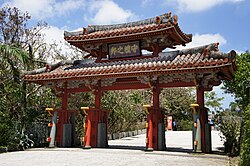
Shureimon
Photo by 663highlandWikimedia CommonsCC BY 2.5

5 min of listening · Section 1 of 5: Welcome to Shureimon

Prefer reading? The full guide is below

Here in person? Walk on with Mappu

This audio guide tells one place’s story. Walk Mode keeps going as you walk:

  • It knows where you are and talks about what’s in front of you, not only these chapters.
  • It takes you on to the next sight and follows what interests you.
  • Ask about anything you see, and it answers on the spot.
  • Your phone stays in your pocket.

A 2-hour live walk with Mappu, €4.99.

50 credits from the Starter pack. One-time purchase, no subscription.

Self-guided audio walk. No guide accompanies you. Not affiliated with the sites.

Keep exploring

Discover more places in Mappu.

Shureimon • Section 1 of 5

Shureimon: is there a free audio guide?

Quick answer. Yes. Mappu’s Shureimon audio guide (Naha, Japan) is free in your browser: 5 sections and about 5 minutes of listening, in 8 languages. It covers “Shureimon and the Second Gate of Shuri”, “A Kingdom That Honors Courtesy” and “Design, Destruction and Rebirth of Shureimon”. In the Mappu app, Walk Mode narrates the places around you as you move and answers your follow-up questions.

Shureimon map

Mappu's own map of the place, with the paths and entrances OpenStreetMap shows around it.

Shureimon mapThe place on the map, with the guide's point marked.

Shureimon: what does the audio guide cover?

  1. 01

    Welcome to Shureimon

    Welcome to Shureimon, written 守礼門 in Japanese, the vermilion gate that greets visitors at the edge of Shuri Castle in Naha, on the island of Okinawa. You are standing in the old royal town of Shuri, on a hilltop that once looked down over the harbor that made the Ryukyu Kingdom wealthy. This gate stands just outside Kankaimon, the castle's welcome gate, at the eastern end of a great avenue that runs east to west through Shuri. In Japanese castle terms, it plays the role of the main front gate. It is also the second of the castle's ceremonial gates, which is why older names call it the upper torii or the upper Ayajo gate. Over the next few minutes we will look at who built it, what its name and its famous sign really mean, how its design borrows from China, and how it came back after the war to become one of the best-known images of Okinawa.

  2. 02

    Shureimon and the Second Gate of Shuri

    Shureimon is said to date from the reign of King Sho Sei, who ruled the Ryukyu Kingdom from 1527 to 1555. It is described as the second ceremonial gate of Shuri Castle. The first was Chuzan Gate, built back in 1428. Shureimon came about a hundred years later and was made the same shape and size as its older sibling. The gate has gone by several names. Besides upper torii and upper Ayajo, it has been called Taiken-mon and Shuri-mon. The first gate, Chuzan Gate, is no longer standing. It was removed in 1908, so Shureimon is the one gate of the pair you can actually see today. Picture the setting in the royal era. The broad avenue called Ayajo Ufumichi led up from the lower town, and the gate marked the point where the city's everyday world gave way to the royal castle. It was a threshold you were meant to feel.

  3. 03

    A Kingdom That Honors Courtesy

    Look up at the plaque hanging at the center of the gate. It reads Shurei no Kuni, and the first two characters of that phrase give the gate its name. Shurei means to keep courtesy, or to uphold propriety, and the whole inscription means that Ryukyu is a country that values courtesy. It is a polite kingdom introducing itself at its own front door. That courtesy had a diplomatic edge. In the Second Sho dynasty era, the Ryukyu Kingdom stood within the Chinese tributary system. When an imperial envoy arrived from China to formally recognize a new king, the king and his high officials came out to meet the envoy at this gate. There they performed a ceremony of three kneelings and nine kowtows, a deeply humble greeting. The plaque is said to have been added after the gate was first built, and it is the part of the gate that explains the whole message. Courtesy, ritual and diplomacy were how a small island kingdom carried itself among larger neighbors.

  4. 04

    Design, Destruction and Rebirth of Shureimon

    Take in the architecture. Four vermilion pillars hold up a double roof of red tile, in the hip-and-gable style called irimoya. The basic form comes from the Chinese three-bay pailou, a ceremonial gateway. Originally, though, the roof was not tile at all but wooden shingles. The gate has survived a turbulent century. It was designated a national treasure in 1933, and restoration work ran from 1936 into 1937. Then the Battle of Okinawa destroyed it completely. It did not stay lost for long. The gate was rebuilt in 1958, and on the twelfth of May 1972 it was designated a tangible cultural property of Okinawa Prefecture under the name Former Shuri Castle Shureimon. Its image is now widely known across Japan. It appeared on the 2000 yen commemorative banknote, which made this little gate a symbol of Okinawa far beyond Shuri.

  5. 05

    Before You Head Off

    Before you move on toward the castle, stand for a moment where the king's officials once stood and look back along the avenue. The gate was designed to be seen from the approach, framing the road and the town below as much as the castle above. If you are planning how to reach the area, Shuri Castle Park is a short walk from the bus stops named Shurijo-mae and Shurijo Koen Iriguchi. The Shuri and Gibo stations on the Okinawa Urban Monorail are about a fifteen-minute walk away. From here, keep going toward Kankaimon, the next gate on the way in. Notice how each threshold changes the mood of the climb, and ask yourself what a visiting envoy would have felt walking this same route.

About this guide

AI-generated from 6 sources; checked automatically and last updated on October 31, 2026. Verify tickets and opening hours on the official site. Independent guide by Mappu. Not affiliated with or endorsed by the site or its managers.

Run a travel site or blog? Embed this audio guide for free.

Walk on from here

This place is stop 2 of 3 of a self-guided walk: Shuri Castle to Tamaudun, Naha. About 0.8 km and 10 minutes on foot, plus about 18 minutes of listening.

Route map: walking on from Shureimon3 numbered stops in walking order. Stop 1: Shuri Castle; Stop 2: Shureimon; Stop 3: Tamaudun.Stop 1: Shuri Castle1Stop 2: Shureimon2Stop 3: Tamaudun3
Distances are estimates along the walking route, from OpenStreetMap.

Indicative route. While you walk, watch where you're going, mind the traffic and follow local signs and rules. The map is an aid, not a safety guide. Terms

  1. Shuri Castle

    about 0.3 km · about 4 min on foot

  2. ShureimonThis guide

    about 0.5 km · about 6 min on foot

  3. Tamaudun
Photo attribution

Walk Mode, in the free Mappu app: 2 hours for 50 credits (€4.99 Starter pack)

See the whole walk

Planning a trip to Naha?

Get your plan

Mappu sketches your days free in the chat, no account needed. Then take the full plan with you:

  • Weekend trip, €9.99: Your day-by-day plan plus 2 live walks
  • Save your trip’s free guides on your phone in the Mappu app: they play with no signal
See the trip packs

Already going? The 2-hour live walk in Naha is €4.99

Plan your trip on a map and get an audio guide for almost any place nearby: just tap it on the Mappu map.

Common questions

Shureimon: how long is the free audio guide?

About 5 minutes of listening in 5 sections: “Welcome to Shureimon”, “Shureimon and the Second Gate of Shuri”, “A Kingdom That Honors Courtesy”, “Design, Destruction and Rebirth of Shureimon”, and “Before You Head Off”.

Shureimon: what can I ask Mappu after the guide?

You can ask follow-up questions such as “What was the role of Chuzan Gate, the first gate of Shuri Castle, and why was it removed in 1908?” and keep asking in Mappu, with the guide connected to your map and trip plan.