Zuigan-ji Audio Guide

Audio guide for Zuigan-ji

Zuigan-ji
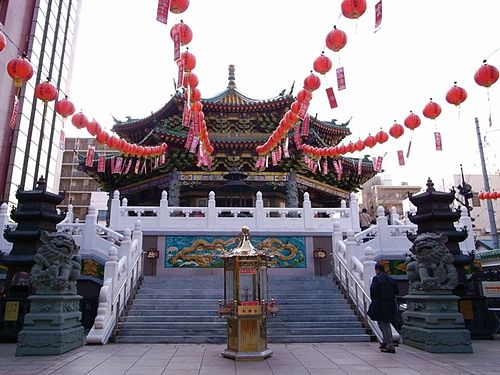
Photo by 663highlandWikimedia CommonsCC BY-SA 4.0

6 min of listening · Section 1 of 5: Welcome to Zuigan-ji Temple

Prefer reading? The full guide is below

Here in person? Walk on with Mappu

This audio guide tells one place’s story. Walk Mode keeps going as you walk:

  • It knows where you are and talks about what’s in front of you, not only these chapters.
  • It takes you on to the next sight and follows what interests you.
  • Ask about anything you see, and it answers on the spot.
  • Your phone stays in your pocket.

A 2-hour live walk with Mappu, €4.99.

50 credits from the Starter pack. One-time purchase, no subscription.

Self-guided audio walk. No guide accompanies you. Not affiliated with the sites.

Keep exploring

Discover more places in Mappu.

Zuigan-ji • Section 1 of 5

Zuigan-ji: is there a free audio guide?

Quick answer. Yes. Mappu’s Zuigan-ji audio guide (Matsushima, Japan) is free in your browser: 5 sections and about 6 minutes of listening, in 8 languages. It covers “Date Masamune and the Momoyama Rebuilding at Zuigan-ji Temple”, “National Treasures and Gates of Zuigan-ji Temple” and “The 2011 Tsunami and Zuigan-ji Temple as Refuge”. In the Mappu app, Walk Mode narrates the places around you as you move and answers your follow-up questions.

Zuigan-ji map

Mappu's own map of the place, with the paths and entrances OpenStreetMap shows around it.

Zuigan-ji mapThe place on the map, with the guide's point marked.

Zuigan-ji: what does the audio guide cover?

  1. 01

    Welcome to Zuigan-ji Temple

    Welcome to Zuigan-ji Temple, known in Japanese as 瑞巌寺, in the town of Matsushima in Miyagi Prefecture. Matsushima faces a bay scattered with more than 260 islands, and it is counted among Japan's Three Scenic Views. Right in the middle of that postcard landscape stands one of the most important Zen temples in the Tohoku region. The temple belongs to the Myoshin-ji branch of the Rinzai school of Zen, and its principal image is a statue of Sho Kannon Bosatsu. Its full name is a mouthful, Matsushima Seiryuzan Zuigan Enpuku Zenji, which is why locals have long called it simply Matsushima-dera, the temple of Matsushima. Over the next few minutes we will look at the man who rebuilt it, the main hall that is now a National Treasure, the day the tsunami came, and what it feels like to visit a working Zen temple. Getting here is easy: it is about five minutes on foot from Matsushima-Kaigan Station on the Senseki Line, or about 20 minutes on foot from Matsushima Station on the Tohoku Main Line.

  2. 02

    Date Masamune and the Momoyama Rebuilding at Zuigan-ji Temple

    To understand Zuigan-ji Temple, you need to meet the warlord who gave it its present face: Date Masamune, one of the great figures of the Sengoku era. He rebuilt the temple at the turn between the Momoyama period and the early Edo period, and his refined taste is felt throughout the buildings. That is the surprise of the place. From the outside the temple looks restrained, in the quiet manner of Zen. Step inside, though, and the interior opens up into the richness that defines Momoyama architecture and art, a style known for confidence and splendor. Simplicity outside and brilliance within is the signature of this temple. The Main Hall, once the abbot's quarters, was completed in 1609. It carries a weight of history that makes it one of the finest buildings of its age in Tohoku. In the Edo period the temple stood at its peak, with thousands of monks and workers serving the flocks of pilgrims who came to Matsushima.

  3. 03

    National Treasures and Gates of Zuigan-ji Temple

    Zuigan-ji Temple is rich in officially protected architecture. The Main Hall was designated a National Treasure in 1953, and the kuri, the kitchen and priests' quarters, is a National Treasure too, together with the corridor that connects the buildings. Together they are some of the best surviving Momoyama-era architecture in Tohoku. The gates are protected as well. The Onarimon Gate and the plaster walls on either side of it, known as taikobei walls, are designated Important Cultural Properties, and so is the Chumon Gate. As you walk, notice how each gate acts like a pause in a sentence, slowing you down before you move deeper into the grounds. One practical note: photography is not allowed inside the Main Hall. Treat it as an invitation. With no camera in your hands, you can simply look, and take in the interior with your own eyes. The temple's museum adds another layer. It opened in 1974 and holds approximately 30,000 items, including artifacts unearthed during excavations. Major repairs to the temple buildings were carried out from 2008 to 2018, so what you see has been carefully tended for the present day.

  4. 04

    The 2011 Tsunami and Zuigan-ji Temple as Refuge

    In March 2011 the great Tohoku earthquake and tsunami struck this coast. The waters destroyed the approach to Zuigan-ji Temple and killed the huge, centuries-old cryptomeria trees that once lined the way. Yet the temple's main buildings were spared, protected by the shelter of Matsushima Bay. There was some damage to the gardens, but nothing like the severe harm seen elsewhere along the coast. And the temple did what it has done for centuries: it served its community. Zuigan-ji Temple provided refuge for the residents of Matsushima. For a town whose economy and culture have long revolved around this temple, that role felt entirely natural. It is worth remembering that this is a living institution, not a museum piece. Training and Buddhist ceremonies are still held here today, which is why many visitors walk quietly through the grounds, aware that they are entering a place of prayer.

  5. 05

    Before You Head Off from Zuigan-ji Temple

    As you leave Zuigan-ji Temple, take a last look at the contrast that defines it: a calm Zen exterior and a Momoyama interior full of splendor, in a town famous for its islands and sea. Each of them tells part of the story of Matsushima. There is plenty left to notice. Think about how the gates guide you inward, how the buildings that survived the tsunami stand beside gardens that were touched by it, and how the approach, once shaded by ancient trees, has its own story of loss and recovery. When you walk back toward the station, keep wondering what Matsushima looked like to the pilgrims of the Edo period, who came by the thousands to this very temple. The answer may change how you see the bay.

About this guide

AI-generated from 6 sources; checked automatically and last updated on October 31, 2026. Verify tickets and opening hours on the official site. Independent guide by Mappu. Not affiliated with or endorsed by the site or its managers.

Run a travel site or blog? Embed this audio guide for free.

Walk on from here

This place is stop 3 of 5 of a self-guided walk: Saigyo-modoshi Pine to Godai-do, Matsushima. About 3.0 km and 40 minutes on foot, plus about 30 minutes of listening.

Route map: walking on from Zuigan-ji5 numbered stops in walking order. Stop 1: Saigyo Modoshi no Matsu Park; Stop 2: Entsū-in; Stop 3: Zuigan-ji; Stop 4: Michinoku Date Masamune Historical Museum; Stop 5: Godai-dō.Stop 1: Saigyo Modoshi no Matsu Park1Stop 2: Entsū-in2Stop 3: Zuigan-ji3Stop 4: Michinoku Date Masamune Historical Museum4Stop 5: Godai-dō5
Distances are estimates along the walking route, from OpenStreetMap.

Indicative route. While you walk, watch where you're going, mind the traffic and follow local signs and rules. The map is an aid, not a safety guide. Terms

  1. Saigyo Modoshi no Matsu Park

    about 1.7 km · about 22 min on foot

  2. Entsū-in

    about 0.3 km · about 3 min on foot

  3. Zuigan-jiThis guide

    about 0.7 km · about 10 min on foot

  4. Michinoku Date Masamune Historical Museum

    about 0.4 km · about 5 min on foot

  5. Godai-dō
Photo attribution

Walk Mode, in the free Mappu app: 2 hours for 50 credits (€4.99 Starter pack)

See the whole walk

Planning a trip to Matsushima?

Get your plan

Mappu sketches your days free in the chat, no account needed. Then take the full plan with you:

  • Weekend trip, €9.99: Your day-by-day plan plus 2 live walks
  • Save your trip’s free guides on your phone in the Mappu app: they play with no signal
See the trip packs

Already going? The 2-hour live walk in Matsushima is €4.99

Plan your trip on a map and get an audio guide for almost any place nearby: just tap it on the Mappu map.

Common questions

Zuigan-ji: how long is the free audio guide?

About 6 minutes of listening in 5 sections: “Welcome to Zuigan-ji Temple”, “Date Masamune and the Momoyama Rebuilding at Zuigan-ji Temple”, “National Treasures and Gates of Zuigan-ji Temple”, “The 2011 Tsunami and Zuigan-ji Temple as Refuge”, and “Before You Head Off from Zuigan-ji Temple”.

Zuigan-ji: what can I ask Mappu after the guide?

You can ask follow-up questions such as “What makes Date Masamune's rebuilding of the temple so distinctive, with its plain Zen exterior and splendid Momoyama interior?” and keep asking in Mappu, with the guide connected to your map and trip plan.