Godai-dō Audio Guide

Audio guide for Godai-dō

Godai-dō
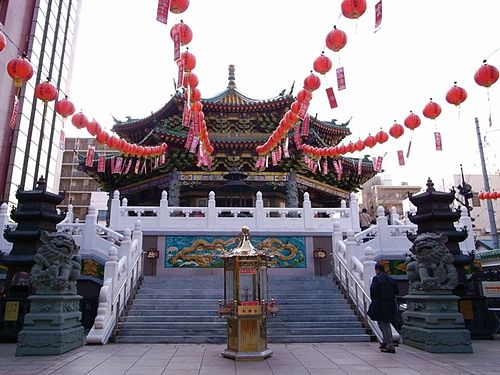
Photo by Tak1701dWikimedia CommonsCC BY-SA 3.0

6 min of listening · Section 1 of 5: Welcome to Godaidō Temple

Prefer reading? The full guide is below

Here in person? Walk on with Mappu

This audio guide tells one place’s story. Walk Mode keeps going as you walk:

  • It knows where you are and talks about what’s in front of you, not only these chapters.
  • It takes you on to the next sight and follows what interests you.
  • Ask about anything you see, and it answers on the spot.
  • Your phone stays in your pocket.

A 2-hour live walk with Mappu, €4.99.

50 credits from the Starter pack. One-time purchase, no subscription.

Self-guided audio walk. No guide accompanies you. Not affiliated with the sites.

Keep exploring

Discover more places in Mappu.

Godai-dō • Section 1 of 5

Godai-dō: is there a free audio guide?

Quick answer. Yes. Mappu’s Godai-dō audio guide (Matsushima, Japan) is free in your browser: 5 sections and about 6 minutes of listening, in 8 languages. It covers “Godaidō Temple and the Legend of 807”, “Date Masamune and the Momoyama Hall of Godaidō Temple” and “Bridges, Zodiac Carvings and Faded Red at Godaidō Temple”. In the Mappu app, Walk Mode narrates the places around you as you move and answers your follow-up questions.

Godai-dō map

Mappu's own map of the place, with the paths and entrances OpenStreetMap shows around it.

Godai-dō mapThe place on the map, with the guide's point marked.

Godai-dō: what does the audio guide cover?

  1. 01

    Welcome to Godaidō Temple

    Welcome to Matsushima, and to one of its most photographed corners. Godaidō Temple is a small Buddhist hall standing on an islet right beside the pier, and it has become the symbol of the whole bay. Its local name is 五大堂, which you may spot on signs as you arrive. Matsushima's name means pine tree islands, and the bay is counted among Japan's Three Scenic Views. It lies on the Pacific coast of Miyagi Prefecture, about 50 kilometers northeast of Sendai, and you can reach it from Sendai by train in under 30 minutes. That makes it easy to arrive, wander on foot, and let the scenery do its work. Over the next few minutes we will look at this little hall from several sides: its traditional beginnings in the year 807, the warlord who rebuilt it in 1604, and the red bridges that make you think twice about every step. Settle in, look out across the water, and let's begin.

  2. 02

    Godaidō Temple and the Legend of 807

    Godai-dō: That large project was completed in 1609, and Zuiganji's Main Hall was later designated a National Treasure in 1953.

    Tradition places the beginnings of Godaidō Temple in the year 807. The story says that five statues were enshrined here by the same priest who went on to found Zuiganji Temple, the great Zen temple a short walk away. Legends connected with Ennin and with the Five Wisdom Kings, the five guardian figures of Buddhism that give the hall its name, have grown up around this islet. Those statues are not on show for passersby. They are carefully preserved as hidden Buddhist statues, which adds to the quiet mystery of the place. What you see from the shore is the hall; the sacred images stay out of view. There is also a family relationship worth knowing. Godaidō Temple is an outlying hall of Zuiganji, a temple of the Myōshinji branch of the Rinzai school of Zen Buddhism. So when you look at this tiny island sanctuary, you are looking at a satellite of the larger temple, one set apart on the water, where the bay itself becomes part of the setting for devotion.

  3. 03

    Date Masamune and the Momoyama Hall of Godaidō Temple

    Godai-dō: Picture the building in that vivid color against the green pines and the blue bay, and you will understand why it became the symbol of Matsushima.

    The building in front of you today dates from 1604, when Date Masamune, the first lord of the Sendai domain, had it reconstructed. It is regarded as the oldest surviving example of Momoyama period architecture in the Tohoku region, and it was designated a National Important Cultural Property in 1950. The timing is interesting. Masamune is said to have worked on Godaidō Temple before the major restoration of Zuiganji. That large project was completed in 1609, and Zuiganji's Main Hall was later designated a National Treasure in 1953. So this little island hall may be seen as an early chapter in Masamune's rebuilding of Matsushima's religious landscape, and it preserves the architectural culture of the late Momoyama and early Edo periods. There is a lovely contrast here. Zuiganji impresses with its imposing temple architecture, while Godaidō Temple offers a small hall on a small island. Visiting the two together gives you a fuller picture of Matsushima's history and Buddhist culture, one grand and one intimate.

  4. 04

    Bridges, Zodiac Carvings and Faded Red at Godaidō Temple

    Godai-dō: Kanrantei, a tea house remembered as a moon-viewing pavilion linked to the Date family, offers another look at the bay.

    Now look closely at how you reach the island. The red bridges connecting it to the shore are known as sukashibashi, which means see-through bridges. The gaps between the boards are deliberate, and they are intentionally precarious. Their purpose is to compel worshippers to concentrate as they cross, so that you arrive at the hall with your attention gathered rather than wandering. Glance down through the planks and you will see exactly why it works. Once you are at the hall, walk around it and look up at the transom, the band of carving beneath the eaves. Animals of the Chinese zodiac are carved into it all the way around the building, so you can hunt for your own birth year. Here is one more detail to imagine. The hall was once painted bright red. That paint has long since worn away, leaving the weathered wood you see today. Picture the building in that vivid color against the green pines and the blue bay, and you will understand why it became the symbol of Matsushima.

  5. 05

    Before You Head Off

    Before you leave the islet, turn around and take in the view of the bay. Pine-covered islands scatter across the water, and from this little hall you can see why the place has been admired for centuries. There is plenty more to explore nearby. Zuiganji Temple, with its great halls, is a short walk away. Kanrantei, a tea house remembered as a moon-viewing pavilion linked to the Date family, offers another look at the bay. If you enjoy a hilltop view, Saigyo Modoshi no Matsu Park is about 15 minutes on foot from Matsushima station, named for the monk and poet Saigyo, who lived from 1118 to 1190. So as you cross those gappy red bridges once more, ask yourself what you notice now that you did not before. Perhaps it is a zodiac animal on the transom, or the faint memory of red paint, or simply how the whole scene sits on the water. Matsushima rewards slow looking.

About this guide

AI-generated from 6 sources; checked automatically and last updated on October 31, 2026. Verify tickets and opening hours on the official site. Independent guide by Mappu. Not affiliated with or endorsed by the site or its managers.

Run a travel site or blog? Embed this audio guide for free.

Walk on from here

This place is stop 5 of 5 of a self-guided walk: Saigyo-modoshi Pine to Godai-do, Matsushima. About 3.0 km and 40 minutes on foot, plus about 30 minutes of listening.

Route map: walking on from Godai-dō5 numbered stops in walking order. Stop 1: Saigyo Modoshi no Matsu Park; Stop 2: Entsū-in; Stop 3: Zuigan-ji; Stop 4: Michinoku Date Masamune Historical Museum; Stop 5: Godai-dō.Stop 1: Saigyo Modoshi no Matsu Park1Stop 2: Entsū-in2Stop 3: Zuigan-ji3Stop 4: Michinoku Date Masamune Historical Museum4Stop 5: Godai-dō5
Distances are estimates along the walking route, from OpenStreetMap.

Indicative route. While you walk, watch where you're going, mind the traffic and follow local signs and rules. The map is an aid, not a safety guide. Terms

  1. Saigyo Modoshi no Matsu Park

    about 1.7 km · about 22 min on foot

  2. Entsū-in

    about 0.3 km · about 3 min on foot

  3. Zuigan-ji

    about 0.7 km · about 10 min on foot

  4. Michinoku Date Masamune Historical Museum

    about 0.4 km · about 5 min on foot

  5. Godai-dōThis guide

Photo attribution

Walk Mode, in the free Mappu app: 2 hours for 50 credits (€4.99 Starter pack)

See the whole walk

Planning a trip to Matsushima?

Get your plan

Mappu sketches your days free in the chat, no account needed. Then take the full plan with you:

  • Weekend trip, €9.99: Your day-by-day plan plus 2 live walks
  • Save your trip’s free guides on your phone in the Mappu app: they play with no signal
See the trip packs

Already going? The 2-hour live walk in Matsushima is €4.99

Plan your trip on a map and get an audio guide for almost any place nearby: just tap it on the Mappu map.

Common questions

Godai-dō: how long is the free audio guide?

About 6 minutes of listening in 5 sections: “Welcome to Godaidō Temple”, “Godaidō Temple and the Legend of 807”, “Date Masamune and the Momoyama Hall of Godaidō Temple”, “Bridges, Zodiac Carvings and Faded Red at Godaidō Temple”, and “Before You Head Off”.

Godai-dō: what can I ask Mappu after the guide?

You can ask follow-up questions such as “How is Godaidō Temple connected to Zuiganji Temple, and why is it called an outlying hall?” and keep asking in Mappu, with the guide connected to your map and trip plan.