Seiryō-ji Audio Guide

Audio guide for Seiryō-ji

Seiryō-ji
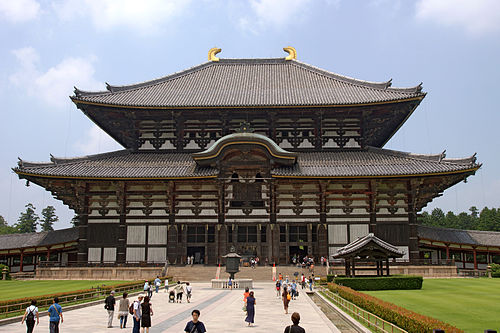
Photo by MtiWikimedia CommonsCC BY-SA 3.0

4 min of listening · Section 1 of 5: Welcome to Seriyō-ji temple

Prefer reading? The full guide is below

Here in person? Walk on with Mappu

This audio guide tells one place’s story. Walk Mode keeps going as you walk:

  • It knows where you are and talks about what’s in front of you, not only these chapters.
  • It takes you on to the next sight and follows what interests you.
  • Ask about anything you see, and it answers on the spot.
  • Your phone stays in your pocket.

A 2-hour live walk with Mappu, €4.99.

50 credits from the Starter pack. One-time purchase, no subscription.

Self-guided audio walk. No guide accompanies you. Not affiliated with the sites.

Keep exploring

Discover more places in Mappu.

Seiryō-ji • Section 1 of 5

Seiryō-ji: is there a free audio guide?

Quick answer. Yes. Mappu’s Seiryō-ji audio guide (Kyoto, Japan) is free in your browser: 5 sections and about 4 minutes of listening, in 8 languages. It covers “Founders of Seriyō-ji temple”, “The Living Buddha of Seriyō-ji temple” and “Genji, Minamoto no Tōru and Seriyō-ji temple”. In the Mappu app, Walk Mode narrates the places around you as you move and answers your follow-up questions.

Seiryō-ji map

Mappu's own map of the place, with the paths and entrances OpenStreetMap shows around it.

Seiryō-ji mapThe place on the map, with the guide's point marked.

Seiryō-ji: what does the audio guide cover?

  1. 01

    Welcome to Seriyō-ji temple

    Welcome to Seriyō-ji temple, written 清凉寺 in Japanese. It stands in the Saga district of Kyoto's Ukyō ward, on the western side of the city near Arashiyama, in a neighborhood whose address even carries the temple's nickname: Saga Shakadō-Fujinoki-chō. Shakadō means the Hall of Shakyamuni, and it hints at what this place is famous for. The story told here sticks to the essentials of the temple: its sect, its founders, its central Buddha and its literary connections. Seriyō-ji is a Pure Land Buddhist temple of the Jōdo school, with the mountain name Godaisan. Over the next few minutes you will hear about a living Buddha, a prince from the world of classic literature, and a style of statue that took its name from this very hall.

  2. 02

    Founders of Seriyō-ji temple

    Every Japanese temple has a founder, and Seriyō-ji has two. The monk Chōnen is recorded as its kaiki, the founding patron who set the temple's creation in motion. His disciple Jōsan is its kaisan, the founding abbot who opened the temple as a working community. Together they gave the temple its start as the home of its central image. That central image is the heart of the place. The main object of worship is Shaka Nyorai, the historical Buddha Shakyamuni. This is no ordinary statue in the eyes of the faithful, because the temple venerates it as the living Shakyamuni. That idea shapes everything about how the hall is understood, and it leads straight to the next story.

  3. 03

    The Living Buddha of Seriyō-ji temple

    Here is the detail that makes Seriyō-ji temple unusual. Its principal Shaka Nyorai is spoken of as a living Buddha, a statue said to possess the five viscera and six internal organs, just as a living body does. For visitors, it changes the way you look at a carved figure. It is treated less as an artwork than as a presence. The statue also gave rise to a whole category in Japanese Buddhist art. Enthusiasts speak of the Seiryō-ji style of Shaka statue, a recognizable type of Shakyamuni image named after this temple's central Buddha. If you ever meet one of these statues in another temple, you are meeting an echo of the figure enshrined here in the Shakadō. The temple is also known for its Amida triad, a group of three figures centered on Amida Buddha, which fits well with the Pure Land tradition the temple belongs to.

  4. 04

    Genji, Minamoto no Tōru and Seriyō-ji temple

    Seriyō-ji temple has roots in the Heian period, and it is deeply tied to literature and legend. The site is associated with Minamoto no Tōru, the courtier traditionally regarded as a model for Hikaru Genji, the shining prince of The Tale of Genji. He is credited with building a hall here that was known as the Saga no Midō, the Saga Hall. That makes this a favorite stop for anyone following the footsteps of Genji in Kyoto. The link between the fictional prince and the real nobleman is an interpretation passed down through the tradition, a model rather than a portrait. It adds a second layer to the temple. Alongside the Buddhist devotion centered on the living Shakyamuni, the grounds also hold the memory of Heian court life in the Saga countryside.

  5. 05

    Before You Head Off

    Seriyō-ji temple sits close to Arashiyama, so it fits naturally into a day in western Kyoto, but it rewards a slower look all by itself. As you walk the grounds, think about the two founders, Chōnen and Jōsan, and about how a single statue gave a temple its nickname. Take a moment with the Shakadō and ask yourself what it means to call a Buddha living. Then let your mind drift to the Heian nobleman said to have inspired Genji. Between devotion and literature, you may find this temple holds more stories than one visit can gather.

About this guide

AI-generated from 6 sources; checked automatically and last updated on October 31, 2026. Verify tickets and opening hours on the official site. Independent guide by Mappu. Not affiliated with or endorsed by the site or its managers.

Run a travel site or blog? Embed this audio guide for free.

Walk on from here

The nearest places with a Mappu audio guide, in walking order: about 3.0 km and 40 minutes on foot in all.

Route map: walking on from Seiryō-ji5 numbered stops in walking order. Stop 1: Seiryō-ji; Stop 2: Daikaku-ji; Stop 3: Nonomiya Shrine; Stop 4: Arashiyama Bamboo Grove; Stop 5: Ōkōchi Sansō.Stop 1: Seiryō-ji1Stop 2: Daikaku-ji2Stop 3: Nonomiya Shrine3Stop 4: Arashiyama Bamboo Grove4Stop 5: Ōkōchi Sansō5
Distances are estimates: the straight line between places plus 30%.

Indicative route. While you walk, watch where you're going, mind the traffic and follow local signs and rules. The map is an aid, not a safety guide. Terms

  1. Seiryō-jiThis guide

    about 0.8 km · about 11 min on foot

  2. Daikaku-ji

    about 1.6 km · about 21 min on foot

  3. Nonomiya Shrine

    about 0.4 km · about 5 min on foot

  4. Arashiyama Bamboo Grove

    about 0.2 km · about 3 min on foot

  5. Ōkōchi Sansō
Photo attribution

Walk Mode, in the free Mappu app: 2 hours for 50 credits (€4.99 Starter pack)

Planning a trip to Kyoto?

Get your plan

Mappu sketches your days free in the chat, no account needed. Then take the full plan with you:

  • Weekend trip, €9.99: Your day-by-day plan plus 2 live walks
  • Save your trip’s free guides on your phone in the Mappu app: they play with no signal
See the trip packs

Already going? The 2-hour live walk in Kyoto is €4.99

Plan your trip on a map and get an audio guide for almost any place nearby: just tap it on the Mappu map.

Common questions

Seiryō-ji: how long is the free audio guide?

About 4 minutes of listening in 5 sections: “Welcome to Seriyō-ji temple”, “Founders of Seriyō-ji temple”, “The Living Buddha of Seriyō-ji temple”, “Genji, Minamoto no Tōru and Seriyō-ji temple”, and “Before You Head Off”.

Seiryō-ji: what can I ask Mappu after the guide?

You can ask follow-up questions such as “What does it mean that the main Buddha of Seriyō-ji temple is called a living Shakyamuni?” and keep asking in Mappu, with the guide connected to your map and trip plan.